How to Find the Right Brand Voice for Your Startup
Your startup’s brand voice is how your business sounds in every communication. It comes through in your website copy, emails, social captions, customer support replies, and even error messages. A clear voice makes your brand easier to recognize, remember, and connect with.
When building a brand, many founders start with the visual side: choosing a business name, creating a logo design, and deciding on a color palette. These elements shape how your startup looks, while your brand voice shapes how it sounds. Together, they create a more recognizable and consistent identity across every customer touchpoint.
This guide walks you through a practical, startup-specific process for defining your brand voice and testing how it works across different channels.
Brand Voice, Tone, and Personality: What Is the Difference?
Before defining a brand voice, it helps to understand a few terms that are often used interchangeably. Brand personality, voice, and tone are closely connected, but each plays a different role in shaping how a startup communicates and how people come to recognize it.
- Brand personality forms the foundation. It describes the human characteristics associated with a brand, such as playful, energetic, thoughtful, reassuring, bold, or unconventional. These traits give the brand a clearer character and influence both its visual identity and communication.
- Brand voice puts that personality into words. A bold personality might use short, confident statements, while an approachable one might rely on conversational language and straightforward explanations. Vocabulary, sentence structure, humor, formality, and the amount of detail included in a message can all contribute to a recognizable voice.
- Brand tone introduces flexibility. The same voice needs to work across different situations, from welcoming a new customer to announcing a product or responding to a complaint. Tone can become more enthusiastic, serious, reassuring, or direct depending on the context without changing the personality underneath.
The easiest way to see how they work together is to look at what each one controls:
| Element | Main Role | Examples |
| Brand personality | Defines the character behind the brand | Playful, bold, thoughtful, approachable |
| Brand voice | Determines how that character comes through in writing | Conversational, direct, witty, informative |
| Brand tone | Adjusts the voice to fit a particular situation | Excited for a launch, helpful in a guide, reassuring in support |
Personality gives the brand its character, voice turns that character into a recognizable way of communicating, and tone allows it to adapt. Keeping those distinctions clear gives you a stronger foundation for deciding how your startup should actually sound.
What Makes a Strong Brand Voice?
There’s no single best brand voice. The right one depends on your audience, your industry, and what makes your startup different. A children’s education app and an enterprise cybersecurity platform shouldn’t sound alike, even if both aim to be confident and clear.
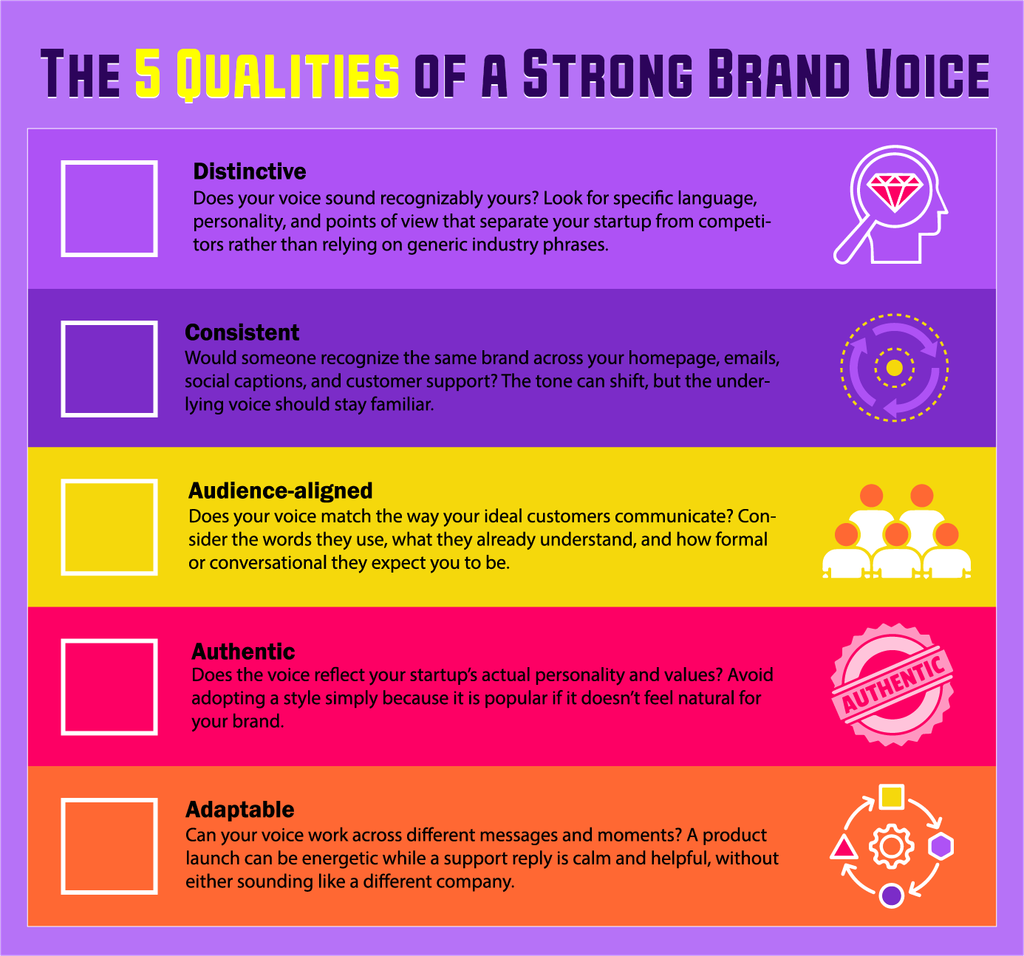
Use this checklist to evaluate whether your brand voice is doing its job.
☐ Distinctive: Does your voice sound recognizably yours? Look for specific language, personality, and points of view that separate your startup from competitors rather than relying on generic industry phrases.
☐ Consistent: Would someone recognize the same brand across your homepage, emails, social captions, and customer support? The tone can shift, but the underlying voice should stay familiar.
☐ Audience-aligned: Does your voice match the way your ideal customers communicate? Consider the words they use, what they already understand, and how formal or conversational they expect you to be.
☐ Authentic: Does the voice reflect your startup’s actual personality and values? Avoid adopting a style simply because it is popular if it doesn’t feel natural for your brand.
☐ Adaptable: Can your voice work across different messages and moments? A product launch can be energetic while a support reply is calm and helpful, without either sounding like a different company.
How Do I Find My Startup’s Brand Voice?
A brand voice rarely appears because someone sits down and decides the company should sound “friendly, confident, and professional.” Those words can describe almost any startup.
A useful voice comes from something more concrete: who you are speaking to, what they expect from you, how competitors already communicate, and what kind of personality makes sense for the business you are building.
The process below helps turn those pieces into a voice you can actually write with.
1. Start with how your audience already talks
Before deciding how your startup should sound, spend some time listening.
Read customer reviews, Reddit threads, industry forums, social comments, and support conversations. Pay attention to the words people use to describe their problems, how much they already understand, and how they naturally communicate with brands in your space.
A freelancer might say they need an easier way to “keep track of invoices,” for example, rather than asking for better “accounts receivable management.” That difference can tell you a lot about the language that will feel natural to them.
Customer expectations support this approach. Research found that 71% of consumers expect companies to deliver personalized interactions, while 76% become frustrated when that does not happen. Understanding how your audience describes its needs gives you useful language for making your communication feel more relevant.
Go a step further than reading passively and start a swipe file. Copy and save 10 to 15 phrases your audience actually uses in reviews, comments, forums, or support conversations. Keep those examples nearby while you write so your brand voice stays grounded in customer language rather than generic marketing terms.
You can see this audience awareness in Glossier, which built much of its communication around the conversational language of its beauty community rather than traditional cosmetics advertising.

Wendy’s takes a completely different approach, particularly on social media, where its quick, informal humor fits the online culture of the audience it is speaking to.
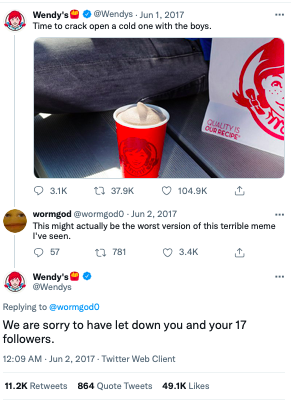
Neither voice would work for every startup, and that is the point. Researching your audience helps you decide how conversational, technical, playful, reassuring, or direct your own voice should be.
2. Find the voice you already have
You may not need to invent your brand voice from scratch.
Pull together your website copy, emails, social posts, product descriptions, onboarding messages, and support replies. Look for sentences that already feel natural to your startup, then compare them with parts that feel generic or disconnected. You may notice that your social posts are warm and conversational while your website suddenly becomes formal, or that certain phrases keep appearing because they naturally fit how your team communicates.
This kind of consistency is easy to recognize in Innocent Drinks. Its conversational humor is not confined to advertising. It appears across packaging, social posts, product descriptions, and other everyday communication, making the voice feel like an established part of the brand.
On Facebook, its conversational tone comes through clearly in captions and posts, giving the brand a familiar and recognizable personality.

Visit the website, and that same style carries into the headlines, product descriptions, and other copy, creating a consistent voice across both channels.
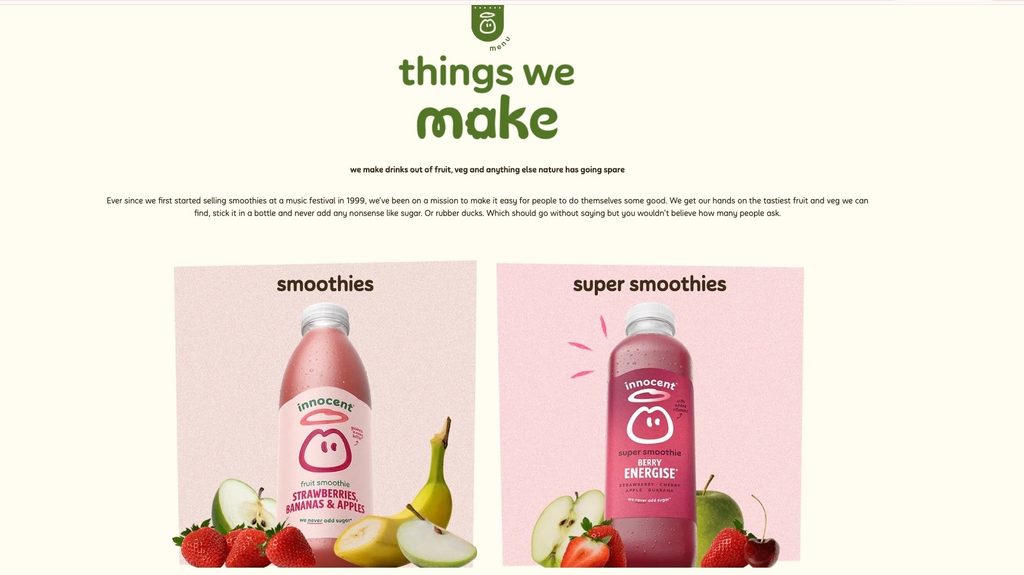
Your audit should help you find those recurring qualities in your own content. Save five or ten examples that already sound right, note what they have in common, and use those patterns as the starting point for defining your voice.
3. Look for what your competitors keep repeating
Competitor research can help you understand how businesses in your category already communicate. More importantly, it can reveal the words, claims, and styles that have become so common that one company starts sounding much like another.
Start by opening five to ten competitor websites and looking closely at their headlines, vocabulary, level of formality, humor, and calls to action. Pay attention to how they describe their products, explain benefits, introduce features, and speak directly to customers.
You might find the same words such as “innovative,” “premium,” “trusted,” or “seamless” appearing again and again. Sometimes the similarities are broader. Several competitors might rely on technical explanations, polished corporate language, playful humor, or the same aspirational promises.
Write down the patterns you notice most often. Seeing them together makes it easier to understand what customers in your category are already hearing and where different brands have started blending together.
Then compare those patterns with the personality you have started identifying for your own startup. Look for qualities that genuinely belong to your brand but are less visible in the way competitors communicate. You might have an opportunity to be warmer, clearer, more straightforward, more knowledgeable, or more conversational.
4. Make your voice fit the brand people see
Your brand voice does not work on its own. Customers read your words while seeing your logo, colors, typography, imagery, packaging, and website, so those elements should feel like they belong to the same personality.
Nike brings the same alignment in a different way. Its short, confident, motivational language complements the bold typography, athlete-focused photography, and energetic visuals that appear throughout the brand.

Put your own visuals and copy side by side and describe each in three words. They do not need to match exactly, but they should point toward the same overall personality rather than making your startup look and sound like two different brands.
5. Put everything into a brand voice guide
By this point, you have already done most of the work. Bring your personality traits, tone rules, preferred language, boundaries, and writing examples into one place.
The guide does not need to be long. It needs to answer the questions someone is likely to have while writing: How formal are we? Do we use humor? Which words do we avoid? How should we sound when something goes wrong?
Your startup might only need a few pages. The important part is that someone else can pick it up and understand how your brand should sound without needing you to explain every decision.
How BrandCrowd Helps You Bring Your Brand Voice and Visual Identity Together
Your brand voice shouldn’t operate in isolation. It should feel connected to your business name, logo design, colors, typography, and other visual elements. Once you’ve defined your voice, review your visual identity alongside it to make sure both communicate the same personality.
BrandCrowd gives startups tools to build that visual identity and carry it across key brand touchpoints.
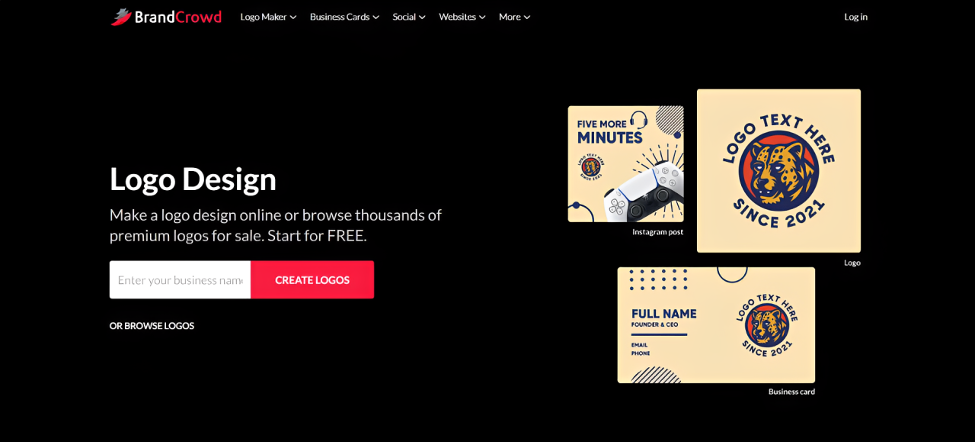
- Logo design: Create a logo that captures your startup’s identity and personality.
- Website: Use your well-designed website to bring your messaging, colors, visuals, and brand voice together.
- Business cards: Carry consistent branding into meetings and networking with business cards.
- Social media designs: Build recognizable social media designs that complement your content and visual style.
- Email signatures: Add branded email signatures to keep everyday customer and business communication consistent.
Together, these elements help your startup look and sound consistent, making your brand easier to recognize across different channels.
Your brand voice will keep evolving as your startup grows, and that’s normal. What matters early on is having a direction you can point new hires, freelancers, and yourself back to, so every email, caption, and support reply still sounds like the same company a year from now. Start with the traits, test them on real people, write them down, and let your visual identity carry the same personality through everything else you build.
Read more on branding here:
- Brand Voice Examples That Align with Brand Personality & Values
- Brand Voice: Making Your Brand Stand Out
- Brand Differentiation: How To Stand Out in a Crowded Market
Anne Joyce Raymundo is an SEO Content Writer with years of experience creating compelling content for businesses of all sizes. She creates thoughtful, research-backed articles that turn complex topics into clear, actionable reads.