Brand Voice Examples That Align with Brand Personality & Values
Some brands feel familiar the moment you read them. You don’t even need to see their logo. Their words just have a certain feel. That’s brand voice at work.
If you’re building your brand from scratch, using a logo maker can help you shape your visual identity. Your visuals and your voice should feel like they belong together. If your logo looks playful but your messaging sounds serious, people get confused. But when your design and your voice match, your brand feels clear and easy to recognize.
In this article, we’ll break down what brand voice actually is, how it’s different from tone, and look at real examples of brands doing it well.
What Is Brand Voice?
Brand voice is your brand’s public identity and consistent style of communication that reflects its personality and core values. It stays the same across platforms and touchpoints, no matter where someone finds you.
Think of it this way: every time you write something as a brand, you’re making a choice about how you sound. Brand voice is the set of rules that guides those choices to make them feel consistent.
A strong brand voice does three things:
- It sets you apart: When your voice is clear and consistent, people can recognize you without seeing your name.
- It builds recognition: The more consistent you are, the more familiar you feel. Familiarity builds trust.
- It creates trust: Brands that sound the same everywhere feel reliable. Inconsistency feels sloppy, or worse, fake.
Your brand voice shows up everywhere. From a tweet to a product description to a customer support reply. When all of those feel like they came from the same source, that’s a brand with a strong voice.
Brand Voice vs. Brand Tone
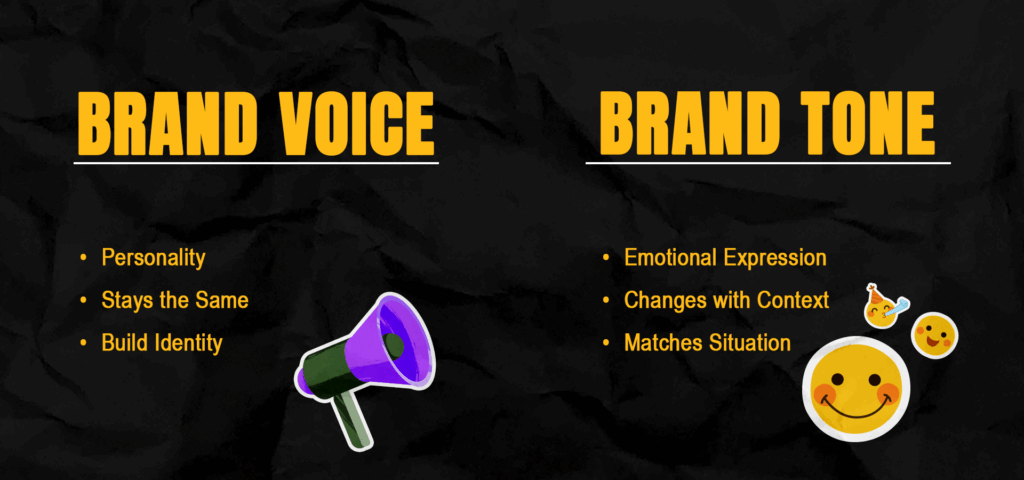
Brand voice and brand tone are often used interchangeably, but they’re not the same thing. If you’re building a brand that actually connects with people, you need to understand the difference, and more importantly, how they work together.
For a brand, voice shows up in things like:
- Website copy
- Emails
- Social media posts
- Product descriptions
- Ads
Examples of brand voice traits:
- Professional and authoritative
- Friendly and conversational
- Bold and edgy
- Calm and reassuring
- Minimalist and straightforward
What is brand tone?
Brand tone is the emotional variation of your voice depending on the situation.
Your voice stays the same, but your tone adjusts based on context.
Think of it like this:
- You don’t talk to a friend the same way you talk in a job interview
- You don’t use the same tone for good news and bad news
For brands, tone changes based on:
- Audience mood
- Platform
- Situation or message
Examples:
- A fun, upbeat tone for a product launch
- A serious, empathetic tone during a crisis
- A helpful, instructional tone in a tutorial
- A celebratory tone for customer wins
The key point: tone is flexible, voice is not.
Here’s a simple table to tell the difference between the two:
| Aspect | Brand Voice | Brand Tone |
| Definition | Your brand’s personality | Your brand’s emotional expression |
| Consistency | Stays the same | Changes depending on context |
| Purpose | Builds identity and recognition | Matches the situation and audience |
| Example | “Friendly and helpful” | “Excited,” “serious,” or “empathetic” |
What Are Great Brand Voice Examples?
Let’s look at some real brands and how their voice connects to their personality and values. These aren’t random choices; each one is a brand that clearly thought about who they are and let that shape how they communicate.
1. Duolingo
Doulingo’s brand voice is probably one of the most recognizable in the app world right now. They lean hard into humor, especially on TikTok videos, where their mascot, Duo the owl, acts out dramatic, funny scenarios, like these ones:
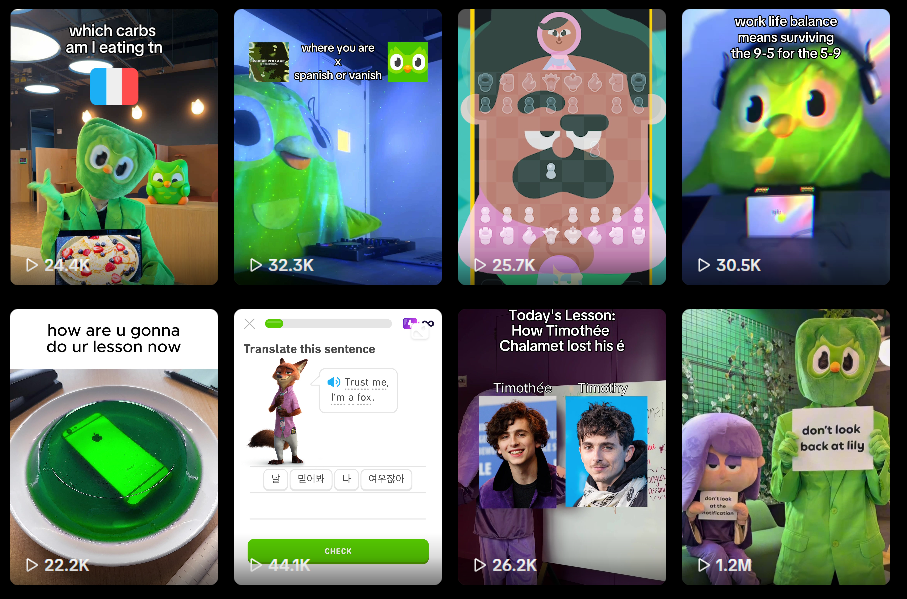
But even in push notifications and in-app messages, the voice is light and a little cheeky.
| “Don’t forget to practice today. I know where you live.” – Duolingo push notification style
This works because Duolingo’s whole mission is to make learning accessible and fun. A dry, corporate voice would undermine that. The playful voice says: “This isn’t scary, this is for everyone.”
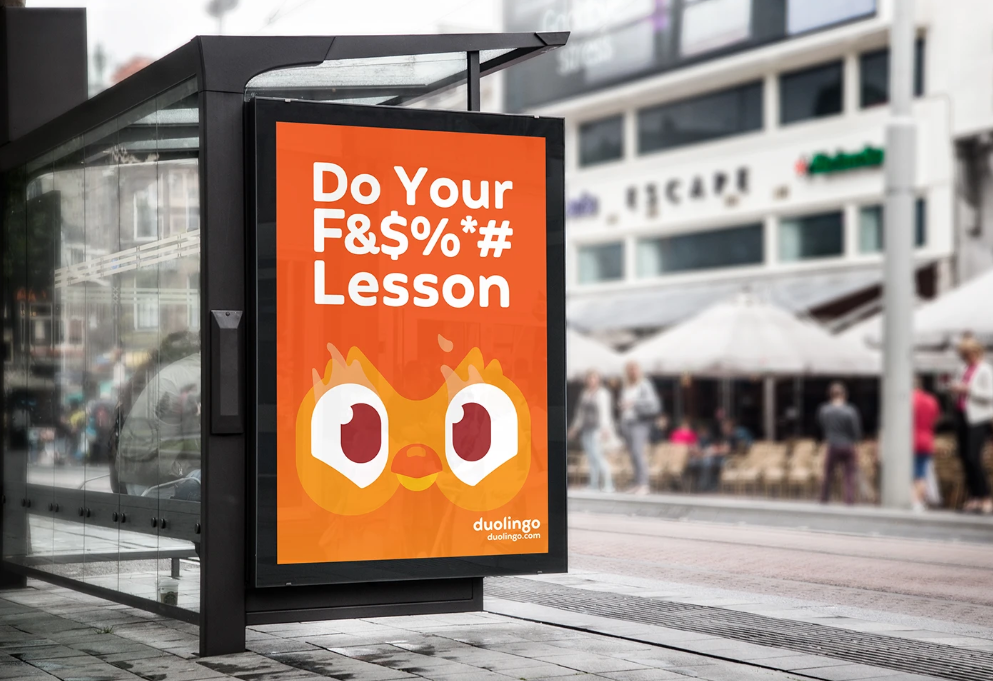
Duolingo also uses public-space marketing in a way that feels more like entertainment than traditional advertising.
Instead of relying on polished, corporate-style messaging, they place bold, humorous ads in high-traffic areas like transit stations, benches, and advertising billboards where people are naturally distracted or bored.
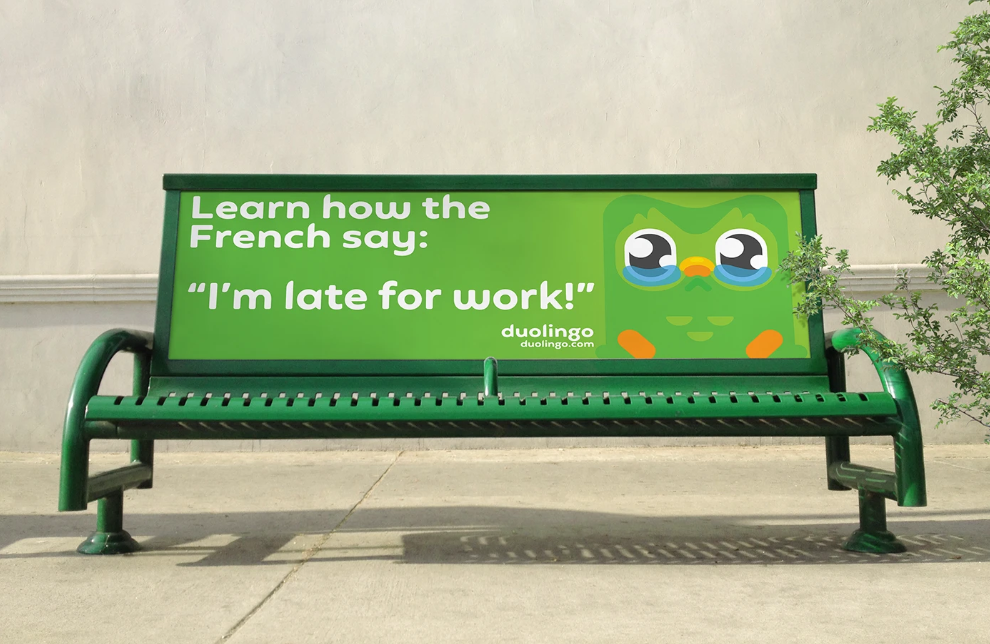
What makes this strategy effective is how well it fits real-life moments. A commuter waiting for a train or someone sitting on a bench is more likely to notice something unexpected and funny.

Duolingo on X is basically an extension of its chaotic, internet-native personality. Instead of using the platform for formal announcements or polished branding…
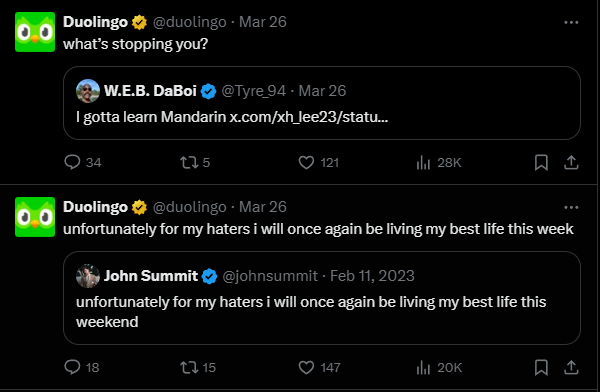
… Duolingo leans heavily into memes, trends, and fast-moving online humor.
Why this works: Duolingo’s brand voice and tone work because they stay consistent, playful, and easy to recognize across all platforms. This makes the brand feel fun, memorable, and more engaging to users.
2. Wendy’s

Wendy’s became internet-famous for their Twitter account. They roast competitors, reply to fans with sharp one-liners, and never sound like they’re trying too hard. It all feels natural, just like a confident friend who just happens to be funny.
| “Our beef is never frozen. Unlike your career.” – The energy of Wendy’s replies
Instead of sticking to safe corporate messaging, this fast food brand built a personality that feels confident, edgy, and a bit sassy.
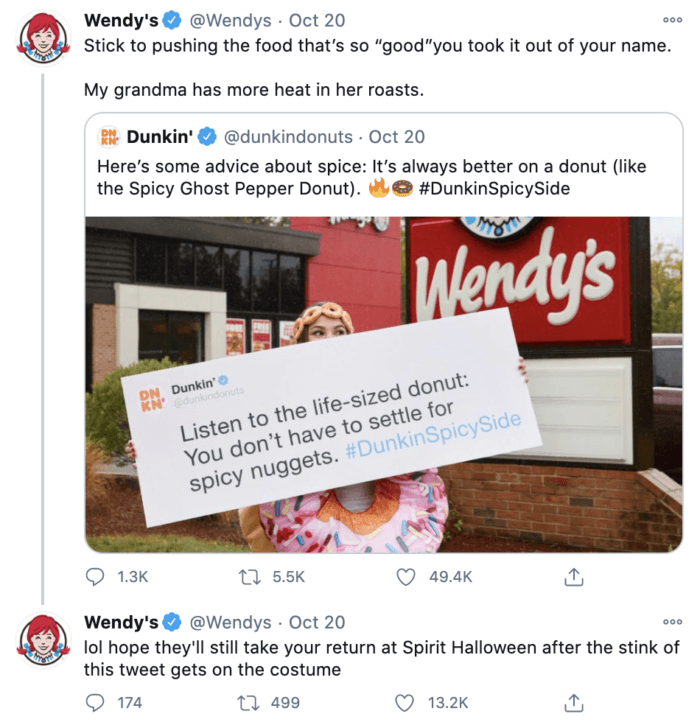
A big part of their strategy is engaging directly with competitors like McDonald’s and Dunkin, often using clever one-liners or jokes that highlight their own brand strengths in a humorous way.
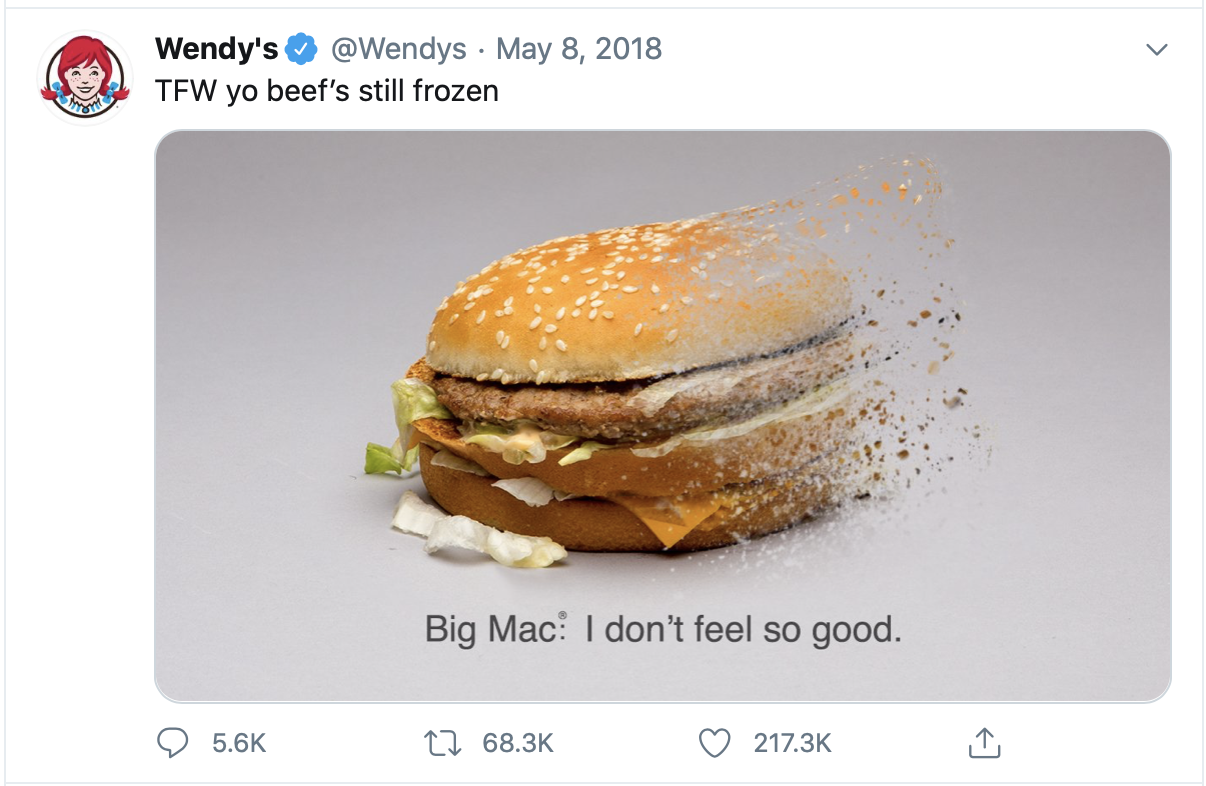
These posts are designed to entertain, spark reactions, and encourage people to share the content.

Why this works: Wendy’s stands out because it uses humor and competition to grab attention in a crowded social feed. Its bold, consistent voice makes the brand feel memorable and entertaining, not corporate.
3. Dove
Dove’s “Real Beauty” campaign changed how a lot of brands thought about advertising. Instead of using polished, idealized images and language, Dove spoke directly to real people about real insecurities, with warmth and without judgment.
| “Real women. Real beauty.” – Dove campaign messaging style

Their voice is gentle, affirming, and honest. No hype. No pressure. Just a brand trying to show how genuinely they care about how people feel. That’s not an accident; it’s a deliberate choice that lines up with their value of authenticity and self-acceptance.
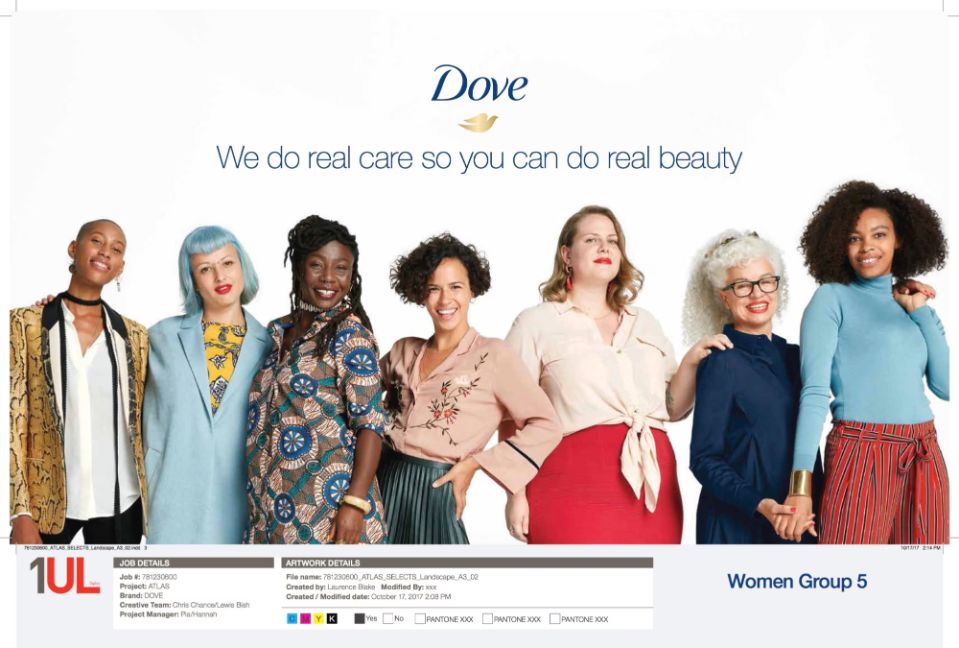
The tone, however, shifts depending on the message. In more general marketing, the tone is softer and encouraging, designed to make people feel comfortable and included.
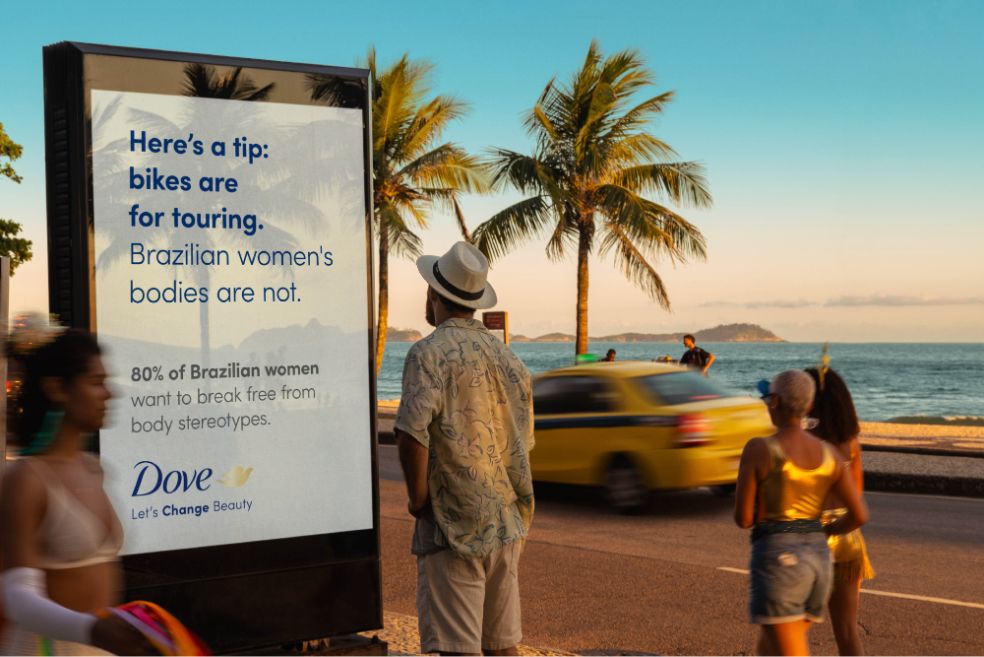
In awareness campaigns, it becomes more serious and reflective, especially when addressing topics like self-esteem or body image.
Why it works: Dove’s messaging works because it feels real, inclusive, and emotionally honest. By focusing on authenticity instead of unrealistic beauty standards, this soap brand builds trust and a stronger emotional connection with its audience.
4. Harley-Davidson

Harley-Davidson doesn’t use a lot of words. Their messaging is short, punchy, and powerful. Things like “Live to ride.” or “All for freedom, freedom for all.” There’s no fluff, no extra explanation. Just confident statements that feel carved in stone.
| “It’s not just a bike. It’s a lifestyle” — The essence of Harley’s voice

That matches exactly who their customer is: someone who sees their motorcycle as part of their identity, not just a way to get around. The voice talks to riders like they already get it.

Their voice is bold, rugged, and emotionally charged, often speaking to a sense of independence and breaking away from convention.

Instead of sounding corporate or polished, Harley-Davidson communicates like a lifestyle brand rooted in identity and attitude.
Why it works: Harley-Davidson’s voice works because it is consistent and deeply tied to a strong sense of identity and lifestyle. It doesn’t try to appeal to everyone, which makes it feel more authentic and emotionally powerful to the people it is speaking to.
5. Mailchimp

Email marketing sounds boring, right? Mailchimp made it feel approachable. Their writing style feels like a smart friend walking you through something, rather than a manual telling you what to do. They use plain language, short sentences, a monkey logo and a helpful tone throughout their product, help docs, and emails.
| “We want to help you grow your business.” – Not “Leverage our platform to optimize your marketing funnel.”
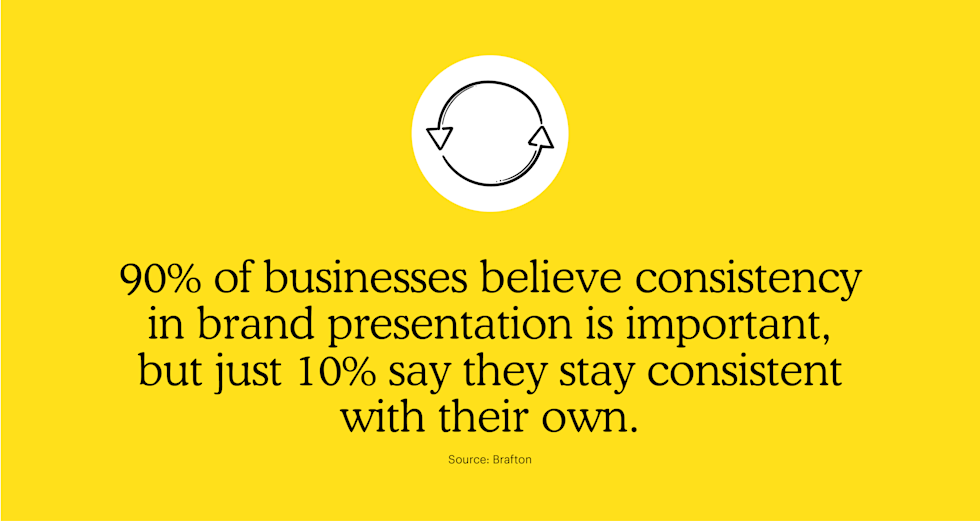
Their voice is consistent: smart, approachable, and conversational. They position themselves as an experienced marketing partner that simplifies complex ideas.

As their official style guide explains, they aim to “demystify B2B-speak” and speak in plain, human language rather than jargon-heavy corporate messaging.
Why this works: Mailchimp’s marketing works because it makes a complex product feel simple and approachable. Its clear, human tone builds trust and helps users feel confident using the platform.
6. Innocent Drinks

Innocent Drinks puts little notes on the bottom of their bottles. Things like “Stop looking at my bottom.” If it sounds silly, well, that’s probably because it is.
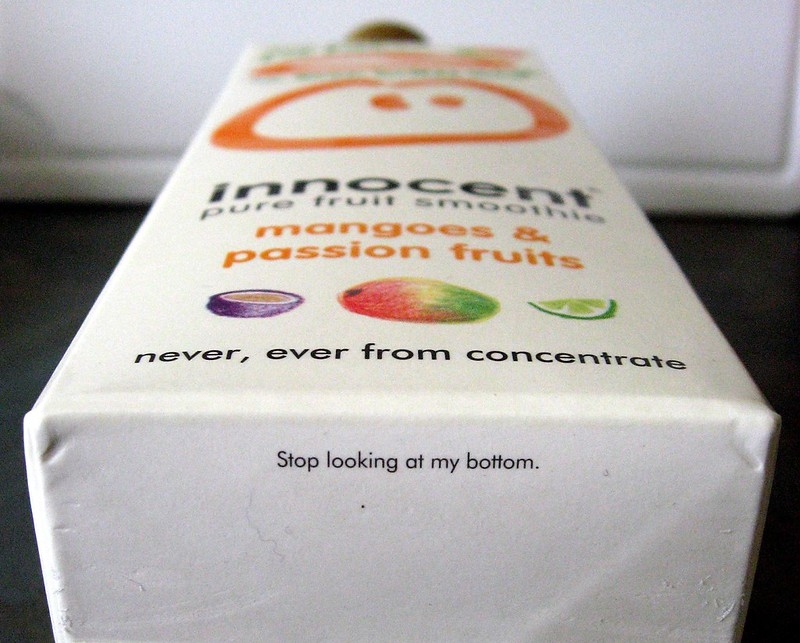
And that’s exactly why people love it. Their voice is playful, unpretentious, and feels like a message from a friend rather than a brand trying to sell you something.
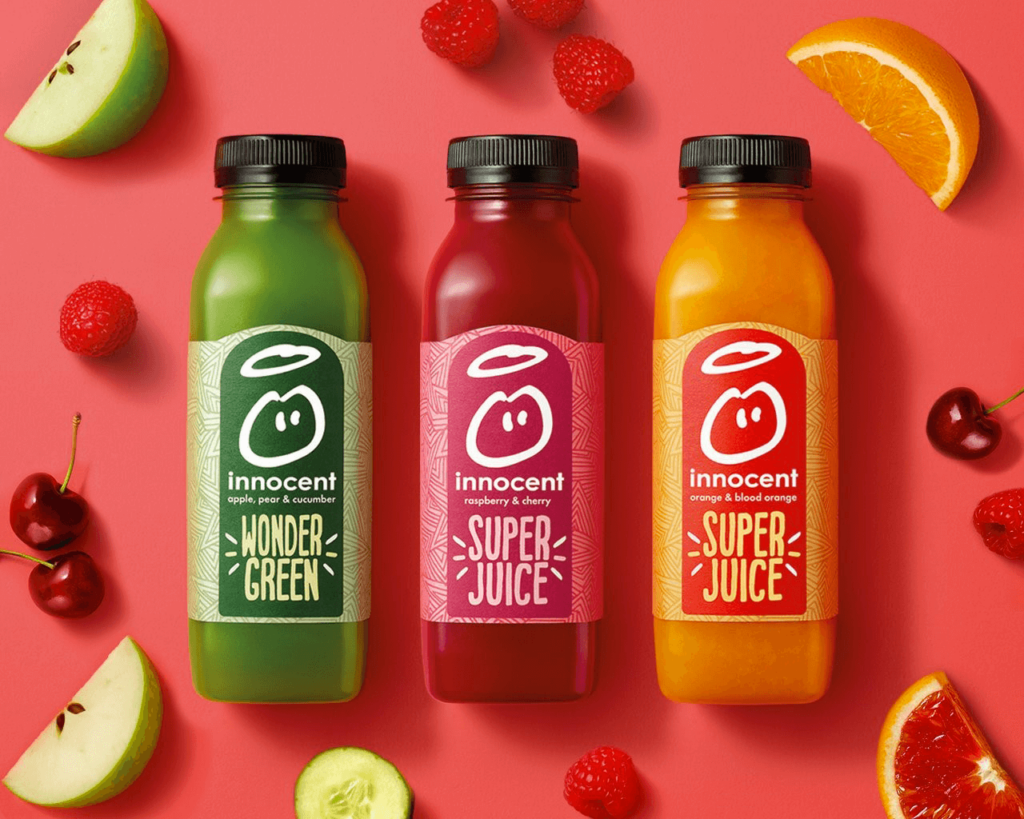
| “We’re just trying to make good drinks and do good things.” – The spirit of Innocent’s voice
Their brand voice is consistently warm, playful, and informal. It often includes light humor, wordplay, and self-aware jokes.
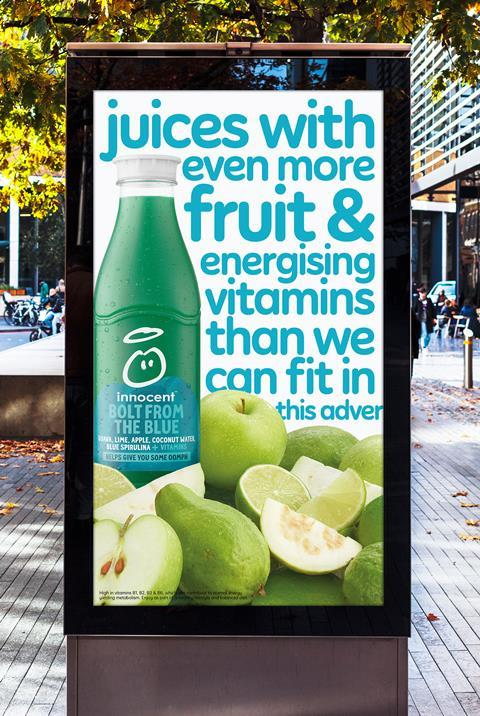
Their tone shifts depending on context, but always stays aligned with that playful identity. In advertising, the tone is often humorous and quirky
Why this works: Innocent Drink’s marketing feels consistent, human, and emotionally approachable.
7. FedEx vs UPS
FedEx and UPS are two global logistics brands that operate in the same industry but use very different brand voices and tones to shape how customers perceive them.
| Aspect | FedEx | UPS |
| Voice | Confident, precise, solution-focused | Dependable, human, relationship-focused |
| Tone | Professional, direct, efficiency-driven | Warm, steady, service-oriented |
| Brand Focus | Speed, global performance, reliability | Trust, consistency, customer relationships |
| Marketing Style | Clean, outcome-driven messaging | Human-centered storytelling, real-world focus |
| Emotional Feel | Fast and high-performance | Reliable and grounded |
FedEx

FedEx uses a brand voice that is confident, precise, and solution-focused. Their messaging often emphasizes speed, reliability, and global reach. The tone is usually professional and straightforward, reflecting their position as a high-performance logistics provider.

In marketing, FedEx highlights outcomes like “on-time delivery” and “global connectivity,” often using clean visuals and clear messaging. The brand doesn’t rely heavily on humor or personality, but focuses more on trust, efficiency, and problem-solving.
UPS

UPS has a more human, dependable, and grounded voice. While still professional, their tone feels slightly warmer and more personal compared to FedEx. They often highlight relationships, consistency, and the people behind the deliveries.

Their marketing tends to emphasize reliability and care, often showcasing drivers, businesses, and real-world logistics in action. This gives UPS a more relatable, service-oriented feel.
FedEx and UPS are two global logistics brands that operate in the same industry but use very different brand voices and tones to shape how customers perceive them through brand differentiation.
Same industry. Same service. But different voices that reflect different values. FedEx says: We’re fast and dependable. UPS says: We’re here to help and serve. One isn’t better than the other; they’ve just made different choices about who they are.
How to Find Your Brand Voice
If you’re not sure what your brand voice is, don’t worry. Most brands figure it out by doing the work, not by waiting for inspiration. Here are four steps to get you started.
Start with your core values and personality
Your brand voice has to come from somewhere real. Start with your mission and values. What do you believe in? What kind of company do you want to be? Your voice should reflect those answers.
If you value simplicity, your writing should be simple. If you value boldness, your writing should take risks.
Know your audience
Your voice needs to connect with actual people. Think about who you’re talking to. How do they speak? What do they care about? A voice that works for Gen Z on TikTok might feel weird to a 55-year-old B2B buyer. Research your customers and let that shape how you communicate.
Audit your existing content
Read through your current social posts, emails, and website copy. What patterns do you notice? Where does the writing feel authentic? Where does it feel off? This audit helps you find what’s already working and spot the inconsistencies worth fixing.
Create brand voice guidelines
Once you know your voice, write it down. Document 3 to 5 adjectives that describe your voice, give real examples of good and bad writing, and share them with your team. Guidelines make it easier for everyone to write in the same voice, even if it’s not you doing the writing.
How to Create a Social Media Brand Voice
Social media is where your brand voice gets tested the most. You’re posting constantly, responding to people in real time, and showing up on platforms that all feel a little different from each other.
Here’s how to make it work.
- TikTok/Reels: Be casual and real when creating TikTok videos. People scroll fast. Get to the point quickly and don’t sound like an ad.
- X (Twitter): Be concise and sharp. One idea per Twitter post. Humor and opinions tend to do well here.
- Instagram: Pair strong visuals with captions that feel warm and on-brand when posting on Instagram. Don’t over-caption.
- LinkedIn: More professional but still human. Share perspective and insights on your LinkedIn posts, not just announcements.
A few practical things that help:
- Mirror your audience’s language: Pay attention to how your followers write and speak. Use similar vocabulary. You don’t need to force slang, but you shouldn’t sound like a textbook either.
- Build caption templates: Templates aren’t about being robotic. They’re about making sure your posts have a consistent structure and feel, especially when multiple people are writing them.
- Use a voice chart for your team: A simple chart with dos and don’ts can go a long way. For example: We say ‘here’s how,’ not ‘leverage our solution.” Specifics beat vague guidelines every time.
Conclusion
Brand voice isn’t something you figure out once and forget about. It grows and gets clearer over time as you write more and learn what feels right for your brand.
But the core idea is simple: know who you are, know who you’re talking to, and let both of those things guide how you write.
The brands mentioned in this article have all found their voice by being clear about their values and consistent in how they show up. You can do the same.
Start small. Pick three words that describe how your brand should sound. Then check your next piece of writing against those three words. Does it match? If not, adjust. That’s really all it takes to get going.
Ready to find your brand voice? BrandCrowd can help you create a logo and complete brand identity that actually reflects who you are: fast, simple, and professionally designed. Get started today and bring your brand to life.