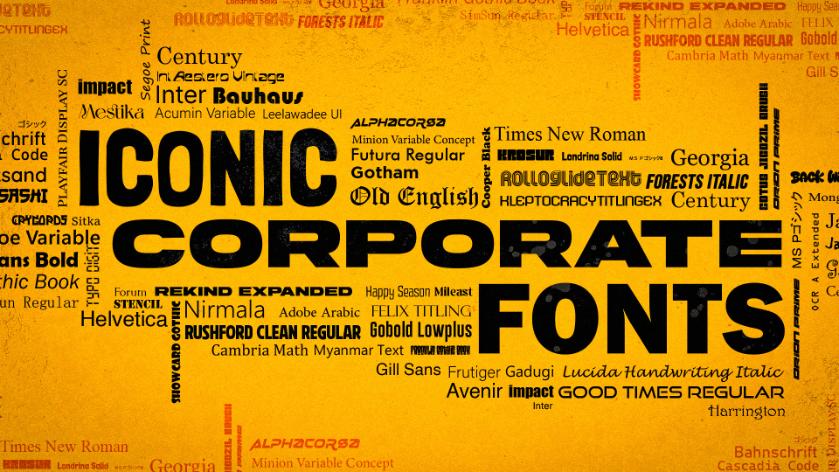
Iconic Corporate Fonts and What Makes Them Memorable
A single letter can make or break a billion-dollar brand. The difference between Times New Roman and Comic Sans isn’t just aesthetic preference. It’s the gap between commanding respect and becoming a laughingstock.
Typography is the ultimate stealth marketing weapon that works whether you’re building your brand with a logo maker or investing in custom design.
It operates around the clock without budgets, campaigns, or strategy meetings. The right font makes people trust you instantly. The wrong one makes them question everything else about your business.
This article reveals the secret psychology behind the world’s most memorable corporate logos.
You’ll learn why certain corporate fonts become legendary, discover what separates iconic typography from generic choices, and get practical strategies for choosing fonts that instantly elevate your brand’s credibility.
Why Typography Drives Brand Success
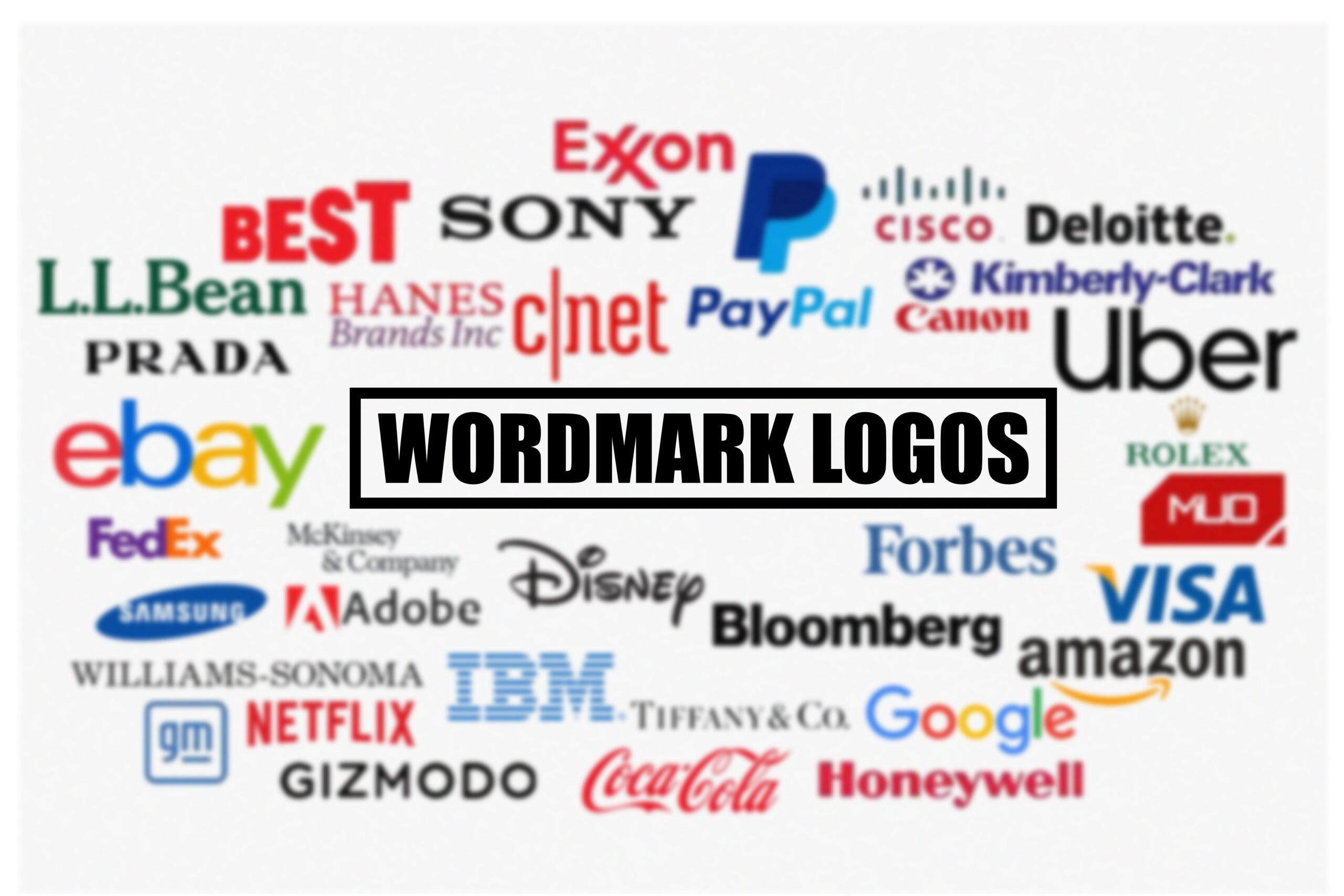
Your font choice is never just about making words readable. It’s about creating an instant emotional connection with your audience.
Typography as a brand voice
Think of fonts as the tone of voice for your written communication. A bold sans-serif font shouts confidence and modernity, while an elegant serif whispers tradition and trustworthiness. Just as you wouldn’t use the same speaking tone for a funeral and a rock concert, you shouldn’t use the same font for a law firm and a skateboard company.
Great corporate fonts work everywhere from business cards to billboards, smartphone screens to highway signs. They build trust by meeting customer expectations. When people see professional typography, they assume professional service.
How cultural recognition creates brand shortcuts
The most successful corporate fonts become visual shortcuts to everything a brand represents. You don’t need to see the company name to know that flowing Coca-Cola script means refreshment and happiness. The geometric precision of Futura automatically suggests innovation and progress.
Times New Roman feels academic because we grew up seeing it in textbooks. Helvetica feels modern because forward-thinking companies have used it for decades. This cultural baggage becomes your advantage when chosen strategically.
Iconic Corporate Fonts That Changed Branding Forever
The world’s most recognizable brands didn’t choose their fonts by accident. Each decision reflects careful consideration of psychology, functionality, and brand positioning.
Helvetica
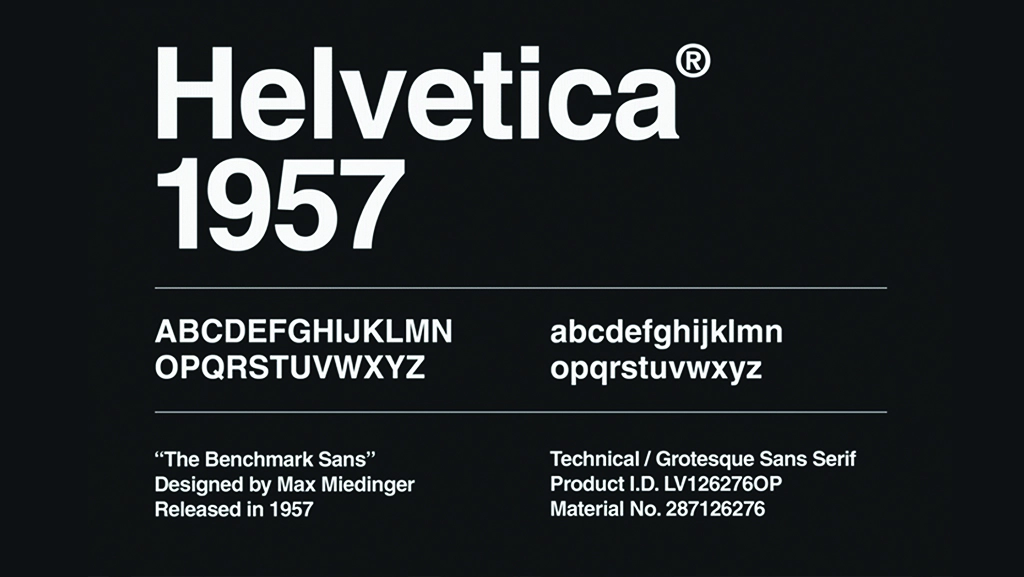
Clean, neutral, and endlessly versatile, Helvetica might be the most successful font in history. Companies like BMW, American Apparel, and Lufthansa have used it to communicate timeless modernity and Swiss precision.
What makes Helvetica work is its almost invisible perfection. The letterforms are so balanced and readable that they never distract from the message. This neutrality lets brand personality shine through content and context rather than competing decorative elements.
In accessible alternatives, BrandCrowd’s Easy BC mirrors Helvetica’s clarity and restraint. This font gives brands a professional and timeless voice that works across industries. Many logos using Easy BC show how simplicity can become a powerful design statement.
See Easy BC in action with the logos below:
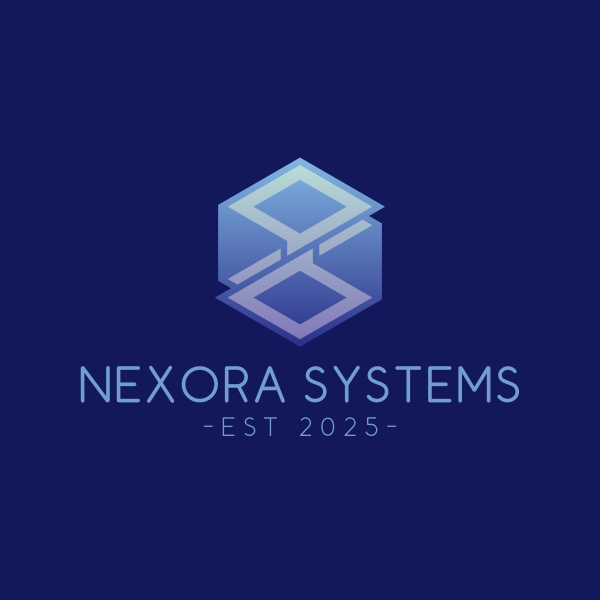

Organic Wellness Emblem by BrandCrowd
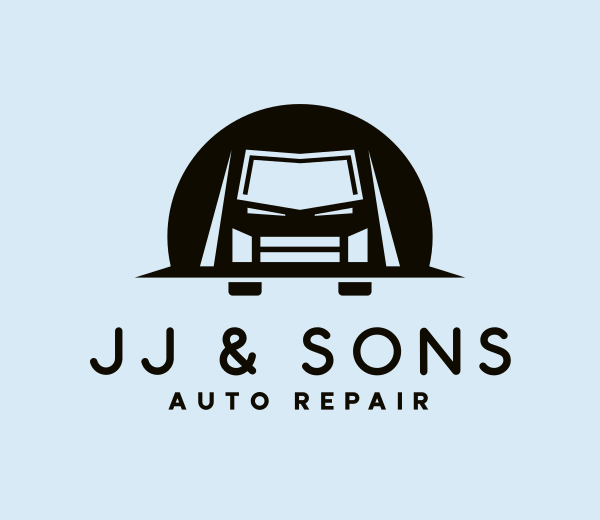
Van Truck Transport by BrandCrowd
Futura
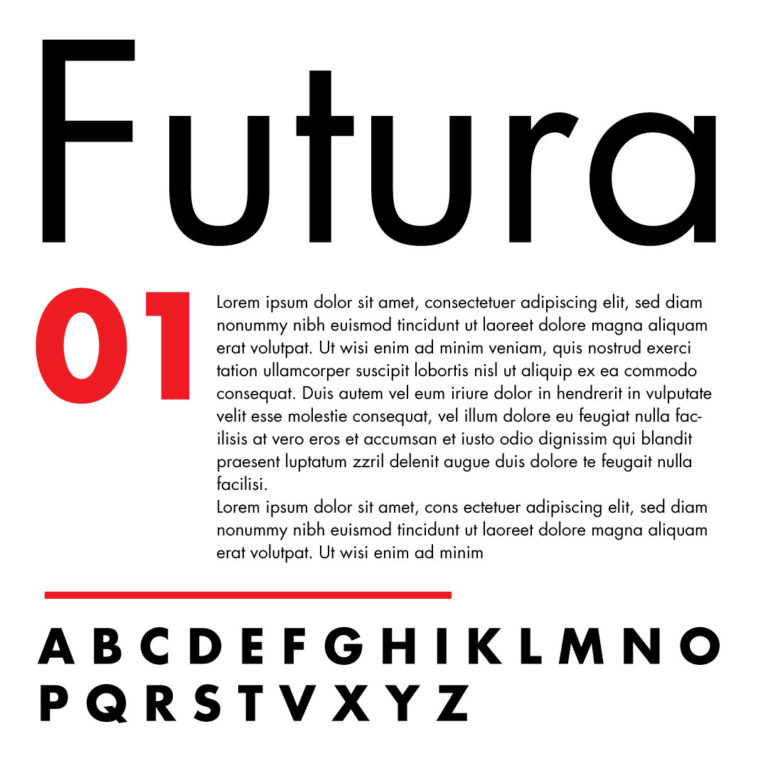
Geometric and forward-looking, Futura has powered some of history’s most ambitious brand messages. Volkswagen‘s early branding and Nike’s “Just Do It” campaign relied on Futura’s perfect balance of strength and optimism.
The magic of Futura lies in its mathematical precision. Every curve and angle feels intentional and engineered, making it perfect for brands that want to suggest innovation, efficiency, and forward thinking.
That same geometric precision comes through in Quadra BC, a BrandCrowd font that projects boldness and modernity. It often appears in logos that lean on minimalism and structure to communicate innovation.
Below are some logo samples that use Quadra BC:
Professional Consulting Letter X by BrandCrowd

Golf Course Location by BrandCrowd

Wellness Yoga Meditation by BrandCrowd
Gotham
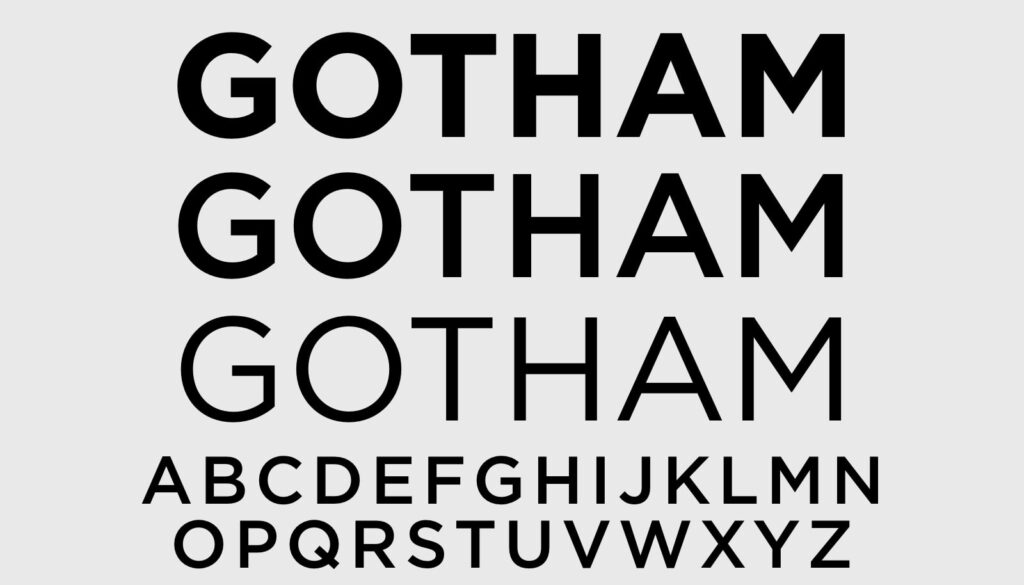
Contemporary and authoritative, Gotham became famous during Obama’s 2008 presidential campaign but has since become the go-to choice for brands that must project both approachability and strength.
Gotham works because its wide and open letterforms suggest transparency and confidence. It’s serious enough for financial services but also friendly enough for lifestyle brands.
BrandCrowd’s Brave BC font echoes Gotham’s spirit. Its open shapes and confident stance make it well-suited for logos that balance professionalism with friendliness.
See samples of some logos using Brave BC below:

Military Star Eagle Insignia by BrandCrowd

Arabian Temple Palace by BrandCrowd
Retro Neon Business by BrandCrowd
Times New Roman
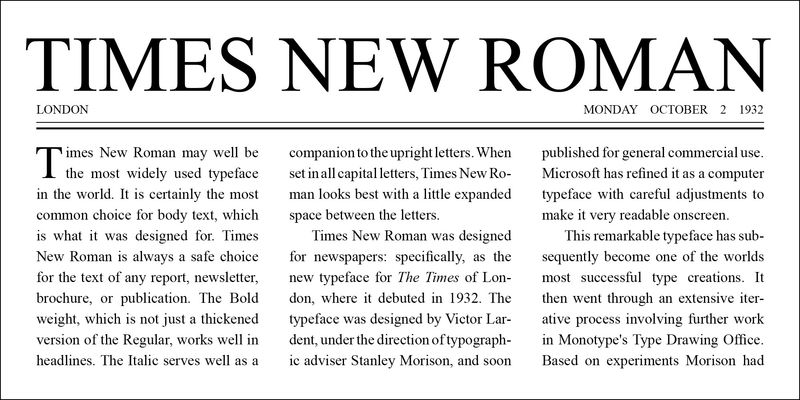
The traditional serif that dominated newspapers and academic publishing for generations, Times New Roman still signals institutional authority and scholarly credibility. Publications like The Times continue to rely on its readability and gravitas.
Times New Roman works because it feels established and trustworthy. The serif details add elegance and improve readability in long blocks of text. It remains unbeatable for brands that must communicate tradition, expertise, and reliability.
For those aiming at a similar tone on BrandCrowd, Letterpress BC delivers the same sense of heritage and credibility. Many logos created with it feel steeped in tradition and classic craftsmanship.
Check out these Letterpress BC logo examples:
Classic Seaside Lighthouse by BrandCrowd

Simple Modern Industrial by BrandCrowd

Podcasting Radio Studio by BrandCrowd
Avenir
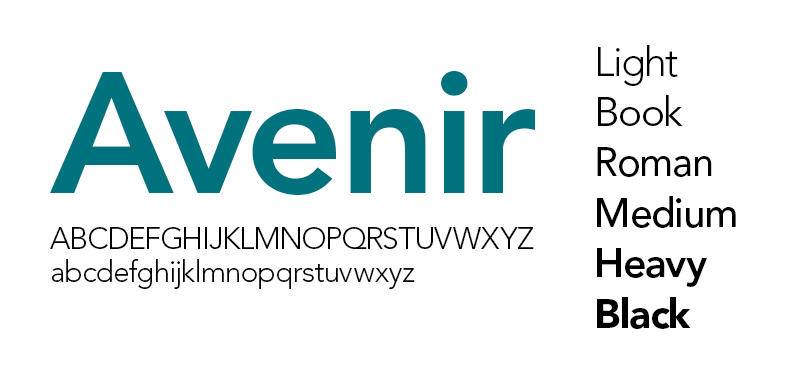
Apple often uses Avenir for certain UI elements because it perfectly balances technical precision with human warmth.
Avenir succeeds by avoiding the cold perfection of geometric fonts while maintaining clean, professional lines. The slightly organic curves make it feel more human than Helvetica while staying entirely professional.
Within BrandCrowd, Halyon BC captures that same blend of precision and warmth. It regularly shows up in logos that want to appear modern and innovative but still approachable.
Take a look at some logos using Halyon BC below:
Castle Amusement Park by BrandCrowd
Professional Editorial Publication by BrandCrowd

Computer Technology Pixels by BrandCrowd
Frutiger
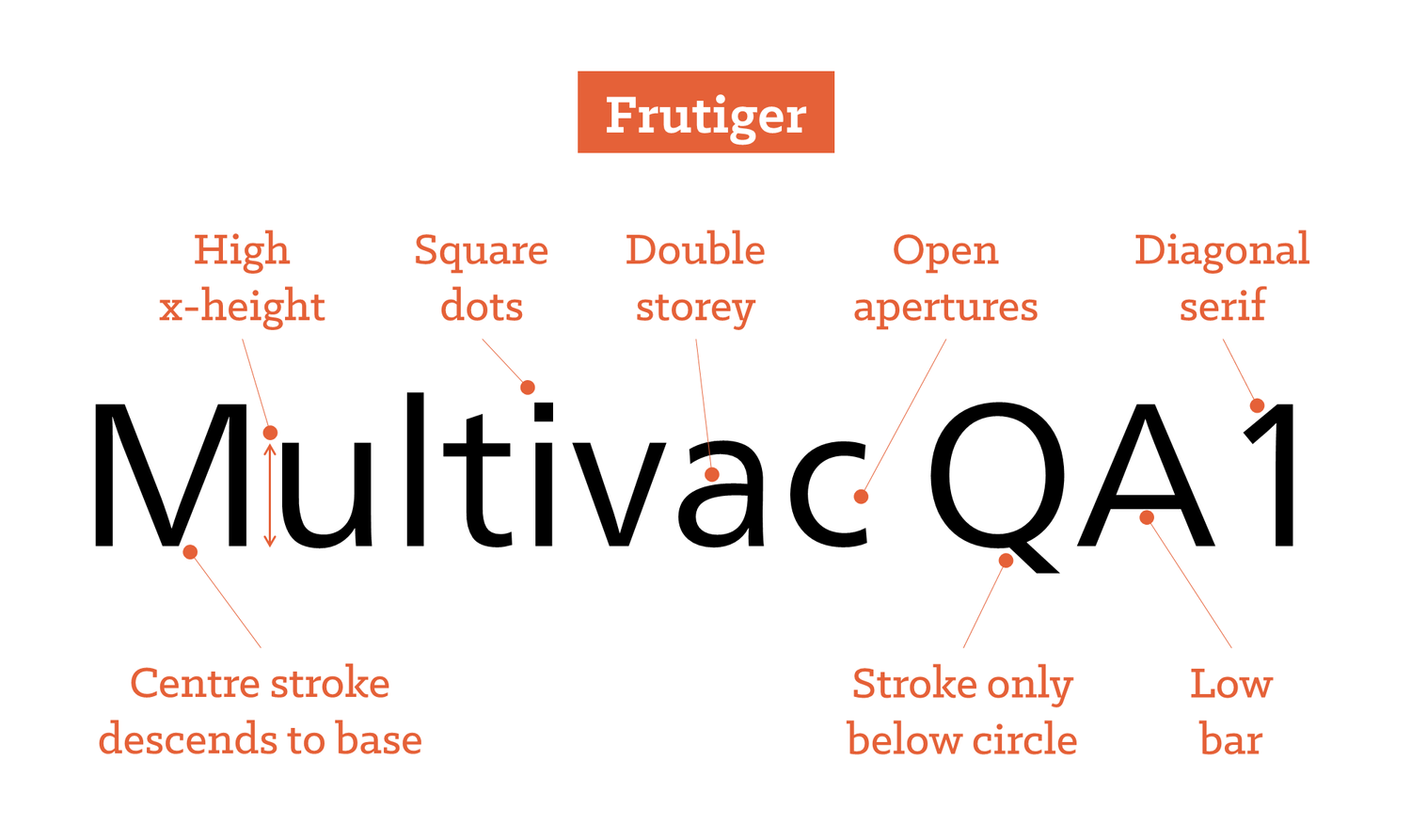
Highly legible and refined, Frutiger was designed for airport signage and has become synonymous with clear and efficient communication. France’s Charles de Gaulle Airport made it famous, but countless brands have adopted its clarity.
Frutiger excels at information hierarchy. The letter spacing and proportions make it incredibly easy to read at any size or distance. For brands that need to communicate complex information clearly, it’s nearly perfect.
That clarity is reflected in Stream BC, a BrandCrowd font that emphasizes legibility above all. It’s commonly chosen for logos where accessibility and functionality are the priority.
Here are some Stream BC logos in action:

Trailer Camping Park Outdoors by BrandCrowd

Lioness Safari Lion by BrandCrowd
Animal Pet Shelter by BrandCrowd
Gill Sans
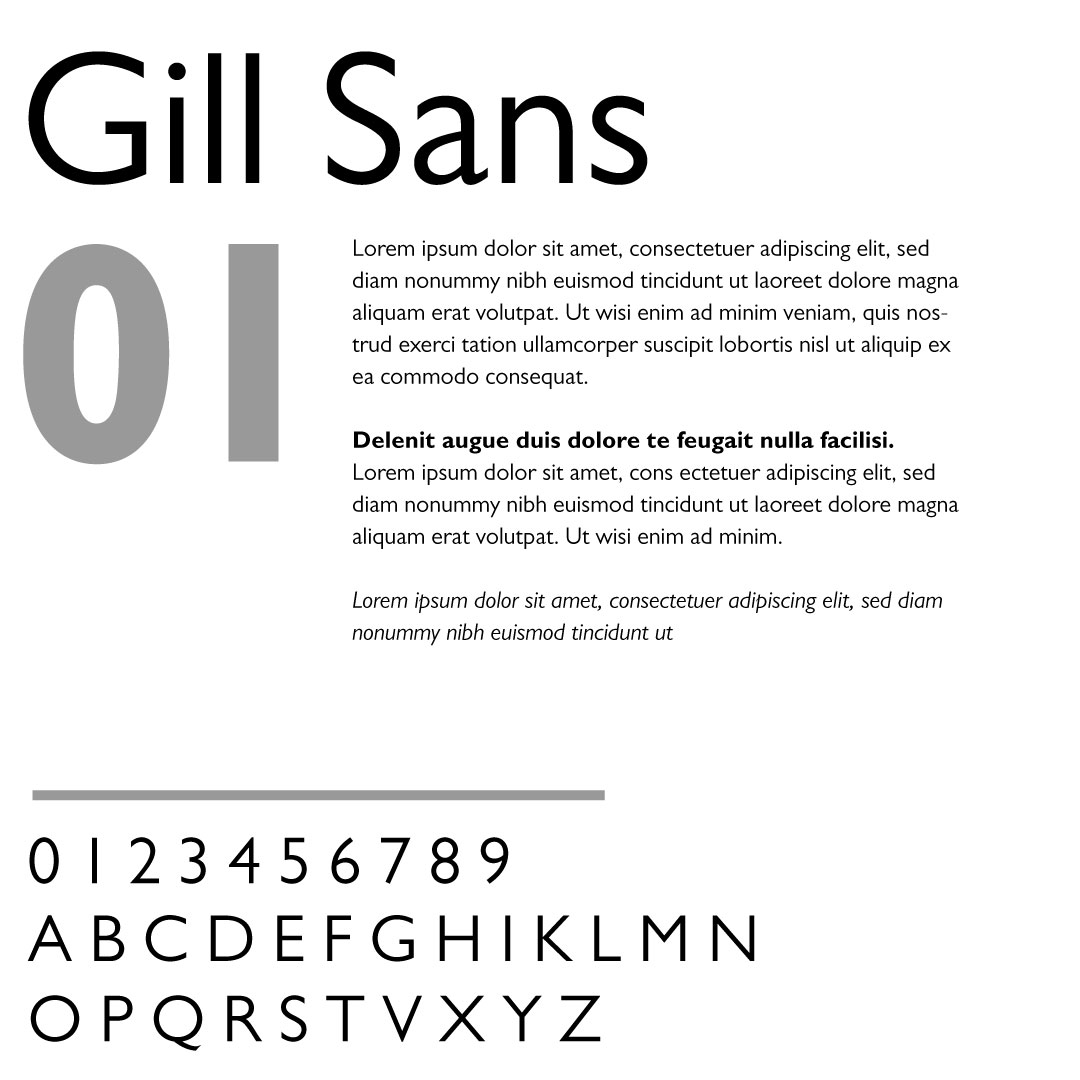
With British heritage and warm neutrality, Gill Sans has been the choice of the BBC and London’s transport system for decades. It manages to feel both authoritative and approachable.
Gill Sans works because it combines the friendliness of humanist fonts with the authority of institutional typography. The slightly quirky details give it personality without sacrificing professionalism.
A close stylistic match is Forge BC, which brings the same approachable authority. Many logos use it to balance reliability with a touch of warmth, making it perfect for service-driven brands.
See how brands could use Forge BC below:
Mechanic Handyman Wrench by BrandCrowd
Bookmark Library Pillar by BrandCrowd
Plumbing Wrench Maintenance by BrandCrowd
Custom Lettering
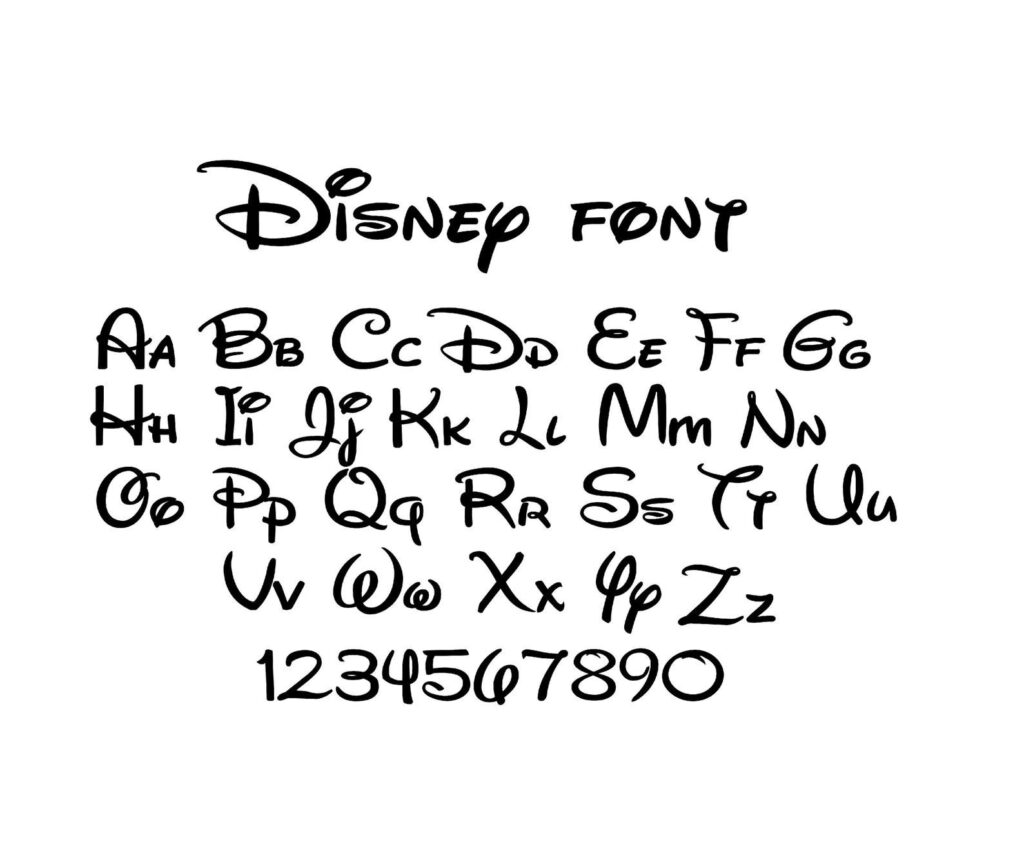
Some brands transcend typography altogether with custom fonts. Coca-Cola’s flowing script and Disney’s magical lettering create instant emotional connections that no standard font could match.
Custom lettering works when brands have such strong personalities that existing fonts feel limiting. The investment is enormous, but the result can be a completely ownable visual asset that no competitor can replicate.
What Makes a Font Memorable?
Understanding why specific fonts stick in our minds helps you make smarter typography choices for your brand.
Legibility across scales
The best corporate fonts work perfectly whether printed on business cards or displayed on highway billboards. This requires careful attention to letter spacing, stroke width, and detail complexity.
Test your font choices at actual use sizes. A font that looks great at 72 points might become unreadable at 8 points. Professional fonts are designed with multiple optical sizes to maintain clarity everywhere.
Distinctive yet balanced characteristics
Memorable fonts have unique characteristics that make them recognizable without conscious analysis. This might be unusually wide letter spacing, distinctive letter shapes, or specific proportions between uppercase and lowercase letters.
The key is balance. Too subtle and your font disappears into generic sameness. Too distinctive and it becomes a novelty that wears thin quickly.
Strategic brand alignment
Your wordmark logos should be a natural extension of your brand personality. A playful startup shouldn’t use the same typography as a corporate law firm. The font should support and amplify your brand message, not fight against it.
Create a brand personality profile first, then find fonts that match. Are you innovative or traditional? Friendly or authoritative? Premium or accessible? Your typography should answer these questions instantly.
How To Choose Memorable Fonts for Your Brand
Understanding font psychology helps you make strategic typography choices that support your business goals.
Align typography with brand strategy
Start with your brand positioning. Are you the heritage choice or the innovative disruptor? The premium option or the accessible alternative? Your typography should reinforce this positioning immediately.
Create a mood board of brands you admire and analyze their font choices. What typography patterns do you notice? How can you apply similar strategies while maintaining originality?
Master font pairing systems
Most successful brand identities use a font pairing system rather than a single typeface. Typically, this involves one display font for headlines and brand elements, plus a highly readable body font for longer text.
The best pairings create visual hierarchy while maintaining brand cohesion. Your display font can be more distinctive and personality-driven, while your body font prioritizes readability and function.
Prioritize clarity over style
Distinctive doesn’t mean decorative. The most memorable corporate fonts achieve recognition through subtle refinements rather than obvious stylistic flourishes. Clarity should always be your priority.
Remember that your typography will be seen in countless contexts you can’t control. It must work in low resolution, poor lighting, and distracted viewing conditions.
Critical Typography Mistakes That Kill Brand Credibility

Learning from others’ mistakes saves you time and credibility. Here are the typography pitfalls that sink otherwise strong brands.
Choosing style over substance
Many fonts look amazing in design presentations but fail in real-world applications. If your logo becomes unreadable on a mobile screen or business card, you’ve chosen style over substance.
Always test typography at actual application sizes before finalizing decisions. Print business cards and view your website on different devices to catch legibility problems early.
Typography overload
Visual clutter kills professional credibility. More than three fonts in your brand system usually signals amateur design decisions. Stick to a primary font plus one or two carefully chosen supporting typefaces.
Instead of adding more fonts, explore the whole family of your chosen typeface. Most professional fonts offer multiple weights and styles, providing plenty of variety within a cohesive system.
Ignoring mobile-first design
Desktop design doesn’t always translate to mobile screens. Fonts that work perfectly on large monitors might become cramped and illegible on smartphones. Consider how your typography performs across all digital platforms.
Pay attention to mobile devices’ line spacing, font size, and contrast ratios. What feels spacious on a desktop often needs adjustment for smaller screens.
Following trends instead of strategy
Typography trends change quickly, but rebranding is expensive. Fonts that feel cutting-edge today might look dated in five years. Choose typefaces with proven longevity over whatever feels trendy right now.
Avoid fonts that everyone else in your industry is using. If all your competitors use the same typography, you’ll struggle to stand out in crowded markets.
Measuring Typography Success
How do you know if your typography choices are working? Here are measurable indicators of successful corporate font selection.
User experience metrics
Test your typography with real users and measure comprehension, reading speed, and subjective preference scores. Actual user feedback always beats design theory.
Tools like readability calculators provide objective metrics, but human testing reveals problems algorithms miss. Pay attention to user comments about clarity, professionalism, and brand fit.
Cross-platform performance
Your typography should look equally professional on high-resolution displays, standard monitors, and printed materials. Fonts that break down at specific sizes or resolutions will hurt your brand’s credibility.
Create a testing checklist covering all brand applications, including business cards, mobile screens, large-format displays, and specialized applications like vehicle graphics, signage, posters, and flyers.
Brand recognition metrics
The ultimate test of memorable typography is whether people remember and recognize your brand. Survey customers about which brand elements stick in their minds most strongly.
Compare your typography’s memorability to that of your competitors. If your fonts blend into industry sameness, they’re not working hard enough for your brand differentiation goals.
Transform Your Brand with Strategic Typography
The world’s most successful brands understand that typography isn’t just about making words readable. It’s also about creating instant emotional connections and building lasting recognition.
From Helvetica’s timeless neutrality to Coca-Cola’s distinctive custom script, memorable fonts become powerful brand assets that work 24/7 to communicate values and build trust.
Take control of your brand’s typographic destiny with tools designed for strategic font selection. BrandCrowd offers access to thousands of customizable designs and professional font options specifically curated for branding.
With its extensive library of fonts and instant customization tools, you can experiment with different typographic approaches and see how they work with your brand identity in real-time.
Because in a world of endless choices, the right font doesn’t just spell out your name, it spells out your future.
Read more on branding and design here:
- 5 Logo Variations Your Brand Needs
- Sensory Marketing Strategies for E-commerce Businesses
- Who Changed Their Look? A Mid-2025 Roundup of Brand Logo Updates
FAQs on Corporate Fonts
1. What is the best font for corporate branding?
The best corporate font depends on your brand positioning and industry. Helvetica works for versatile, modern brands, while serif fonts like Times New Roman suit traditional industries requiring authority.
2. What are the five basic font categories?
The five fundamental font categories are serif (Times New Roman), sans-serif (Helvetica), script (cursive styles), monospace (Courier), and display (decorative fonts). Each serves different communication purposes and evokes distinct psychological responses.
3. What makes a font professional?
A professional font prioritizes clarity and readability over decoration. It maintains legibility at all sizes, works across digital and print media, and supports your message without overwhelming it.
4. Which font is considered most professional?
Helvetica is considered the most professional due to its neutral design and proven corporate track record. Gotham and Arial are strong alternatives, depending on whether you need approachability or versatility.
5. Why do most corporations use sans-serif fonts?
Sans-serif fonts like Helvetica and Arial offer clean, modern aesthetics with excellent cross-platform readability. Their simplicity ensures consistent brand presentation across websites, mobile apps, and printed materials.
Hannah Suroy suroy brings clarity to complex topics across entertainment, business, and creative industries. She specializes in translating industry trends and innovations into engaging content that helps readers understand the creative process behind the work they love.
Original Images by Selwyn Legaspi