Branding vs. Marketing: A Definitive Guide
If you have a business, you probably have heard of “branding” and “marketing” at some point. You may have thought they were just buzzwords. But, in reality, they are powerful tools you can use to grow your business.
These two terms are often used interchangeably in conversations. However, they could not be more different from each other. Not to mention the misinformation about what makes the two. Branding is always thought of as just the logo design, while marketing is often dismissed as simply handing a flyer in the streets.
Understanding the differences between branding vs. marketing, knowing how each works, and learning how to weave them together can help entrepreneurs like you craft a strategy that will resonate with your audience and turn your small business into a household name.
Sounds complicated? This is where this guide will come in. By the end of this article, you will know everything about branding vs marketing and learn how to integrate them to kickstart your business to new heights.
What is branding?
Branding is the process of building a brand’s identity or image through your messaging, themes, and visuals.
Think of it as turning a brand into a person. Each person has a unique way of talking, a sense of style, and values they stand for. It’s how your friend Jane who loves to dress bohemian and is passionate about saving the environment, is different from your coworker Bob who is an adrenaline junkie and does skydiving for fun.
The same goes for brands. How their logo looks, how they communicate online, their mission and vision—all of this is what makes their branding. This unique identity is what will make their audience remember them and set them apart from their competitors.
Key elements of branding

Branding is not just composed of one thing. It’s composed of multiple element—tangible and intangible—that work cohesively together to create a whole identity.
These elements are:
- Visual identity—This is how your brand presents itself visually. It’s composed of your logo, color palette, typography, art style, photography style, packaging, mascot, merch, in-store decor, etc.
- Brand personality — This is the trait or identity that your brand wants to embody. Friendly and approachable? Powerful and bold? Sporty and athletic?
- Brand voice—This is how your brand communicates with your audience. It’s built by your writing style, language, tone of voice, or slang you use.
- Brand values — Beyond making a profit, why does your brand exist? What are your mission and vision? What does your brand stand for?
- Brand story — This is the origin of your brand. Why and how did you start your brand? What was your journey till now?
- Brand positioning—This is the unique value you offer to your customers. Why should they choose you over the others? What does your brand have that others don’t?
Why Branding Matters
Branding is important because:
- Builds recognition—The stronger your branding, the easier it is to remember and identify. For example, people can easily recognize Google’s color scheme. This is why each of their apps (Drive, Chrome, Maps, etc.) is easily recognizable as part of the Google umbrella just from their logos.
- Increased customer loyalty — People are more loyal to brands they identify with. This can be because they support the same advocacies, like a person supporting Allbirds because they also care for the environment. Sometimes, it’s just because the overall vibe of the brand aligns with their style. For example, some people exclusively wear Stussy, while some prefer the glitz of Louis Vuitton.
- Premium pricing potential — Brands that position themselves as the highest quality or superior to their competitors can command higher prices, even if they may have similar offerings. For instance, Apple emphasizes its quality and degree of innovation. As a result, people are more willing to shell out money for Apple products even if there are alternatives in the market.
- Employee alignment and culture — A strong brand is important not just for your customers but also for your team. It gives your employees clear direction and meaning. They will be more productive since they know what they are working for and why they are doing it. It also makes attracting and retaining employees who align with your goals, mission, and culture easier.
- Long-term business value — Branding is not about immediate sales. Instead, it’s an investment for the future. A strong and recognizable brand makes you more attractive to investors and stakeholders. Branding can also maintain customers’ interest and loyalty even through changing trends, economic downturns, or a PR misstep. This provides stability even through challenging times.
What is marketing?
Let’s now move on to marketing.
Marketing is a brand’s efforts to promote itself to its audience. Its focus is sending the right message to the right people at the right time.
If branding is about what makes a person, marketing is about how a person will “sell” themselves. Let’s say you have friends who are applying for a job. One may write a long and heartfelt cover letter, one may directly contact the company through social media, while one may try a gimmick to get their resume to stand out (remember the guy who sent his resume inside a box of donuts?!).
The right technique will depend on the position and company you are applying for. The donut resume guy’s tactic will be appreciated if he applies for marketing or sales for a company that brands itself on fun or innovation. But if it’s a data analyst role for a strait-laced financial company? Then it’s a colossal blunder.
The same logic applies to brand marketing. It’s all about finding what your customers want, tailoring your message to convey that accurately, and sending the message just when they need to see it the most.
Key components of marketing

Just like branding, marketing is not just a one-and-done. It’s a whole process composed of multiple strategies with the end goal of communicating a specific message to your customer.
Marketing is built by the following:
- Market research — This is all about understanding your audience’s needs, goals, preferences, and pain points. Who is your audience? Why should they want or need your product? What problems can your product solve for them?
- Market strategy — This is the overall plan to reach your customers. This includes your product’s unique selling point, the company’s value proposition, and your key messaging.
- Marketing channels — Which platform will you use to reach your audience? Is it through social media? Email marketing? Or ads?
- Marketing campaigns – What objective do you want to achieve for this particular campaign? Are you launching a new product? Announcing a new brand ambassador? Doing a huge Black Friday sale?
- Marketing analytics – This is about tracking, monitoring, and studying the data of your efforts to optimize your future campaigns.
Types of Marketing
Marketing comes in various forms, all of which are tailored to fit a specific audience, platform, and goals. Some of the common types are:
Traditional marketing
This is about using offline channels to reach your audience. This can be through TV, radio, or print ads. Event marketing, such as promoting your brand at trade shows, exhibits, or conventions, is also part of traditional marketing.
Traditional marketing is best used if your target audience is not very active online. It’s also great for building general awareness and reaching many people since traditional ads are everywhere. Anyone can easily see a poster, billboard, or transit ad.
Social media marketing
This involves promoting your brand on platforms like Facebook, Instagram, Twitter, TikTok, LinkedIn, Pinterest, or Reddit. It includes organic efforts such as posting content or paid efforts such as boosting a post or running an ad campaign.
Looking to add social media to your business? Check out our Guide To Different Social Media Design Formats or Guide to Instagram Ads.
Email marketing
Email marketing is about sending targeted messages directly to your audience’s inbox. These messages can include updates to their orders, a welcome message after signing up for your newsletter, a roundup of useful blog articles, or vouchers they can use.
Content marketing
This focuses on creating useful or engaging content for your audience. This can be in the form of blog articles, infographics, podcasts, ebooks, case studies, or tutorial videos.
Content marketing is not always about being educational, though. A behind-the-scenes video at your company, a funny and relatable TikTok video, or a “What I Wear in a Week” reel is still content. So long as your audience finds it engaging or relevant to their interests, it’s great content.
Influencer marketing
This involves working with influencers or brand ambassadors and having them create content that promotes or highlights your products. This can be an in-depth product review, a short-form video where they show how your product works in their day-to-day life, or even a picture of them wearing your product.
Influencer marketing is effective if you are aiming to reach a niche audience or if you want to appear more authentic when promoting your products.
Search engine marketing (SEM)
SEM combines organic search engine optimization (SEO) efforts with the power of pay-per-click (PPC) advertising to boost a website’s visibility.
SEO is focused on optimizing your website to rank higher in search. You can do this by creating content that contains your target keywords, improving technical aspects such as page speed, and getting backlinks from reputable sites.
PPC, on the other hand, is when you run ads that appear on search engines like Google or on social media platforms like YouTube and Facebook. This drives clicks and traffic to your website, boosting your visibility.
Experiential marketing
This form of marketing is all about providing an interactive and immersive experience for your customers.
This can be done through workshops, product demos, interactive displays, live events, or VR.
An example is Gatorade. They hosted a pop-up event where people can experience a Combine, a series of physical tests that professional athletes undergo. Aside from being a fun event, it reinforces its branding as the top sports drink that athletes rely on.

Source: Gatorade (from Mountain Trout Photography)
Another is IKEA Place. It’s an app where you click a product and see how it will look when “placed” in your room. All the virtual products are in 3D and are true to scale, so you can “test” them out before you even buy them.

Source: IKEA
Why Marketing Matters
Your business needs marketing since it:
- Builds awareness — No matter how good your product is, it’s meaningless if people don’t know you exist in the first place. Marketing can help people discover your product and brand. It’s even more important if you are a new business looking for your first customers or a small business competing with established companies.
- Drive sales and conversions — Marketing convinces your customers to take action, whether adding your product to their cart, signing up for your online course, visiting your new location, or following your social media pages.
- Retains customers—In addition to bringing in new customers, marketing also helps keep your existing customers happy and loyal. This can be done through a rewards card, birthday gifts, vouchers after purchase, or exclusive events.
- Creates connections—Marketing is not just about telling people to buy stuff. It’s also about building bonds with your customers through your content. This can be done by building a community where you freely engage and talk to your customers and where they can also chat with their fellow customers.
- Keeps you relevant—There are millions of businesses in the world. Every day, these businesses launch a new product or participate in trends. If you don’t keep up, you will fade into obscurity. Marketing lets you keep your brand at the forefront of your customers’ minds, even if you may not have a big event right now.
The Key Differences Between Branding vs. Marketing
Branding and marketing may look similar at first glance, but their core purposes are different.
To summarize:

We can liken the two to a house. Your branding is the foundation or the structure. Marketing is the decoration and interior design that will convince people to buy the house.
The Relationship Between Branding and Marketing
They may be two different concepts, but they are closely related to each other. They support each other and amplify the effect of the other.
How branding supports marketing
A strong brand provides the foundation for your marketing.
The more recognizable your brand is, the stronger the effect of your marketing campaigns. An example is Spotify. All their marketing materials use the same font, color palette, and imagery style as their branding. Even if you just get a short glimpse of their ad, you immediately recognize them as Spotify.
It’s also easier to have a consistent message in your campaigns. Nike’s brand of “Just Do It” is instilled in all of its materials. Whether it’s a commercial for its new athlete ambassador, a banner ad for its leggings, or a new virtual try-on on its app, it all conveys the same message of athleticism, passion, and surpassing your limits.
Customers are more likely to trust brands they recognize. Similarly, it’s easier to convince people to buy from you if they already know you.
Here’s a scenario: If you’re buying a microwave for the first time, will you buy from a popular brand or one you never heard of? You’ll likely buy from the known brand, even if the unknown brand is cheaper or lists down the same specs. This is because strong branding is essentially a mark of quality and credibility—the belief that no brand will be popular if its quality is bad.
How marketing amplifies branding
Marketing gives your business a voice. It spreads the word about your brand, products, and services.
If your branding makes your marketing stronger, the same logic applies to the reverse. The more you market, whether through social media, email campaigns, or tailor-made print-on-demand products, the more people become aware of your brand, making it more recognizable and familiar. Leveraging an influencer marketing platform can amplify this reach even further by connecting you with authentic voices that resonate with your target audience.
Marketing also allows you to tell your brand’s story and purpose. Whether it’s a customer testimonial video, a personal story from the founder, or an advocacy video, you can convey your brand’s mission and vision. Incorporating services such as WANotifier can further amplify your message by delivering real-time updates and engaging your audience more directly. This builds a stronger emotional connection with your audience, fostering stronger brand loyalty.
Marketing can also reinforce your brand’s positioning. An example is the war between Coca-Cola and Pepsi. Coca-Cola is seen as the leader of the cola industry over Pepsi. This means they are more delicious, right?
A blind taste test found that people prefer the taste of Pepsi. So why is Coca-Cola more popular?
The answer is with their marketing. Remember their #ShareACoke? They always reinforce their branding of “fun, joy, friendship, and family” with their commercials, jingles, and campaigns. They consistently use their color palette and typography, and their logo never strayed far from their original look. This makes them easier to remember than Pepsi, which has a slightly weaker brand identity.
The more you market your brand as the best, the more people will believe it. Over time, this can solidify your position as the industry leader over your competitors.
How To Build Your Brand Foundation
Now that you know the importance of branding, it’s time to build one for your business.
Do the following:
Step 1: Define your brand’s values
Source: Starbucks
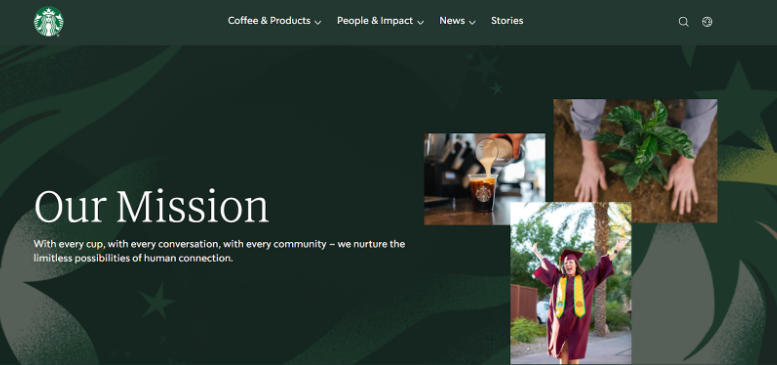
The first step is to identify your core purpose as a brand.
Write down your mission statement (why your business exists), your vision statement (your brand’s long-term goals), and 3-5 principles your business believes in.
Let’s say you sell bamboo toothbrushes. Your mission can be “to provide cheap but high-quality eco-friendly products that make sustainable living easier and more accessible,” while your vision can be “to be the leading provider of sustainable products globally.” Your core values can be “sustainability,” “innovation,” and “accessibility.”
Step 2: Do market research
Next, you need to know your target audience. What are their demographics and psychographics? What are their goals and pain points? This should help you create a customer persona, such as a “30-year-old professional who values sustainability.”
Knowing your audience can help you create a brand aligned with their needs and preferences.
Look at your competitors as well. Analyze their logos, messaging, brand voice, and strategies. You should also determine what makes you unique from them. For example, your bamboo toothbrushes feature ergonomic handles and multiple size options, making them easier to use for people of all ages.
Studying your competitors can help you see what works and what doesn’t. Knowing how you differ from them can also help you find your unique selling point, which you can highlight in your branding.
Step 3: Create your brand identity
Based on what you know from your brand, what personality and traits can you envision if they were real? How would they dress and speak? What age group would they be in? What kind of places would they go to?
Write down adjectives that can describe your brand. From there, you should get an idea of what your identity is. This can be “warm and approachable,” “playful and whimsical,” or “adventurous and bold.” The same principle applies when you’re job hunting. Use compelling resume action words to highlight your achievements and get noticed by hiring managers.
Need more examples? LEGO is creative and imaginative, Glossier is effortless and cool, and Dove is authentic and sincere.
Step 5: Establish your brand voice
Source: Slack
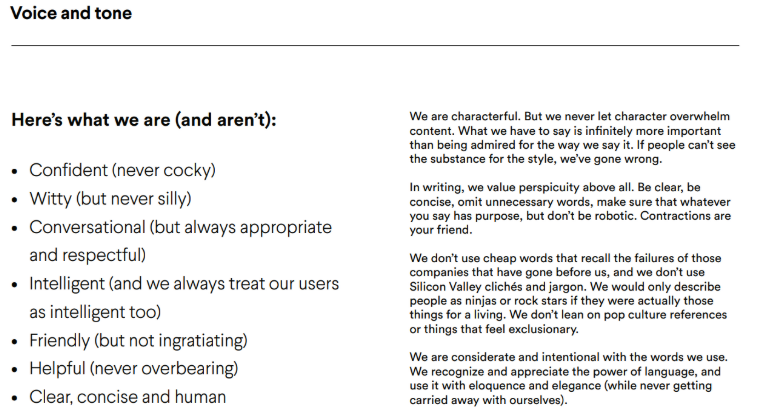
Now that you have your identity, you can set how your brand would “speak,” AKA your brand voice.
Your brand voice should match your identity. For example, a “young and friendly” brand would use casual language and sprinkle some slang or pop culture references. Meanwhile, a luxury brand would use more formal language and speak more sophisticatedly.
Step 4: Design your brand assets
It’s now time to design your visuals. While there are a lot of materials you need to create, you should prioritize creating your logo and having a set color palette, typography, and imagery style first. It’s because they would dictate how your other assets, such as business cards, stickers, or even custom clothing will look like.
Your visuals should always align with your brand identity. If your identity is “fun and playful” it makes sense to use bold colors like sunny yellow and neon orange instead of black and white, right?
Need help in creating a logo? Check out our AI logo generator.
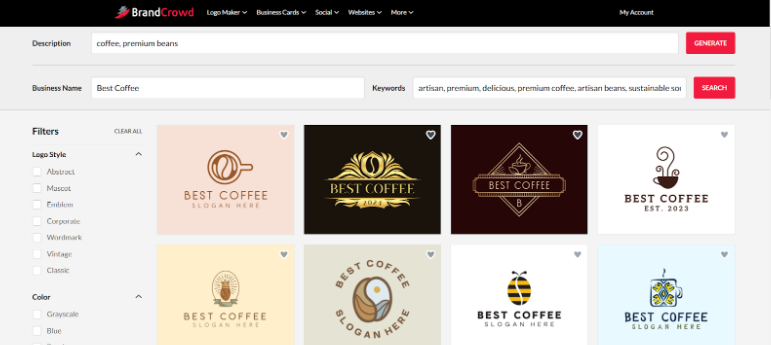
Simply enter your business name, a short description of your business, or even keywords associated with you. We’ll then give you suitable logo ideas in just a few seconds. You can use the logo as is or click to customize. It’s that easy!
Step 6: Create a brand bible
Source: Medium
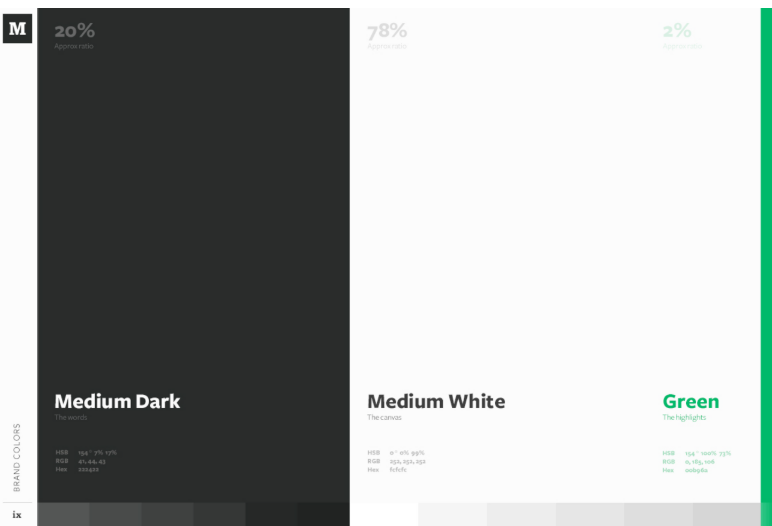
Want to ensure that all your materials will align with your branding? The key is to create a brand bible.
A brand bible is a rulebook that contains all the guidelines of your brand—from the HEX code of your logo colors down to the correct writing style to use for your blog articles.
When you have one, it’s easier for your team to be on the same page, whether they are new hires or long-time employees. It also ensures that your materials will visually look cohesive with each other since you can find style guides or know the exact font style to use. It also reduces the time spent redoing works that don’t match your brand.
Want to create one for your business? Read our article on creating a brand bible to learn more.
Step 7: Assess your customer’s perception
Unlike in marketing, there’s no hard data or specific metric to determine if your branding is successful.
This doesn’t mean that you will be left wondering forever. A good way to know your audience’s pulse is to regularly run surveys. Even a simple form after they bought something online or after shopping in your store can yield results.
You can also run some brand awareness ads. Have you ever seen a YouTube survey asking if “Do you remember seeing an ad from Brand X in the past months?” or “If you are buying product Y, which of the brands below will you purchase from?” Yes, those are brand awareness ads in action!
You can also track conversations around your business online. Are they happy with your brand? Are you getting talked about, or do they mention your competitor more? Etc.
You can set alerts on Ahrefs or Google or use monitoring tools like Melwater to ping you if your business name or any related keywords are mentioned. You can also do this for free by manually searching for your brand on social media and combing through results.
Bonus tip: Prioritize data privacy
Make sure your protocols align with data privacy laws, like the California Consumer Privacy Act (CCPA) or the General Data Protection Regulation (GDPR).
These laws require you to keep consumers informed about how you want to use their data, including if you’re using it for advertising or marketing purposes. This information should go directly into your compliant privacy policy. You can make this using a privacy policy generator, just ensure it’s designed to comply with the specific laws that impact you.
How To Develop Your Marketing Strategy
Ready to start promoting your business? Follow our tips on creating a marketing strategy below:
Step 1: Set marketing objectives
A great marketing campaign always starts with a clear goal. If you don’t know what you want to achieve and what results you want to get, it’s hard to have a clear direction on what to do.
Set SMART goals–Specific, Measurable, Achievable, Relevant, and Time-bound. Your goals should look like “Reach 10,000 Instagram followers in 2 months” instead of something vague like “Increase followers.”
Step 2: Do market research
Research is crucial in marketing just like in branding.
Know your audience. Aside from their demographics and psychographics, you should also know their online behavior and their shopping habits. What social media platform do they use the most? What time are they most active? What sites do they visit? What kind of content do they like? Which platforms do they shop on? Do they prefer using vouchers or free shipping? Etc.
Understanding your audience can help you segment them. Segmentation is important in marketing campaigns because it allows you to send personalized messages that are more relevant to them rather than generic, template ones. One effective way to do this is by using a sophisticated email marketing system. These platforms allow brands to scale personalized communication while maintaining consistency in tone, design, and messaging.
Step 3: Choose your marketing channels
Next is to identify the channels you will use. Keep in mind that you don’t need to be everywhere. Choose the channels that your audience is present at. If you know they are on TikTok, having an account there makes sense. If they don’t use LinkedIn, then don’t waste your resources creating content there.
Still, it’s good to have a mix of channels to ensure you have a wide reach. If you are a small business, you can start with social media first since it’s easier and generally doesn’t cost as much. You can also consider email marketing together with strategies like email warmup. Email marketing has the highest ROI across all channels at $36 per every $1 spent, making them more cost-efficient.
Step 4: Create marketing calendars
Marketing is going to be overwhelming and confusing if you don’t keep track of your activities and plans.
Start by having a social media calendar. This calendar contains all your planned posts for the month, organized by their planned day and time of posting. It helps you keep track of your plans and deadlines to ensure that you won’t forget to post. It also ensures consistency and quality since you can prepare posts ahead of time instead of creating rushed work.
The bigger your business grows, the more calendars you’ll need. In the future, you may need to create a separate YouTube content calendar, Instagram ads calendar, or editorial calendar for your blogs.
But if you’re starting out, a general content or social media calendar should help you stay organized. You can also use tools like Asana or Trello to delegate tasks more easily among your team.
Step 5: Allocate your budget
Distribute your funds accordingly based on the goals and channels that you want to prioritize.
For example, one may spend 50% on ads, 30% on social media marketing, and 20% on email marketing.
We recommend starting small with your campaigns. Don’t pour out thousands of dollars immediately. Start with a small campaign, check the results, then scale up based on the performance.
An example is Facebook ads. You can start with their minimum daily budget of $1 to test your campaigns. If they perform well, you can slowly scale up to $10 or even $100.
Step 6: Track your performance
The success of your marketing campaigns can be seen in your channel’s analytics.
Run a TikTok ad? Then you can analyze your numbers in the TikTok ad manager. Did an email blast using Buzzstream? Check their Reports tab. And so on.
The metrics you monitor will also depend on your objectives. Did you run a Google PPC campaign? Then, you should track your CPC, CTR, and ROAS.
Wanted to increase your website engagement? Then, you should have higher Page Dwell Time and smaller Bounce Rates—something top SaaS SEO agencies can help you achieve through strategic content optimization and technical SEO.
If one of your goals includes improving SEO, consider partnering with an SEO agency. They can help keep an eye on metrics tied to backlink building, such as referral traffic and domain authority. High-quality backlinks can significantly impact your search rankings and organic visibility.
For deeper insights, working with a data analyst can be a game-changer. They can interpret complex data patterns, spot trends, and help refine your strategy with precision.
Regularly reviewing your campaign’s performance can help you tweak your strategies accordingly and make the most out of your budget.
Common Challenges to Branding and Marketing (and the Solutions!)
As much as one would want to spend all their time, money, and effort creating the best branding asset and doing multiple marketing campaigns in a week, the reality is that it’s just not possible. Even big brands have a budget; what more does a small business need?
But don’t lose hope yet! We listed down common obstacles business owners encounter and some ways to combat them.
❌ The problem: Limited budget and manpower
✅ The solution: Use free platforms like BrandCrowd to design your branding and marketing materials. These are customizable templates, so you can still create a beautiful design even if you don’t have editing experience. It’s fast and easy, so you won’t need to hire a huge editing team!
❌ The problem: Lack of time
✅ The solution: Utilize an AI design tool like Design.com or use image generators like Midjourney and Microsoft Designer to reduce editing time. You can also use ChatGPT to help you write text and blog articles. Leverage automated marketing tools like Hootsuite, Buffer, or MailChimp to automatically schedule your marketing campaigns so you won’t need to waste time manually doing them.
❌ The problem: Hard to stand out in a crowded market
✅ The solution: Thorough research is necessary to know the state of your industry and to differentiate your brand. You can’t just randomly create a Facebook post and hope for the best. Once you know what works and what doesn’t, it’s easier to make strategic choices to make you stand out. Use tools like Google Trends, Google Analytics, Ahref Keyword Explorer tool, and the analytics page of your social media platforms. This should give you enough data to optimize your efforts.
Conclusion
Branding and marketing are the two sides of the same coin.
Branding is all about creating that unique identity that your audience will resonate with. Marketing, on the other hand, is how you sell and communicate that identity to the right people who will appreciate it.
One cannot exist without the other. And ideally, they should work hand-in-hand to propel your small business forward.
It may sound like hard work but don’t fret! BrandCrowd is here to support your branding and marketing efforts. Feel free to use our business name generator to get a cool and witty name, our Facebook ad maker to help you create eye-catching ads, or our menu maker to help you craft a beautiful design to use in your stores.
Need more advice to navigate the world of branding? Check out our other articles below, or drop us a message.