How To Do Logo Testing
You spent time designing a logo. But how do you actually know if it works? That’s what logo testing is for.
A logo can look great to you and your team, but still confuse your customers, blend in with competitors, or just not stick in anyone’s memory.
Testing takes the guesswork out of it. Instead of hoping your logo lands, you find out for sure. If you’re still creating or refining your logo design, using a logo maker can help you quickly generate options to test.
This guide walks you through everything you need to know: what logo testing is, how to run one, what questions to ask, and how to measure results.
What Is Logo Testing?
Logo testing is the process of evaluating how well a logo design communicates your brand identity, resonates with your audience, and stands out from competitors.
It’s not just asking your friends if they like it. Real logo testing uses structured methods such as surveys, A/B tests, focus groups, and recall assessments to collect data on how people actually react to your design.
The key difference: Subjective design critiques are based on opinion. Logo testing is based on evidence. One person’s gut feeling isn’t enough to make a decision about something as important as your brand identity.
Logo testing can answer questions like:
Does it communicate the right message?
When someone looks at your logo, do they understand what kind of brand you are?
Is it memorable?
Will people remember it after seeing it once or twice?
Does it feel right for your audience?
A logo that appeals to teenagers might not work for a law firm, and testing helps you confirm you’re hitting the right mark, especially when using minimalist logos that rely on simple shapes and clean design to communicate clearly.
Fundamental Principles of Effective Logo Testing
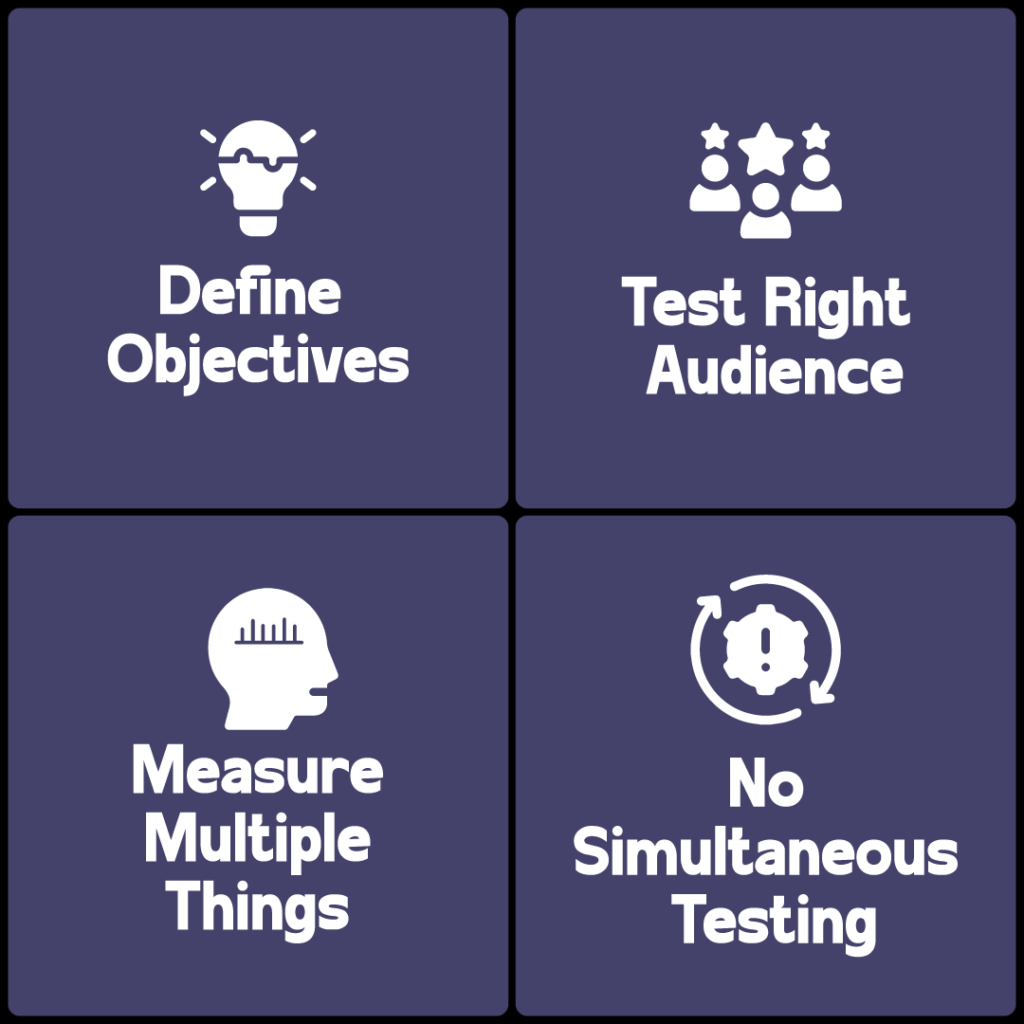
Before you run any test, it helps to understand the basics. A poorly designed test gives you bad data. Here’s what makes logo testing actually work.
Define clear objectives
What are you actually trying to find out? Memorability? Emotional response? Preference between two options? Get specific before you start. If you test everything at once without focus, you end up with data that’s hard to act on.
Test with the right audience
Your test is only useful if it reaches the right audience: people who represent your actual customers. Asking your team or your designer friends skews the results. Find people who match your target demographic.
Measure more than one thing
A good logo test looks at brand recall, recognition, preference, emotional associations, and perceived clarity, not just “do you like it?”
Test variations one at a time
If you change the color and the typography at the same time, you won’t know which change affected the results. Change one thing at a time to isolate what’s actually driving the reaction.
Worth Knowing: There are different test structures to choose from.
- Monadic testing shows one design to one group.
- Sequential monadic testing shows multiple designs to the same group, one at a time.
- Comparative testing shows multiple designs side-by-side.
Each has its place depending on what you’re trying to test.
How to Run A/B Tests for Logo Effectiveness Online
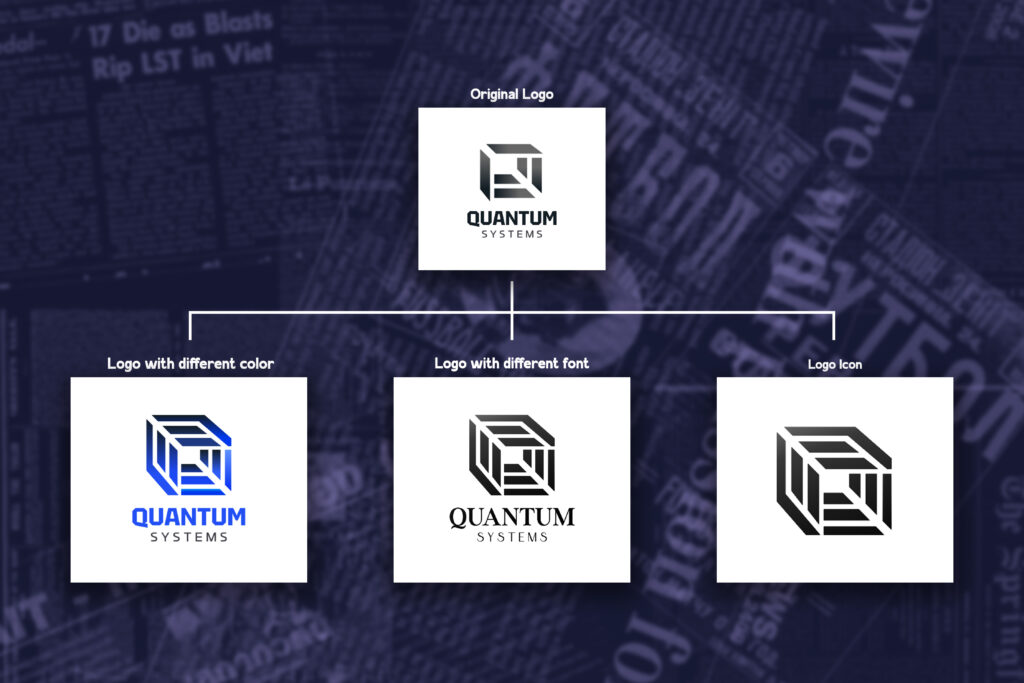
A/B testing compares two logo versions by showing option A to one group and option B to another. You then measure which one gets a better response.
It’s one of the most practical ways to test logos online because it’s structured, scalable, and gives you clear comparative data.
1. Design your variants
Create two or more logo options with deliberate differences: maybe one uses a different color palette, another has a different font, or one is an icon-only version. Keep the differences focused so you know what you’re testing.
2. Choose a testing platform
Tools like Google Optimize, UsabilityHub, Maze, or even a simple survey platform can split your audience and distribute different versions to different groups. Pick something that fits your budget and technical comfort level.
3. Randomize your audience segments
Each group should be random and roughly equal in size. You don’t want all your younger respondents in one group and all your older respondents in another; that would skew your results.
4. Collect quantitative metrics
Track preference ratings, recall rates, click behavior if running a live test, and any emotional response scores. Numbers give you something concrete to compare.
5. Analyze and decide
Examine the data and identify which version consistently outperforms the others. Don’t just go with the one that scored slightly higher; look for meaningful differences that justify a clear choice.
Want to go deeper? Heatmaps and eye-tracking tools show you exactly where people look first, how long they spend on different parts of the logo, and what they tend to ignore. Tools like Hotjar or dedicated eye-tracking software can be useful for this, especially if visual hierarchy is important in your design.
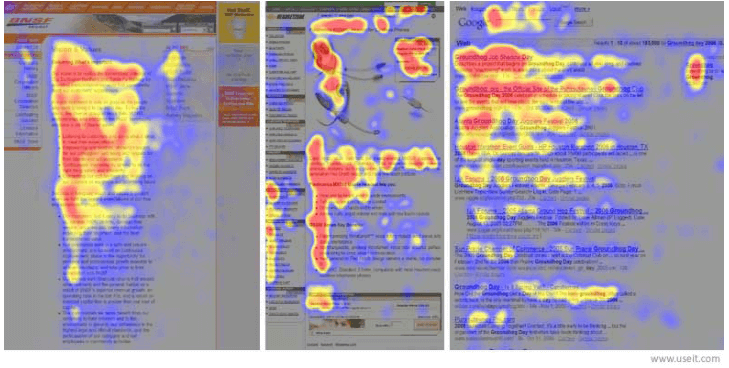
An example of Hotjar heatmap
Logo Testing Survey Questions and Feedback Methods
Surveys are one of the easiest ways to gather logo feedback at scale. But the questions you ask matter a lot. Vague questions give you vague answers.
Good logo testing survey questions
- Which logo variation do you prefer, and why?
- What words come to mind when you look at this logo?
- How memorable does this logo feel after a single viewing?
- What feelings does this logo bring up for you?
- How likely are you to recognize this logo if you saw it again?
- What type of brand or industry do you think this logo belongs to?
- Does this logo feel professional, casual, playful, or serious?
Mix closed questions (rating scales, multiple-choice) with open ones (what words come to mind?) to get both measurable data and real human feedback.
Feedback collection methods
- Online surveys: Scalable and cost-effective. Great for reaching large samples quickly.
- Focus groups: In-depth qualitative discussion. Surfaces nuanced reactions you can’t get from a survey alone.
- A/B test campaigns: Real-world digital experiments that show how people respond in context.
- Heatmaps & eye tracking: Shows exactly where attention goes. Useful for evaluating visual hierarchy.
Budgeting for Professional Logo Design Evaluation
Logo testing doesn’t have to be expensive. But how much you spend depends on how much depth and confidence you need in your results.
- Lower cost: DIY surveys using tools like Google Forms, Typeform, or SurveyMonkey, as well as social media polls and small audience panels. These are good for early-stage testing and quick gut checks.
- Higher cost: Professional market research firms, moderated focus groups, and eye-tracking studies. These methods are more structured and statistically valid, but they come at a higher price.
A few budgeting tips worth keeping in mind:
Match spend to stakes
A small local business refreshing its logo doesn’t need the same research budget as a national brand rebranding. Scale accordingly.
Think of it as insurance
A well-run test can save you from an expensive mistake. Catching a problem before launch is far cheaper than fixing it after.
Start simple, add depth if needed
Run a basic survey first. If the results are unclear or the stakes are high, then invest in more structured research.
Where to Find User Feedback Services for Logo Evaluation
You don’t have to build your own audience from scratch. There are plenty of places to find real people willing to give you feedback on your logo.
| Platform | Details |
| Survey platforms | Tools like Typeform, SurveyMonkey, and Google Forms let you build and distribute surveys to your own audience or a purchased panel. Easy to set up, easy to analyze. |
| Research services | Platforms like UserTesting, Respondent, and Prolific connect you with curated panels of real users. You can filter by demographics to match your target audience. |
| Social media polls | Instagram stories, LinkedIn polls, and X (Twitter) polls are quick ways to gather broad preference data. Not the most rigorous method, but useful for a fast temperature check. |
| Design communities | Communities like Dribbble, Behance, or Reddit’s design subreddits can offer feedback from a design-literate audience. Good for craft-level feedback, though less useful for testing with general consumers. |
Pro Tip: Don’t rely on just one source. Combining a broad survey with a smaller focus group gives you both scale and depth: numbers to see the pattern, and real conversations to understand the why behind it.
Accurate Methods for Measuring Logo Memorability
A logo can be liked without being remembered. Memorability is one of the most important things to test, and it requires a slightly different approach than preference testing. Here are some methods you can try:
Brand recall testing
This method measures how well your logo sticks in someone’s memory after a single viewing. You show participants your logo, give them a short break, then ask them to describe it or redraw it from memory.
What you’re looking for is not perfect accuracy. You want to see what details people remember most. Do they recall the icon, the colors, or the shape? If people can describe the core idea of your logo even after a delay, that’s a strong sign it’s memorable. If they struggle or mix it up with something else, your design may be too generic or too complex.
Recognition tests
Recognition is different from recall. Instead of asking people to remember your logo from scratch, you show them a group of logos and ask which one belongs to your brand.
This simulates real-world scenarios in which your logo appears alongside competitors. A strong logo should stand out and be easy to identify at a glance. If participants hesitate or pick the wrong one, your logo may not be distinct enough.
Engagement metrics
Sometimes the best insights come from real behavior, not just surveys. This method examines how people interact with your logo in real digital environments, such as websites, ads, or social media.
You can also use this to test your website color scheme and see how well it works with your logo in a real setting.
Track simple signals like clicks, time spent on a page, and social reactions. If your logo grabs attention, people are more likely to pause, engage, or explore further. If it gets ignored, that’s a sign it may not be visually compelling or noticeable enough.
Emotional response surveys
Memorable logos are not just seen, they are felt. Right after showing your logo, ask participants how it made them feel. Was it exciting, trustworthy, fun, or confusing?
Then follow up after a few days and ask the same question again. This helps you understand if the emotional impact lasts or fades quickly. A strong logo creates a consistent feeling that people can still recall even after some time has passed.
Conclusion
Logo testing isn’t complicated. You’re just trying to find out if your logo does what you need it to do before you commit to it publicly.
Start by knowing what you want to measure. Pick your method based on your budget and timeline. Ask good questions. And test with real people who match your audience.
Even a simple survey with 50 respondents can surface insights you’d never get from an internal review.
Need a logo to test in the first place? BrandCrowd lets you generate professional logo options in seconds. Browse thousands of designs, customize to fit your brand, and have something ready to test right away.
FAQs about Logo Testing
How many people do I need for a logo test?
For a basic online survey, 50 to 100 responses are enough to spot clear patterns. If you’re doing A/B testing, aim for at least 50 per group. For focus groups, 6 to 10 participants per session works well.
When should I test a logo?
Before launch is the obvious answer. But testing early in the design process, even with rough concepts, saves time and money. You can rule out bad directions before investing in full refinement.
Can I test a logo on social media?
Yes, but with limitations. Social polls give you quick preference data, but your followers aren’t always representative of your broader target audience. Use social testing as a supplement, not a replacement for structured research.
What’s the difference between logo testing and brand testing?
Logo testing focuses specifically on the visual mark: how it looks, how it’s perceived, and whether it’s remembered. Brand testing is broader and includes messaging, values, positioning, and overall identity.
How long does logo testing take?
A simple online survey can be set up and completed in a few days. A full research process with focus groups and A/B testing typically takes two to four weeks. Plan for this in your design timeline.