Instagram vs Facebook: Which Platform Is Better for Business in 2026?
Most businesses today are fighting for the same thing: attention.
And in 2026, two platforms still dominate that battle: Facebook and Instagram. Both are massive, both are owned by Meta, and both promise access to billions of users. On paper, they look almost identical. But in practice, they couldn’t be more different.
One is built around communities, conversations, and trust. The other thrives on visuals, speed, and discovery. One helps you build relationships. The other helps you get seen.
So here’s the real question most businesses are quietly asking:
Between Instagram and Facebook, which one actually grows your business?
The answer isn’t as obvious as it used to be. And once you understand how each platform really works, your entire marketing strategy – from logo design to social media posts – might change.
Let’s get started!
What Is Instagram?
Instagram is a visual-first social media platform built around photos, short-form videos, and mobile storytelling. Unlike platforms designed for discussions or long-form sharing, Instagram is built for fast scrolling, instant impressions, and content that communicates visually within seconds.
At its core, it is a platform where branding, aesthetics, and attention drive performance. Businesses and creators use it to showcase identity through curated visuals, engaging videos, and short-form content designed for mobile consumption.
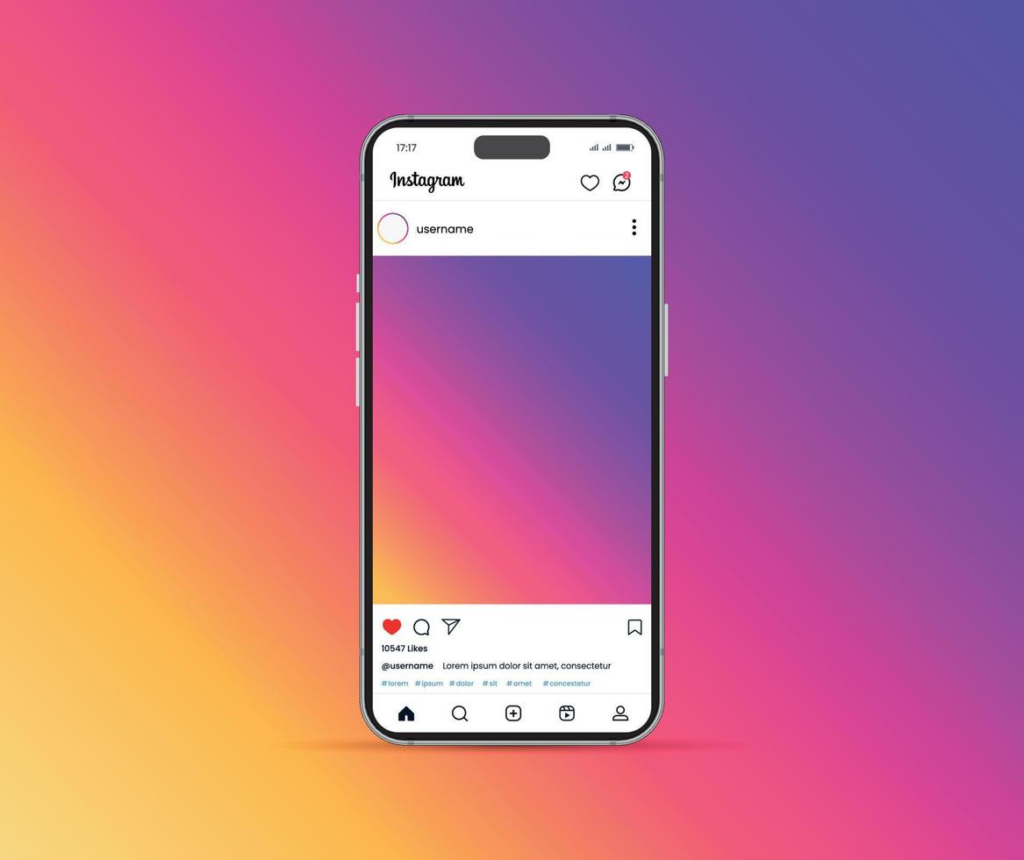
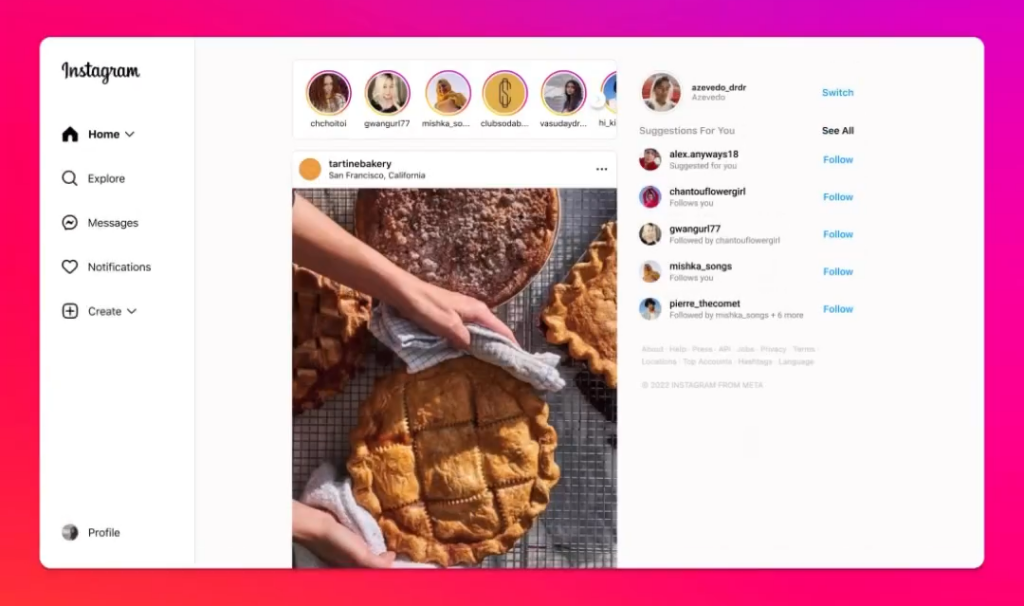
Here’s an image of the Instagram home page, both on mobile and web versions:
Core features of Instagram
Instagram is structured around several key features that shape how users and businesses interact on the platform:
1. Feed posts
These are permanent images or videos displayed on a user’s profile and main feed. They are commonly used for brand identity, product showcases, educational content, and storytelling with captions.
Here’s an example of Instagram posts:
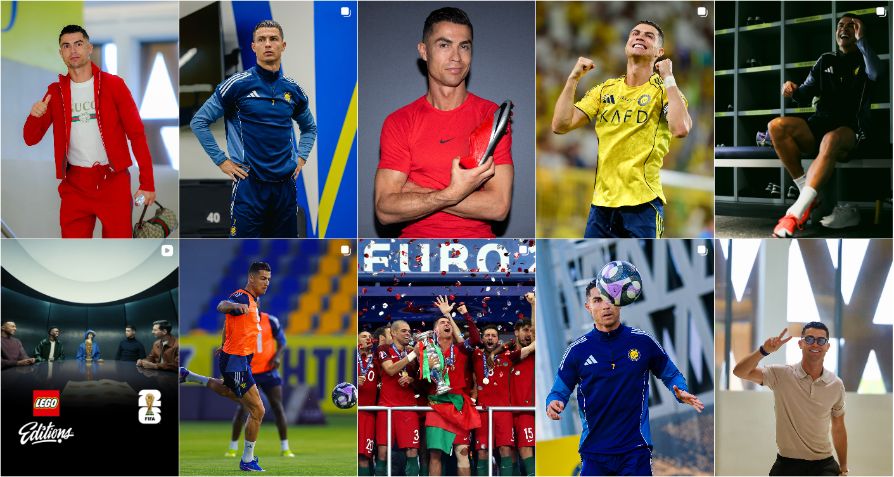
Fun Fact: Cristiano Ronaldo, a world-famous football player, is the most-followed individual on Instagram with approximately 673 million followers!
2. Stories
Instagram stories are short-lived posts that disappear after 24 hours. They are used for real-time updates, promotions, behind-the-scenes content, and casual engagement. Their temporary nature encourages frequent interaction.
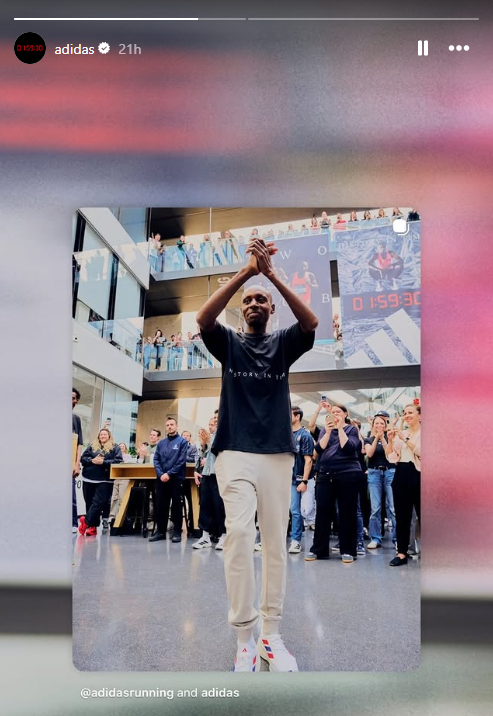
Adidas featured Sebastian Sawe in their Instagram stories. He recently made history by becoming the first man to officially break the 2-hour barrier for 42km while wearing Adidas shoes.
3. Reels
Reels are Instagram’s short-form video format and one of its strongest growth drivers. They are heavily pushed by the algorithm, making them a key tool for reaching new audiences beyond existing followers.
In addition to the story, Adidas posted an Instagram reel about the shoe that Sebastian Sawe wore during the marathon – the Adizero Adios Pro Evo 3 – saying that it was a key tool to unlock Sebastian’s time.
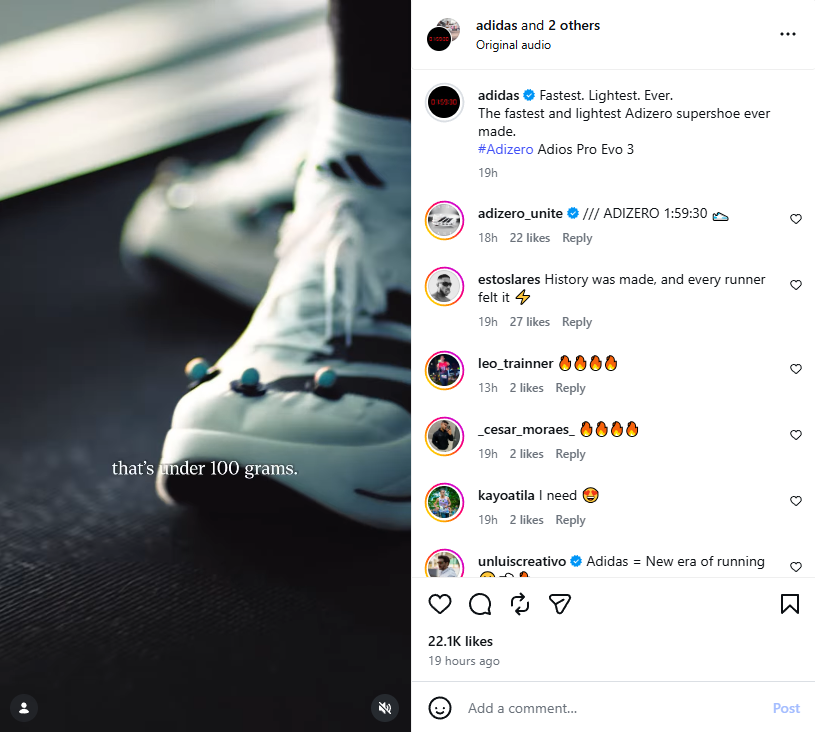
You can see the full reel on Adidas’s Instagram account.

The image above shows Sabastian Sawe holding his Adizero Adios Pro Evo 3, with ‘1:59:30’ written as the final time.
4. Direct messaging (DMs)
DMs play a major role in business communication on Instagram. Many inquiries, collaborations, and customer interactions happen privately rather than in public comment sections.
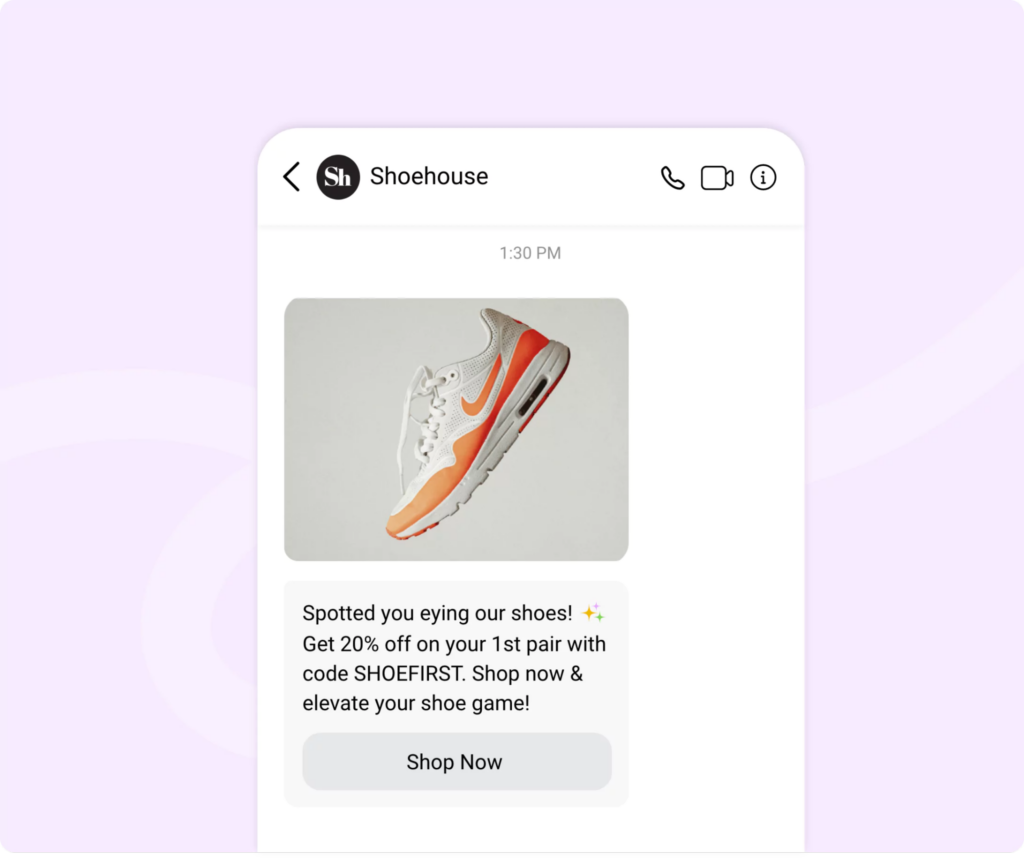
Here’s a perfect example of how to start a conversation and put your brand out there:
5. Shopping tools
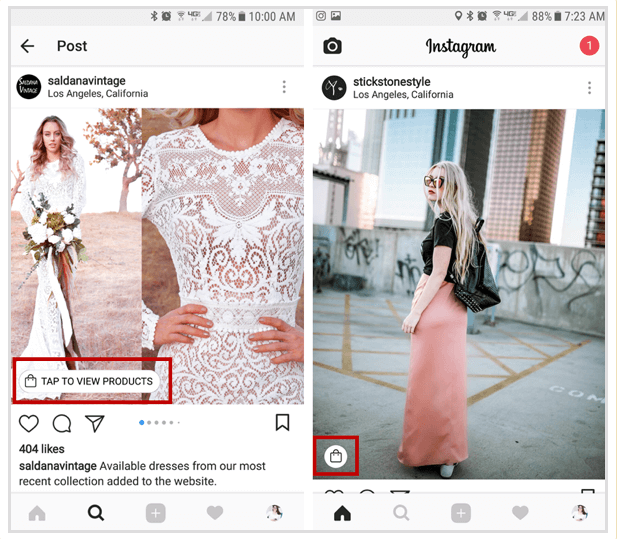
Instagram has evolved into a social commerce platform, allowing users to discover and purchase products directly through the app. This makes it especially powerful for e-commerce and product-based businesses.
As you can see in the example below, brands can now add a shopping bag icon or a clickable text link that directly leads potential customers to their shopping page.
What Is Facebook?
Facebook is widely recognized as the world’s largest social networking platform, designed to connect people, communities, and businesses at scale. While newer platforms have emerged with different content styles and engagement patterns, Facebook remains a central hub for communication, discovery, and community building.
With over 3.7 billion monthly active users globally, Facebook continues to dominate in terms of reach and user base size. What makes it particularly powerful is not just its scale, but its depth of user activity: people don’t just scroll passively, they interact through groups, events, comments, and shares.
Facebook’s structure is built around tools that support both personal connection and business activity:
Pages
Facebook Pages are used by businesses, brands, and public figures to establish a presence on the platform. They serve as public profiles where updates, promotions, and content are shared with followers.
One example of a popular Facebook page is Red Bull, widely known by its bull logo:
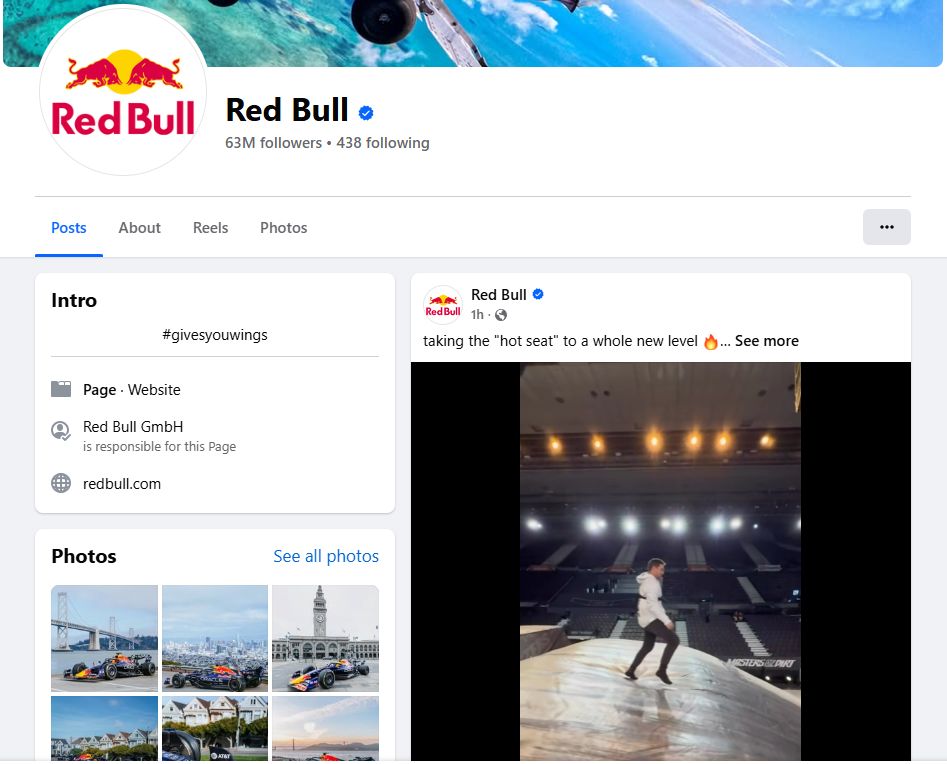
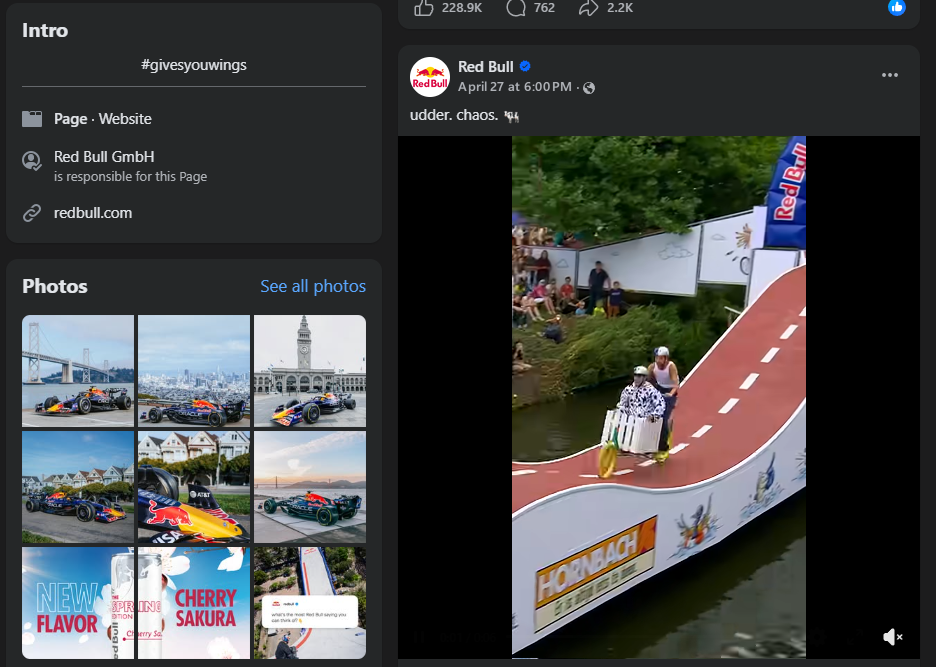
Some of its popular posts include the bike challenges – these are comedic events featuring homemade tandem bikes and navigating obstacle courses… in which the participants fall in water almost all of the time.
Groups
Groups are one of Facebook’s strongest features. They allow users to form communities around shared interests, industries, or goals. For businesses, groups are powerful for building loyalty, engagement, and ongoing discussion.
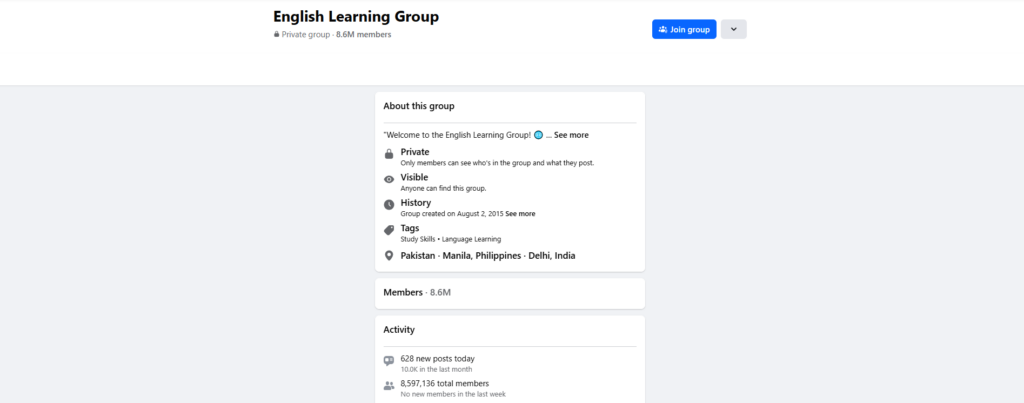
As of 2026, English Learning Group is the largest Facebook group, with over 8.6 million members.
Marketplace
Facebook Marketplace enables users to buy and sell products locally and globally. It has become a major feature for small businesses and individuals looking for direct commerce opportunities.
Here’s how it works:
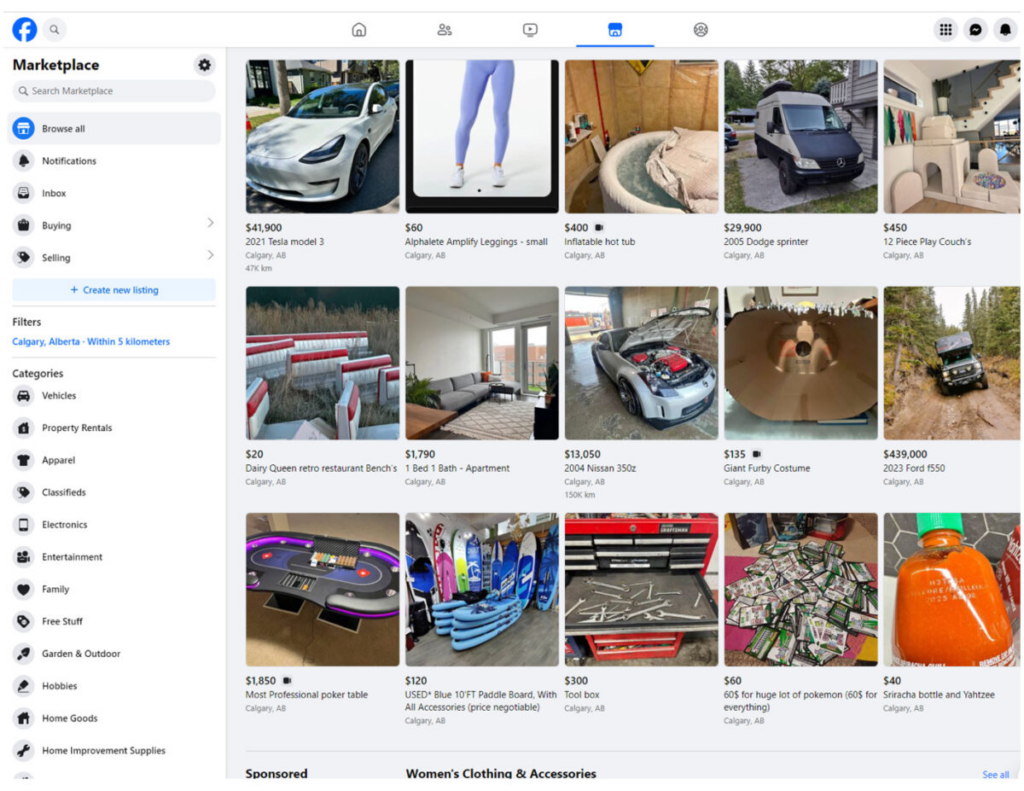
You just type in whatever you are looking for, and Facebook Marketplace will show you options available for sale near you. Once you have chosen a product, you can start a conversation with the seller and proceed with the deal.
Events
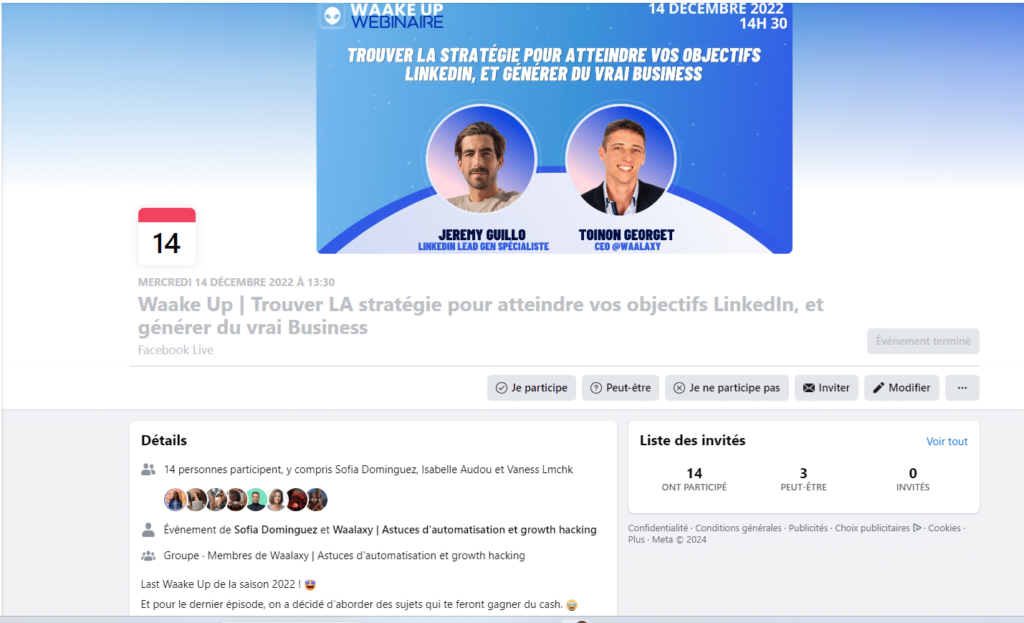
Events allow users and businesses to organize and promote physical or virtual gatherings. This is especially useful for local businesses, webinars, product launches, and community activities.
News Feed
The News Feed is the central content stream where users see posts from friends, pages, groups, and advertisers. It is the primary driver of content visibility and engagement on the platform.
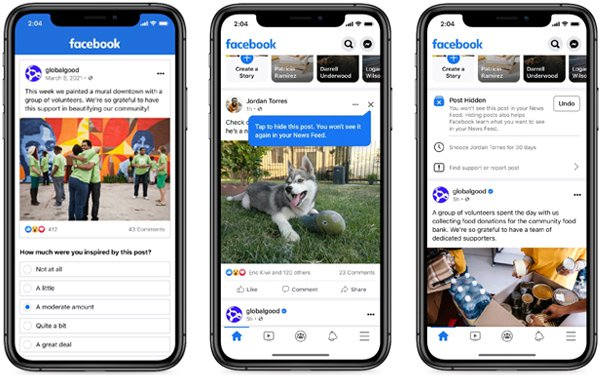
What goes into your news feed is a combination of posts from your friends, pages you follow, groups you belong to, and sponsored posts based on your likes and searches.
Content Formats on Facebook
One of Facebook’s biggest strengths is its flexibility in content types. Unlike more visually restrictive platforms, Facebook supports a wide range of formats:
- Text Posts: Facebook posts, which are simple written updates, are still widely used, especially for opinions, discussions, announcements, and community engagement.
- Images: Photo posts remain highly effective for storytelling, promotions, and brand updates.
- Videos: Video content performs strongly on Facebook, including both short clips and longer-form content such as interviews, tutorials, and storytelling pieces.
- Links: Facebook is one of the most link-friendly platforms, making it useful for driving traffic to websites, blogs, and external resources.
- Live Streams: Facebook Live enables real-time broadcasting, commonly used for Q&A sessions, product launches, events, and interactive engagement.
What Is the Difference Between Facebook and Instagram?
Although Facebook and Instagram are both owned by Meta and share some advertising infrastructure, they operate very differently in practice. The key difference is not just in features, but in how users behave on each platform and how content is consumed.
Facebook is built around community and communication, while Instagram is built around visual discovery and attention-driven content. This fundamental difference shapes everything from engagement patterns to marketing outcomes.
Here’s how they differ:
Content style: Visual vs. mixed content
One of the biggest differences in the Instagram vs. Facebook comparison is how content is shared.
Facebook supports many types of posts: text, images, videos, links, and even long discussions. This makes it easier for businesses to explain ideas, share updates, and start conversations with their audience.
Instagram is much more focused on visuals. Most content comes in the form of photos, short videos, Reels, and Stories. People scroll quickly and decide in seconds whether something is interesting.
Because of this, Instagram is more about grabbing attention fast, while Facebook is better for sharing detailed information.
Device experience: Multi-platform vs. mobile-first
Another key difference is how people use them. Facebook works across mobile phones, desktops, and tablets. Many users still browse it on a computer, which makes it easier to read longer posts, click links, and spend more time on content.
Instagram is built mainly for mobile. Everything is designed for quick scrolling, tapping, and watching on a phone screen. This changes how content is created: on Instagram, posts need to be simple, visual, and easy to understand right away.
User behavior: Community vs. discovery
The way users behave across platforms highlights a fundamental difference in purpose.
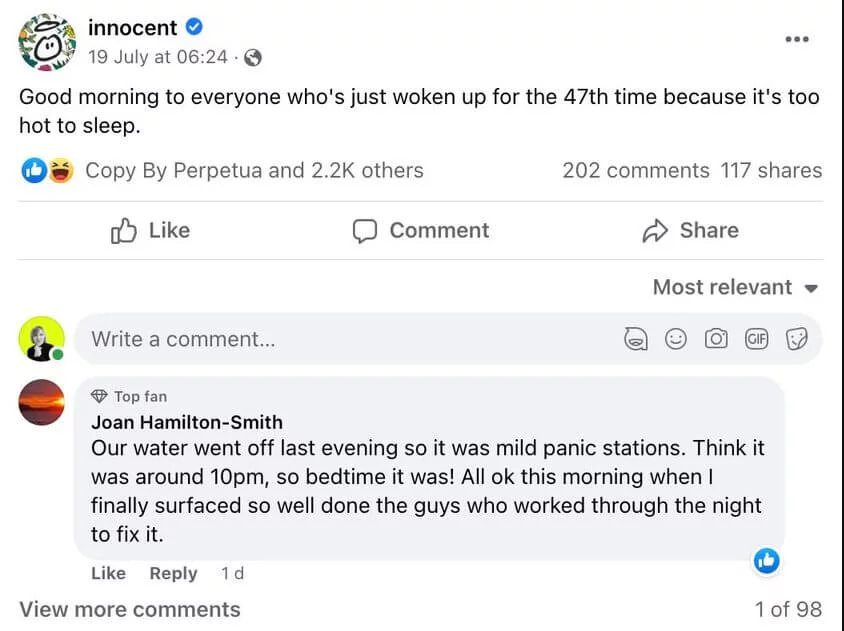
Facebook is centered around community and interaction. Users join groups, participate in discussions, follow pages, and engage with content that feels relevant to their personal networks or interests. It’s a space where people actively contribute, share opinions, and build connections over time.
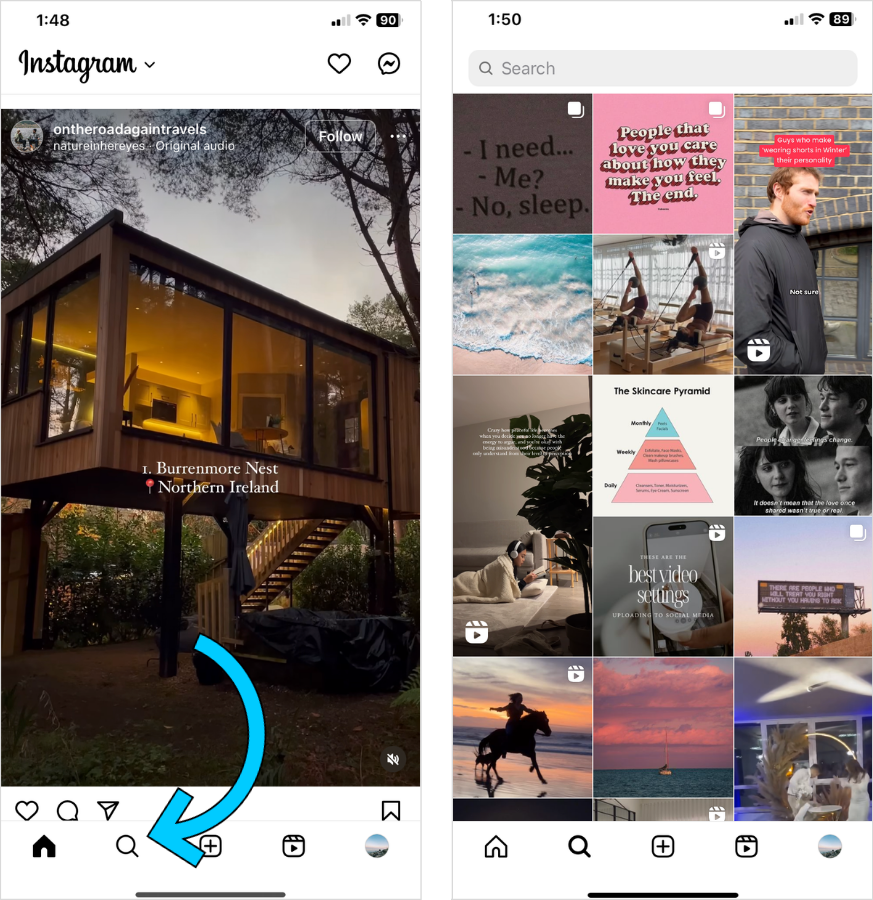
Instagram is driven by discovery. Users are constantly exposed to new content through algorithm-driven feeds, Reels, and Explore pages. Instead of focusing on conversations, the platform encourages users to find new creators, brands, and trends.
On the other hand, here’s a quick similarities and differences between these two popular platforms:
Both are owned by Meta
Both platforms are managed under Meta, which means businesses can use Meta Business Suite or Meta Ads Manager to run campaigns, manage content, and track performance in one place.
Paid advertising tools
Both platforms offer highly advanced targeting options, including:
- Demographics (age, gender, location)
- Interests and behavior
- Custom audiences (website visitors, email lists)
- Lookalike audiences
This makes Meta one of the most powerful advertising ecosystems in digital marketing.
Business profiles
Both Facebook and Instagram allow businesses to create professional accounts with:
- Analytics and insights
- Contact buttons
- Promotion tools
- Audience tracking features
Content formats
Both platforms support:
- Stories
- Reels
- Videos
- Carousel posts
This allows businesses to easily repurpose content across both platforms.
Engagement tracking
Marketers can track:
- Likes
- Comments
- Shares
- Reach
- Impressions
This helps businesses measure performance and adjust strategies.
E-commerce integration
Both platforms support social commerce through:
- Facebook Shops
- Instagram Shopping
- Product tagging
- Shoppable posts and Stories
This allows users to discover and purchase products directly within the apps.
Influencer marketing & lead generation
Both Facebook and Instagram are widely used for:
- Influencer collaborations
- Sponsored content
- Lead generation ads
- Audience capture campaigns
Engagement style: Conversations vs. reactions
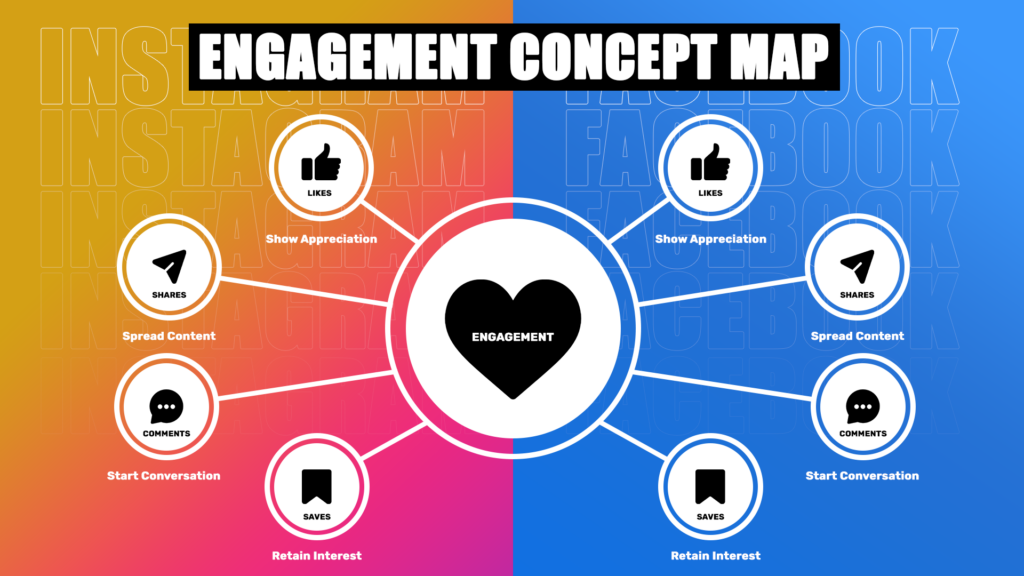
Engagement also looks very different across the two platforms.
On Facebook, interaction tends to be more deliberate and conversational. Users comment in detail, share posts with their networks, participate in group discussions, and click through links to learn more. Engagement often leads to deeper involvement, especially within communities.
On Instagram, engagement is faster and more reactive. Likes, short comments, saves, and video views dominate interaction. Users are less likely to engage in long discussions and more likely to respond quickly before moving on to the next piece of content. This creates higher overall engagement rates, but often with less depth than on Facebook.
Refer to the comparison table below for a quick guide:
| Feature | ||
| Core Purpose | Community & communication | Visual discovery & branding |
| Content Type | Text, links, images, videos | Photos, Reels, Stories |
| Device Focus | Mobile + desktop | Mobile-first |
| User Behavior | Discussion-driven | Discovery-driven |
| Engagement Style | Comments, shares, groups | Likes, saves, quick interactions |
| Best For | Communities, local businesses, and information sharing | Branding, influencers, visual marketing |
When comparing Facebook vs. Instagram, the difference is not about which platform is better overall, but which type of attention you are trying to capture.
- Facebook builds relationships and trust through interaction
- Instagram builds awareness and interest through visual discovery
Both platforms serve different roles in a modern marketing strategy, and understanding this difference is what determines how effectively a business can use them in 2026.
Facebook Age Demographics vs. Instagram Demographics
Facebook’s User Base and Popularity
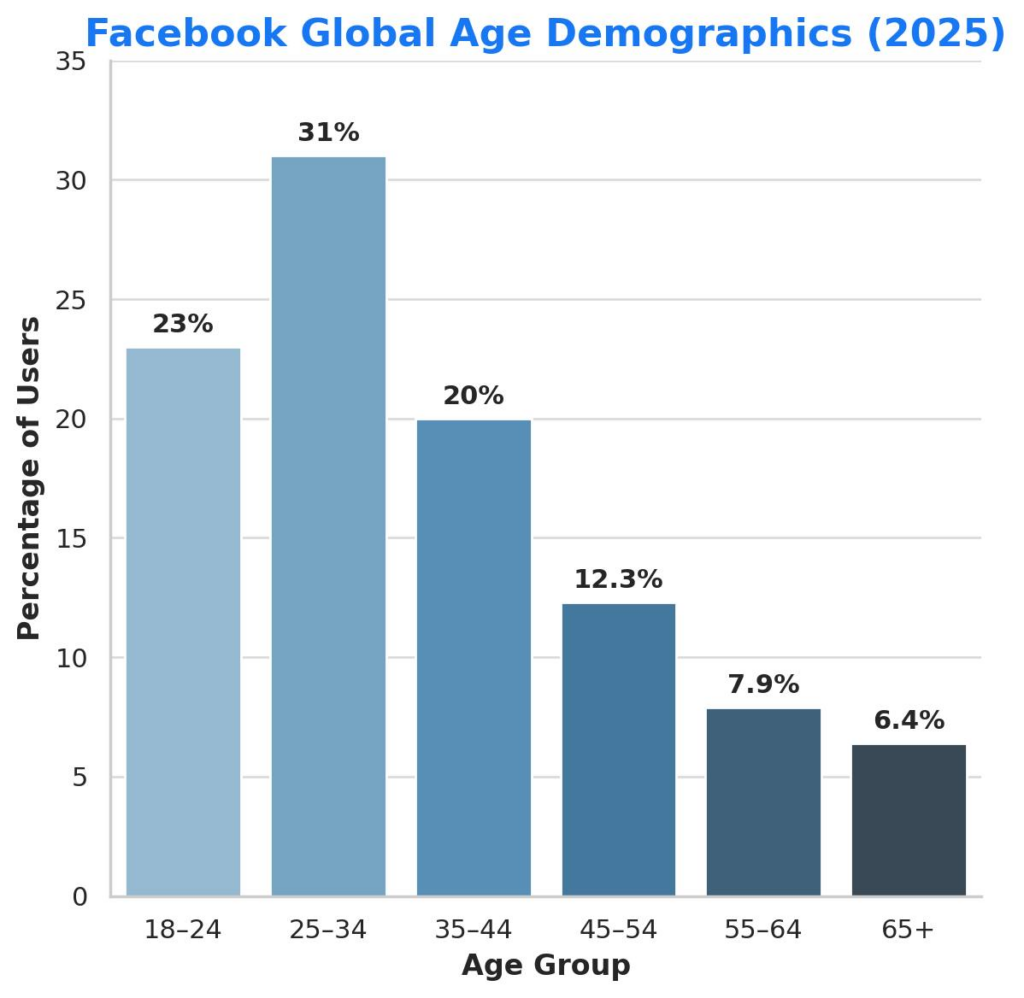
Facebook has one of the broadest and most evenly distributed age ranges among all social platforms.
- Facebook has a broad age distribution, but it is not evenly spread across all age groups.
- The platform is most heavily used by adults in their mid-20s to mid-40s, with the largest segment being ages 25–34 (31%), followed by 35–44 (20%) and 18–24 (23%).
This makes Facebook especially powerful for businesses targeting:
- Working professionals (especially 25–34)
- Mid-life consumers and families
- Local communities
- Users with relatively stable purchasing power
In simple terms, Facebook’s audience is slightly older, more stable, and more likely to engage in informational or community-driven behavior rather than purely visual discovery.
Instagram’s user base and popularity
Instagram has grown into one of the largest social platforms globally, with over 3 billion monthly active users worldwide.
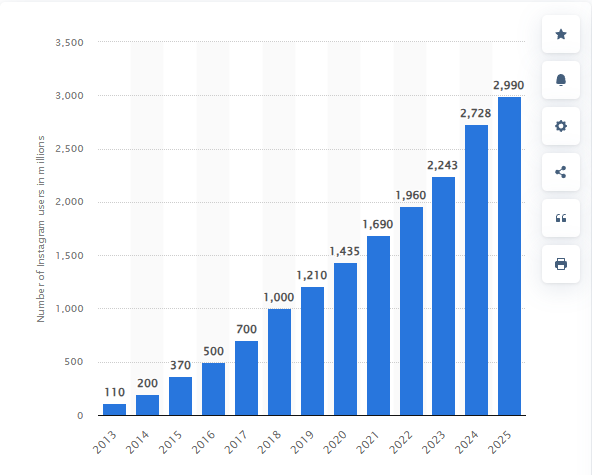
According to Statista, there were 2.99 billion monthly active users of Instagram in 2025.
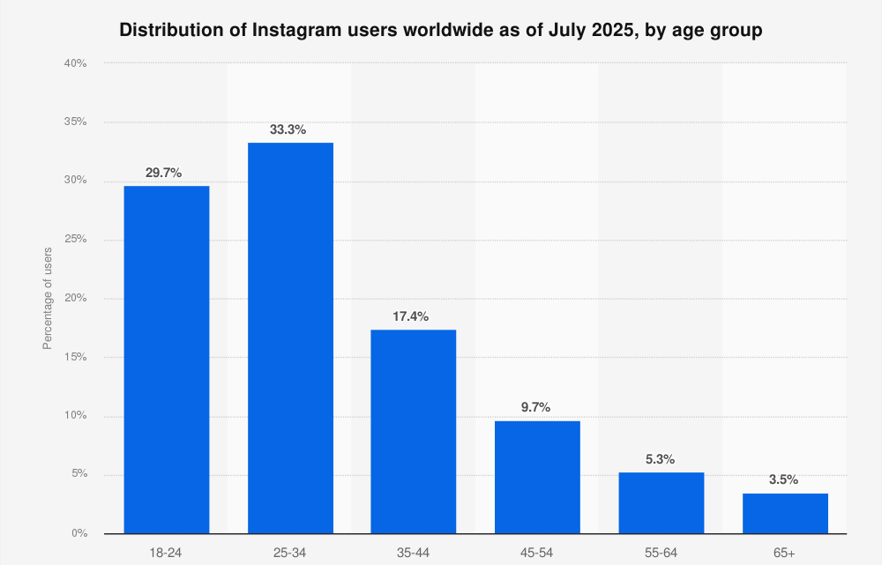
Its audience is especially strong among younger demographics, particularly Millennials and Gen Z users aged 18 to 34, who are more inclined toward visual content, influencer-driven discovery, and mobile-first browsing.
This makes Instagram not just a social platform, but a digital discovery engine for brands, where attention is earned through visuals rather than conversation.
Key behavioral differences between audiences
Beyond age, the way users behave on each platform is fundamentally different:
Facebook users
- More community-oriented
- Participate in groups and discussions
- Engage with news, updates, and shared content
- More deliberate in decision-making
Instagram users
- More discovery-driven
- Prefer visual and video content
- Engage with creators and influencers
- More influenced by aesthetics and trends
What does this mean for business?
The demographic gap between Facebook and Instagram directly affects marketing strategy:
- Facebook works best for trust-building, community engagement, and informational marketing
- Instagram works best for brand visibility, trend-driven content, and visual influence
Why demographics matter for marketing strategy
Demographics are not just background data. They directly influence how your message should be structured, delivered, and positioned on each platform: who is on the platform determines how they think, and how they think determines how they respond to your marketing.
On Facebook, the audience is generally more mature and information-driven. People tend to spend more time reading, comparing, and understanding before making decisions. Because of this, marketing performs better when it focuses on clarity, trust, and explanation rather than quick attention-grabbing visuals.
On Instagram, the audience is more visually driven and trend-sensitive. Users scroll quickly and make fast judgments based on appearance, emotion, and relevance. This means marketing needs to be more immediate, visually strong, and emotionally engaging rather than highly detailed.
How this changes your marketing approach
- Facebook users respond better to information and context
- They want to understand the product first
- They value detailed explanations and real-world use cases
- Trust and credibility matter more than aesthetics
- Instagram users respond better to visuals and emotion
- They decide quickly based on appearance and feel
- They engage more with short videos and strong imagery
- Trends and influencer content strongly influence behavior
- Facebook supports longer decision-making journeys
- Users often read posts, join groups, or click links before converting
- It works well for services, local businesses, and trust-based industries
- Instagram supports faster discovery and impulse interest
- Users are more likely to engage immediately
- It works well for e-commerce, branding, and lifestyle-driven products
How Content Strategy Differs Between Facebook and Instagram
Another big difference between these two platforms is how content needs to be created and structured. Here’s how the content strategy between the two differs:
Facebook content strategy
On Facebook, content performs best when it is informative, conversational, and community-driven. Users are more willing to spend time reading and engaging, which makes longer, more detailed content more effective.
- Longer captions work well because users are open to reading context, explanations, and storytelling.
- Community discussions are highly effective, especially in comments or group settings where people share opinions and experiences.
- Links to articles and external content are commonly used, making Facebook strong for driving traffic outside the platform.
- Groups and events are a major part of the ecosystem, helping businesses build communities and organize real-world or online interactions.
Overall, Facebook’s content strategy is about building trust through information and interaction. It is less about grabbing attention instantly and more about holding attention over time.
Instagram content strategy
Instagram works very differently because it is built around fast visual consumption. A clear Instagram strategy for brands can keep Reels, Stories, and feed posts aimed at one goal. That makes it easier for a company to post with purpose instead of posting at random. Content needs to be immediately engaging, simple to understand, and visually strong.
- Visual storytelling is the foundation of Instagram. Brands rely on images and videos to communicate identity, lifestyle, and value.
For example:
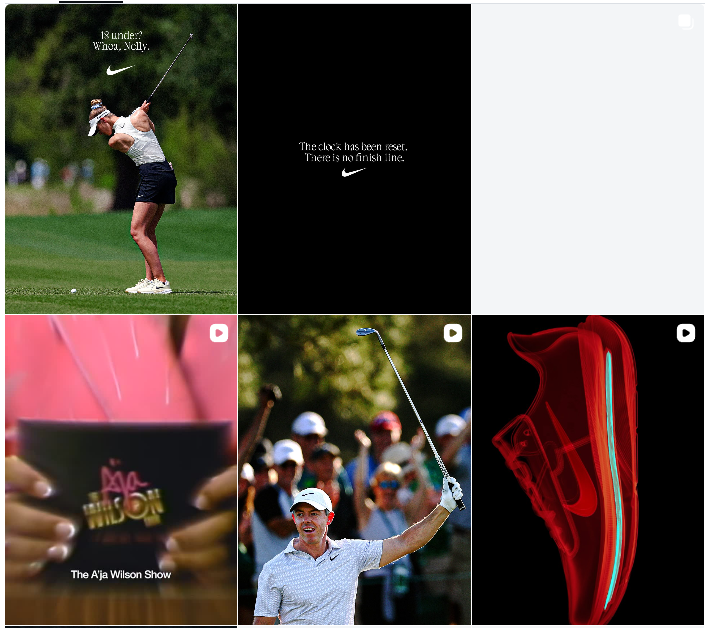
Nike uses dynamic visuals of athletes to express performance and motivation, while
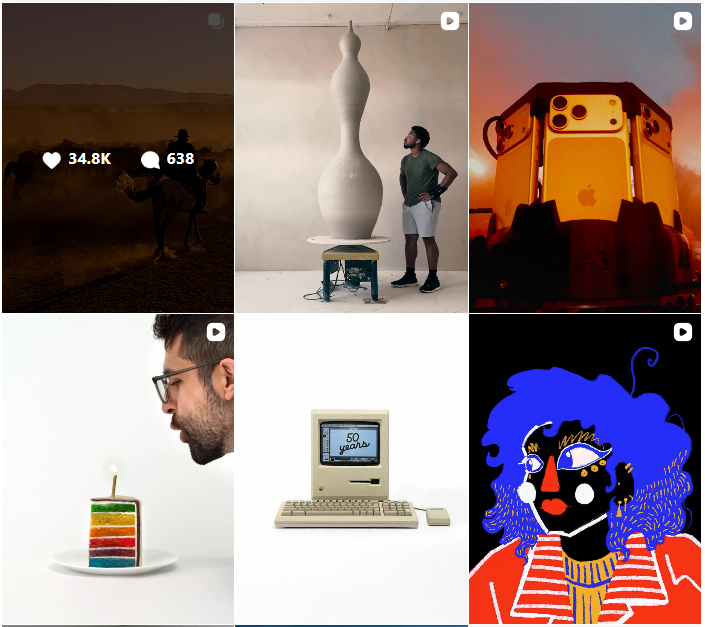
Apple showcases high-quality imagery to highlight creativity and product value.
- Lifestyle branding is key, where products or services are shown as part of an aspirational or relatable lifestyle rather than explained in detail.
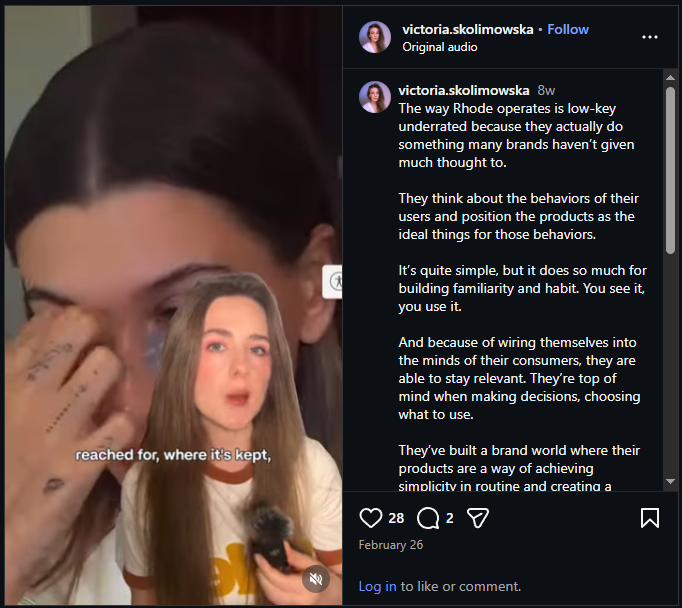
One example is the influencer Victoria Skolimowska, who praised the skincare and beauty brand, Rhos.
- Short-form videos (Reels) are one of the strongest growth drivers, often reaching audiences far beyond existing followers.
- Influencer collaborations play a major role in content distribution and credibility, as users trust creators more than traditional ads.
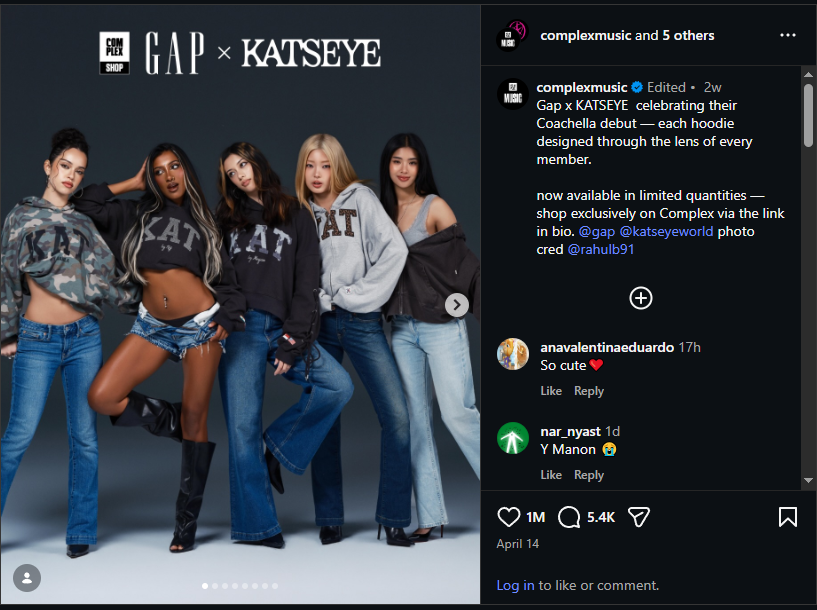
KATSEYE made a big impression at Coachella with a cool collaboration with GAP, showcasing stylish outfits and a strong stage presence on debut.
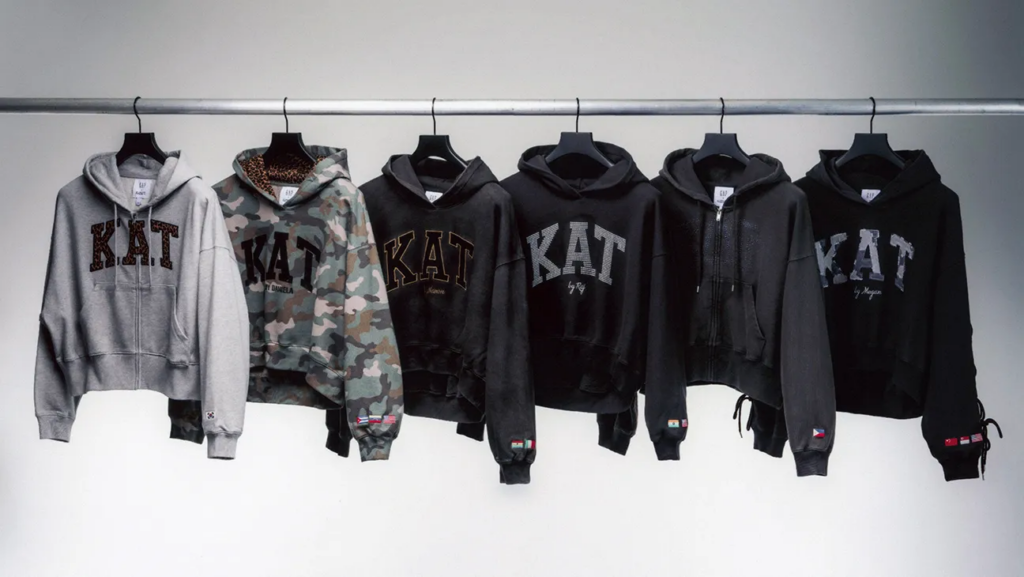
Even before this, they already had a huge global fan base, which made their Coachella moment even more exciting for fans.
Instagram content is designed for quick impact. Instead of explaining in detail, it aims to create interest within seconds.
Why visual platforms drive stronger engagement
One reason Instagram often outperforms Facebook in engagement is how content is consumed. Visual content is processed faster by the brain than text, which leads to quicker reactions and higher interaction rates.
On average, Instagram engagement rates are around 0.48%, compared to approximately 0.15% on Facebook. While these numbers can vary by industry, the pattern remains consistent: Instagram tends to generate more immediate interaction.
This difference happens for a few key reasons:
- Visual content is easier to process quickly than text-heavy posts
- Instagram’s algorithm heavily promotes discovery-based content like Reels
- Users are more likely to react instantly to images and short videos
- Facebook users often engage in deeper but slower interactions, such as reading and commenting
Facebook Reels vs. Instagram Stories
Short-form content has become one of the most important drivers of attention on both Facebook and Instagram. But even though both platforms offer fast, mobile-friendly formats, they use them in very different ways.
The key difference comes down to purpose: Instagram Stories are built for ongoing engagement with existing followers, while Facebook Reels are built for reaching new audiences through discovery.
Facebook Reels
Facebook Reels are short vertical videos designed for algorithm-driven discovery. Unlike Stories, Reels are not limited to followers. Instead, they are pushed to users based on interests, behavior, and engagement patterns, making them a powerful tool for reaching new audiences.
Reels focus on entertainment, education, or quick value delivery. The format is heavily optimized for scrolling behavior, meaning content must capture attention within the first few seconds to perform well.
Businesses use Facebook Reels to:
- Increase brand visibility beyond their existing audience
- Share quick product demos or tips
- Repurpose content from Instagram or TikTok
- Drive awareness through viral-style videos
See examples of some of the most-viewed reels below:
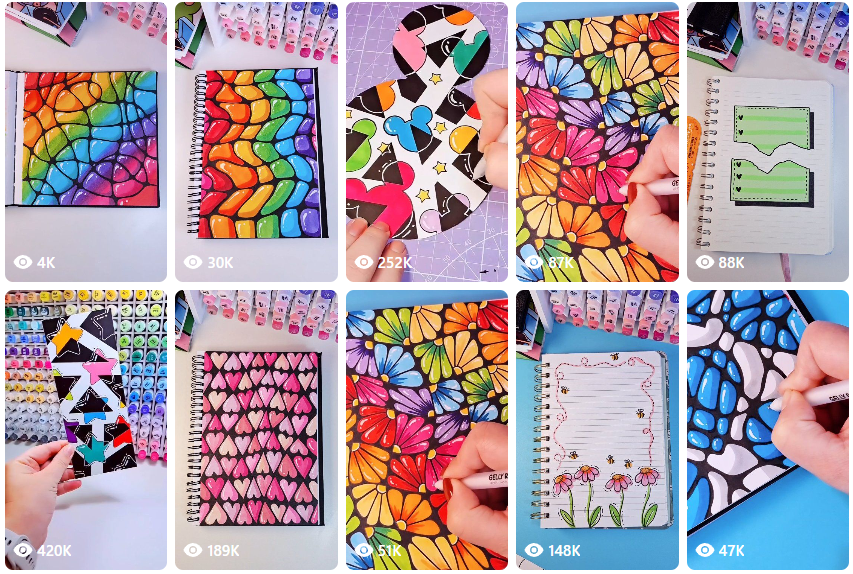
From Pinoxart with highly engaging drawings and creative videos. Watch the reels here.
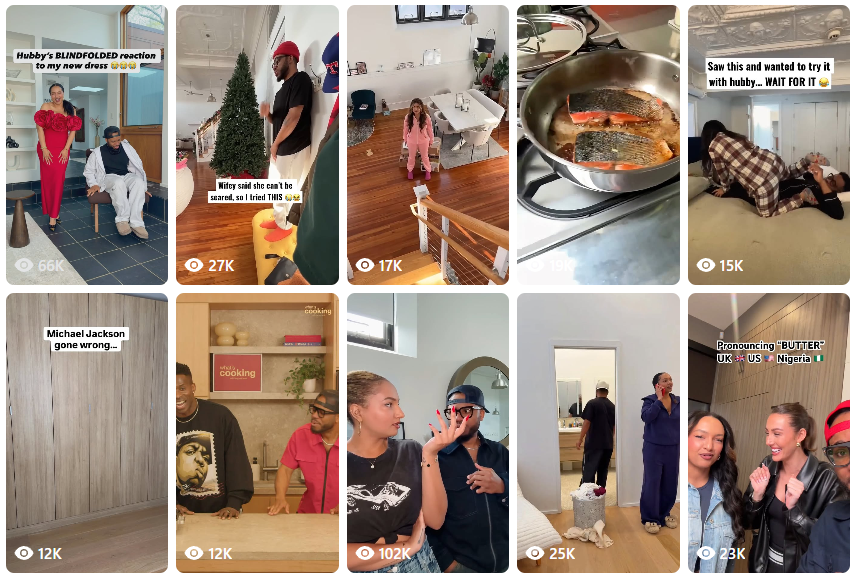
From Ling and Lamb, a famous food-and-lifestyle couple. Watch their reels here.
Instagram Stories
Instagram Stories are short, temporary posts that disappear after 24 hours. This format is designed for quick, casual, and frequent updates rather than permanent content. Because of their short lifespan, Stories feel more personal and less polished, which encourages more authentic interaction between brands and users.
Stories also include interactive features that make them highly engaging:
- Polls and quizzes
- Question boxes
- Emoji sliders
- Links and swipe-up actions (for eligible accounts)
These tools make Stories ideal for direct audience interaction. Businesses often use them to maintain daily visibility, promote limited-time offers, or share behind-the-scenes content that strengthens brand connection.
Below are some of the most common content themes that perform well:
Behind-the-scenes (BTS) content
Behind-the-scenes content is one of the most effective ways to use Instagram Stories. It gives audiences a more human, unfiltered view of a brand, showing what happens beyond polished feed posts.
This can include product development, office life, packaging orders, or even day-to-day moments. The goal is to make the brand feel more real and relatable rather than overly curated or formal.
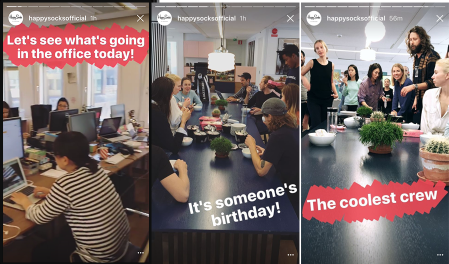
Example: Happy Socks, a Swedish manufacturer and retailer of socks and underwear, used Instagram stories to show what a regular workday in the office is like.
Interactive features
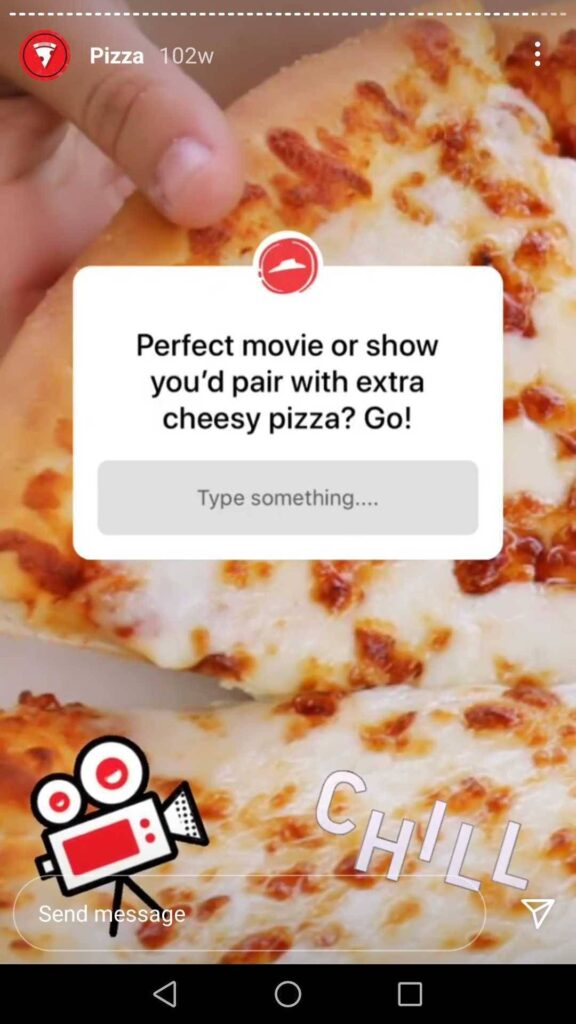
Instagram Stories are highly effective because they allow direct interaction with followers. Features like polls, quizzes, sliders, and question boxes turn passive viewers into active participants.
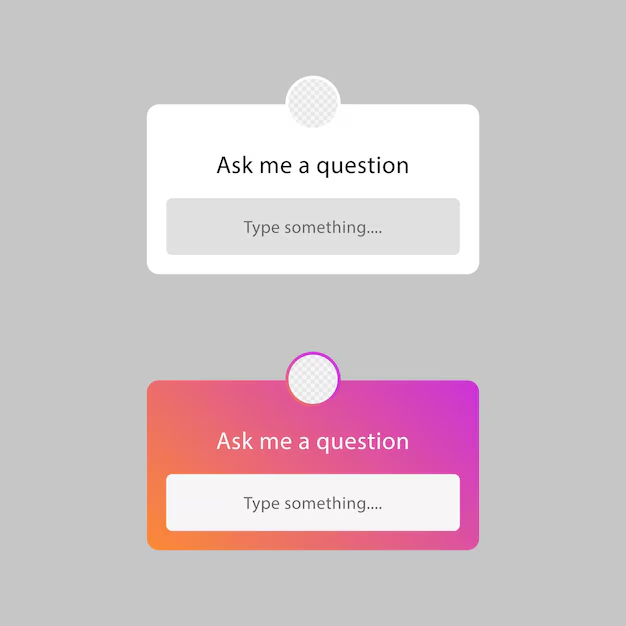
One of the most popular formats is the “Ask Me Anything” (AMA) sticker, which allows audiences to submit questions and receive direct responses. This builds trust and makes communication feel more personal.
Here’s what it looks like:
Another example is the local brand, Pizza, showing you how it’s done:
Bonus: Stories are temporary, but Instagram lets businesses save important content in Highlights, which stay visible on their profile. This turns short-term content into long-term value.
Highlights are often organized into themes such as products, services, testimonials, travel, or behind-the-scenes content. This helps new visitors quickly understand what a brand is about.
Calvin Klein, the famous fashion brand, uses highlights for each of their popular brand ambassadors:
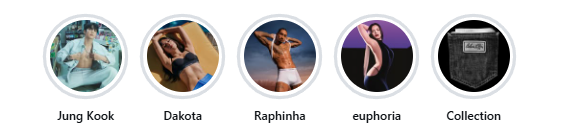
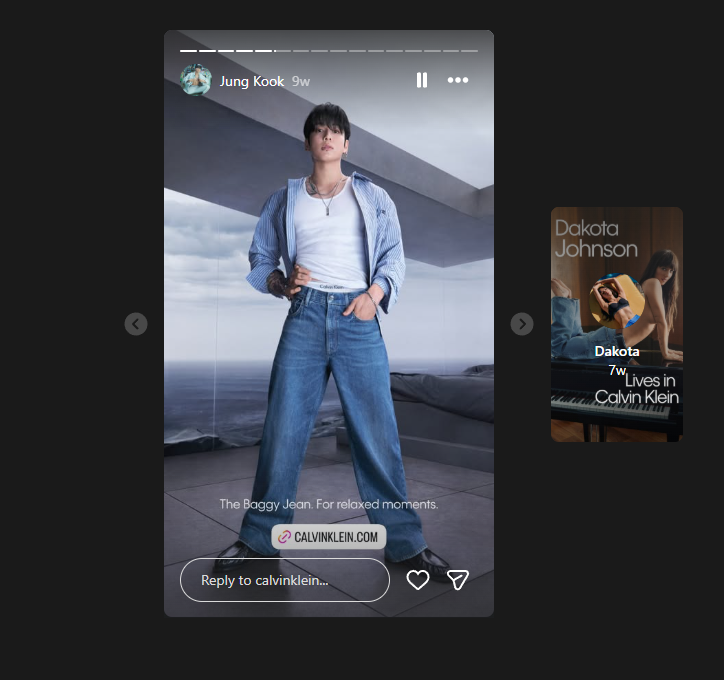
It’s basically a collection of their artists wearing their products. One of their popular ambassadors is Jung Kook of the K-Pop group BTS:
Facebook vs. Instagram Marketing
As you explore the world of social media marketing, the debate between Facebook and Instagram naturally comes up. Most businesses eventually ask the same questions: Which platform should I focus on? Do I need both? And which one actually drives better results?
Before answering that, it’s important to understand one thing: social media marketing only works when your goals are clear.
Advertising on Meta platforms
Facebook and Instagram share the same advertising system through Meta Ads Manager. This allows businesses to run campaigns across both platforms from a single location.
Meta Ads Manager is where all campaigns are built. Businesses can:
- Create ad campaigns from scratch
- Choose objectives like traffic, leads, sales, or engagement
- Set budgets and schedules
- Launch ads across Facebook, Instagram, or both at the same time
This unified system allows businesses to run a single campaign across both platforms or split campaigns based on performance.
Audience targeting
One of the biggest strengths of Facebook vs. Instagram marketing is its advanced audience targeting.
Meta allows advertisers to target users based on:
- Age, gender, and location
- Interests and online behavior
- Custom audiences (like website visitors)
- Lookalike audiences (people similar to existing customers)
Both platforms use the same data, but user behavior differs.
- Facebook works better for precise targeting and conversions
- Instagram works better for reaching new audiences and building awareness
The key advantage is that both Facebook and Instagram use the same data system. This means a business can reach the same audience across both platforms but adjust messaging based on how users behave in each environment.
Facebook is often stronger for detailed targeting and conversion-focused campaigns, while Instagram is stronger for visual discovery and awareness campaigns.
Ad formats
Both platforms support similar ad formats, but they perform differently.
- Facebook ads work best for:
- Link posts
- Longer captions
- Educational or detailed content
- Driving traffic and conversions
- Instagram ads work best for:
- Reels and Stories
- Visual content
- Short videos
- Brand awareness and engagement
Even though the formats are similar, the way users interact with them is different. Facebook users tend to click, read, and compare. Instagram users tend to scroll, watch, and react quickly.
Analytics and performance tracking
Meta Ads Manager also provides detailed analytics for both platforms in one place. Businesses can track:
- Reach and impressions
- Click-through rates
- Conversions and sales
- Cost per result
This makes it easier to compare performance between Facebook and Instagram without switching tools. Over time, businesses can see which platform delivers better ROI for specific campaigns and adjust budgets accordingly.
How businesses use both platforms together
Most businesses don’t choose between Facebook and Instagram: they use both.
A common strategy:
- Instagram for discovery: attracting new audiences through visuals and short videos
- Facebook for conversion: retargeting users with detailed content and offers
Is Instagram Better Than Facebook?
The short answer is no. Instagram is not automatically better than Facebook. It depends on what you’re trying to achieve.
Instagram often shows higher engagement rates, mainly because it is built around visual content. Photos, Reels, and Stories are easier to consume quickly, which leads to more likes, views, and interactions. This makes Instagram a strong choice for businesses focused on brand awareness, content reach, and audience growth.
Facebook, however, remains powerful in a different way. It may not always match Instagram in quick engagement, but it excels in reach, community building, and deeper interaction. Features like groups, events, and link sharing make it more effective for building trust, sharing information, and guiding users toward a decision.
When Instagram performs better
Instagram is often the better choice when your goal is:
- Building brand visibility
- Reaching younger audiences
- Promoting visual or lifestyle-based products
- Driving engagement through short-form content
- Working with influencers or creators
Instagram is designed for attention and discovery, which makes it ideal for getting noticed quickly.
When Facebook performs better
Facebook is usually the better option when your goal is:
- Building a community
- Sharing detailed information
- Driving website traffic
- Running local or event-based marketing
- Nurturing leads and converting customers
Facebook is built for interaction and trust, which makes it more effective for long-term relationships.
The real answer
In the Instagram vs. Facebook debate, the better platform is the one that aligns with your business goals.
- Choose Instagram if you need attention and engagement
- Choose Facebook if you need trust and conversion
For most businesses, the smartest approach isn’t choosing one: it’s using both in the right way.
How to Choose the Right Platform for Your Business
Each platform is built for different types of behavior, so the right choice depends on how you want to attract, engage, and convert your audience.
Below are the most common business use cases and how each platform performs.
E-commerce brands
If you sell physical products, Instagram is usually the stronger platform. Its visual nature makes it ideal for showcasing products through photos, Reels, and Stories. Users often discover brands while scrolling, which makes Instagram highly effective for product exposure.
Instagram works well because:
- Products can be shown visually in real-life use
- Reels help reach new audiences quickly
- Shopping features support in-app browsing
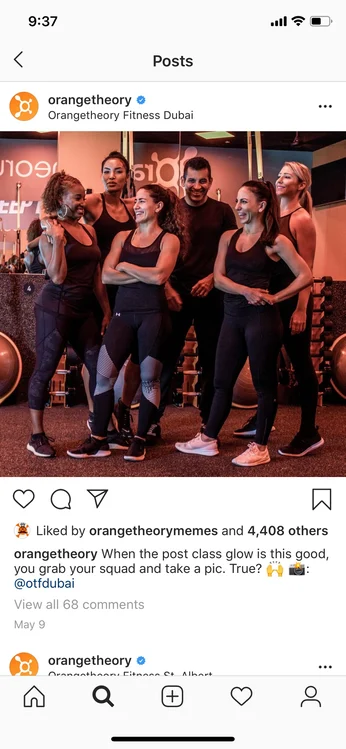
Orangetheory does this perfectly! Adding an Instagram post for their followers to see. And with a group of fit people looking like that, who wouldn’t want to sign up for the gym?
Local businesses
For local businesses, Facebook is often the better choice. Its features, like Groups, Events, and location-based targeting, make it easier to connect with nearby audiences.
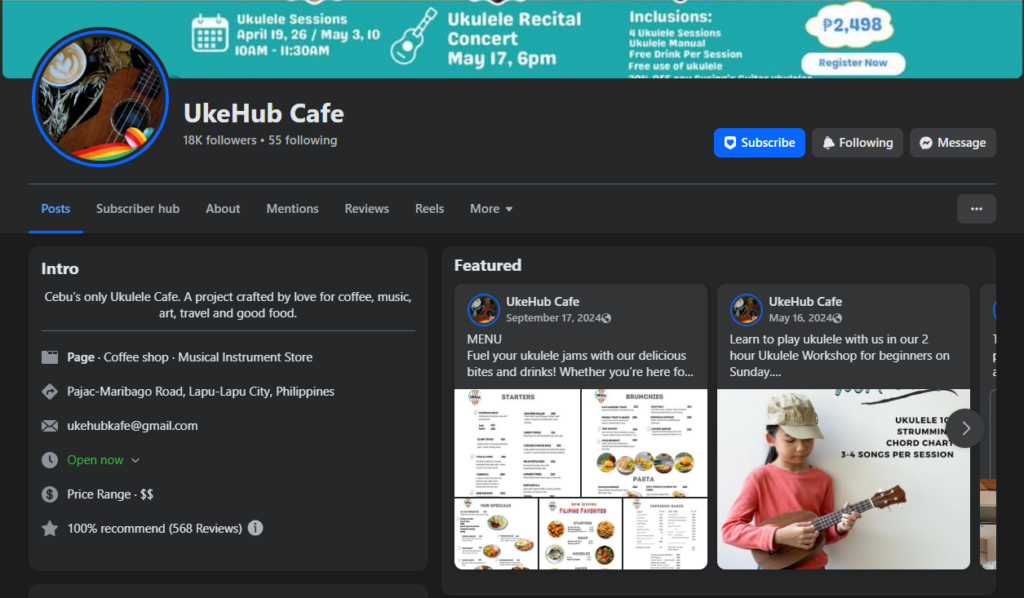
For example, a local coffee shop called UkeHub Cafe often hosts events teaching kids how to play the Ukelele.
Facebook is effective for:
- Promoting local events and offers
- Building community through groups
- Staying visible within a specific area
Personal brands
If you’re building a personal brand, Instagram has the advantage. It offers powerful creator tools and lets you build a visual identity that people can connect with quickly.
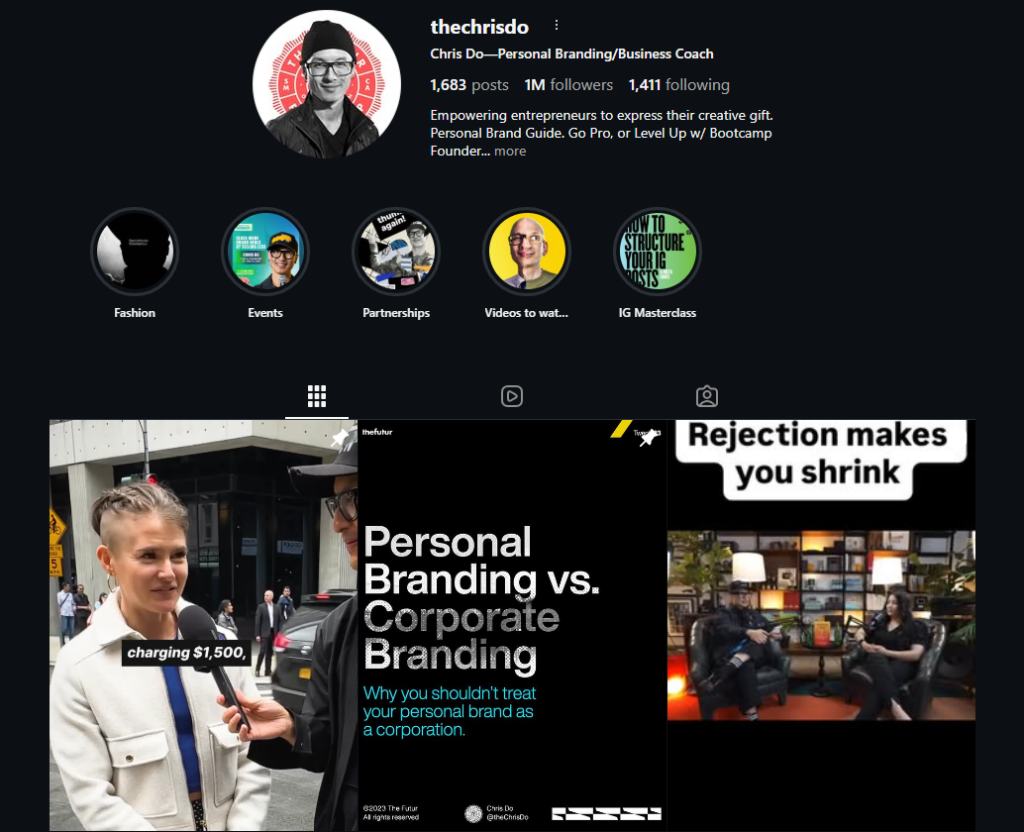
One popular creator who has established his brand on Instagram is Chris Do. Most of his content is usually about empowering entrepreneurs to express their creative gift.
Instagram helps personal brands by:
- Showcasing lifestyle and personality
- Using Reels for rapid audience growth
- Building closer connections through Stories and DMs
This makes it easier to grow influence and recognition.
B2B companies
For B2B businesses, Facebook is generally more effective. It supports more detailed content and professional discussions.
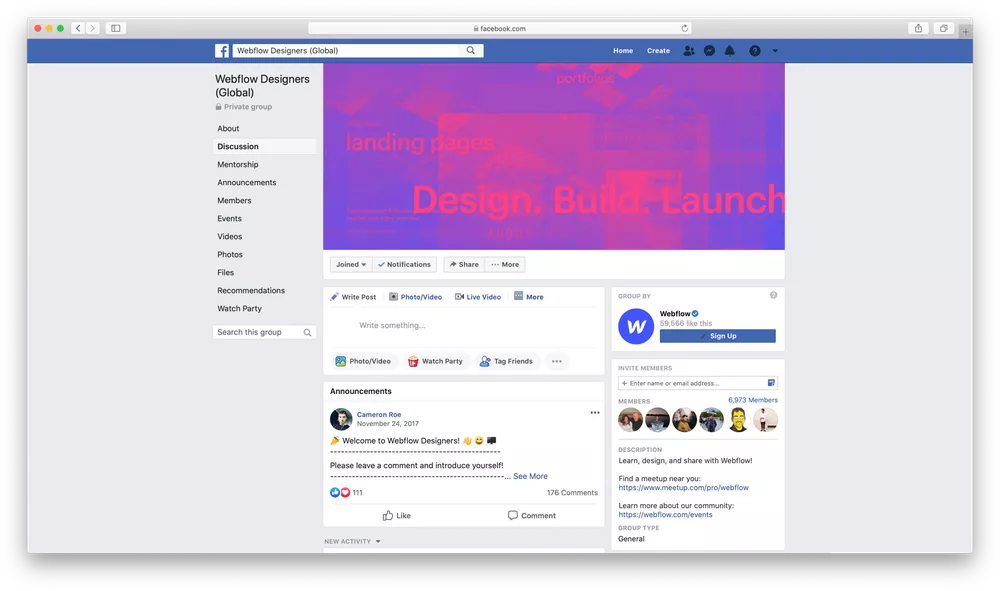
Webflow Designers has a group where Webflow users can get answers to their questions.
Facebook works well for:
- Sharing insights, articles, and updates
- Building niche communities through groups
- Connecting with decision-makers
B2B audiences usually need more information before taking action, which fits Facebook’s strengths.
Content-driven businesses
If your business relies on content like blogs or education, Facebook has an edge because it supports link sharing and longer posts.
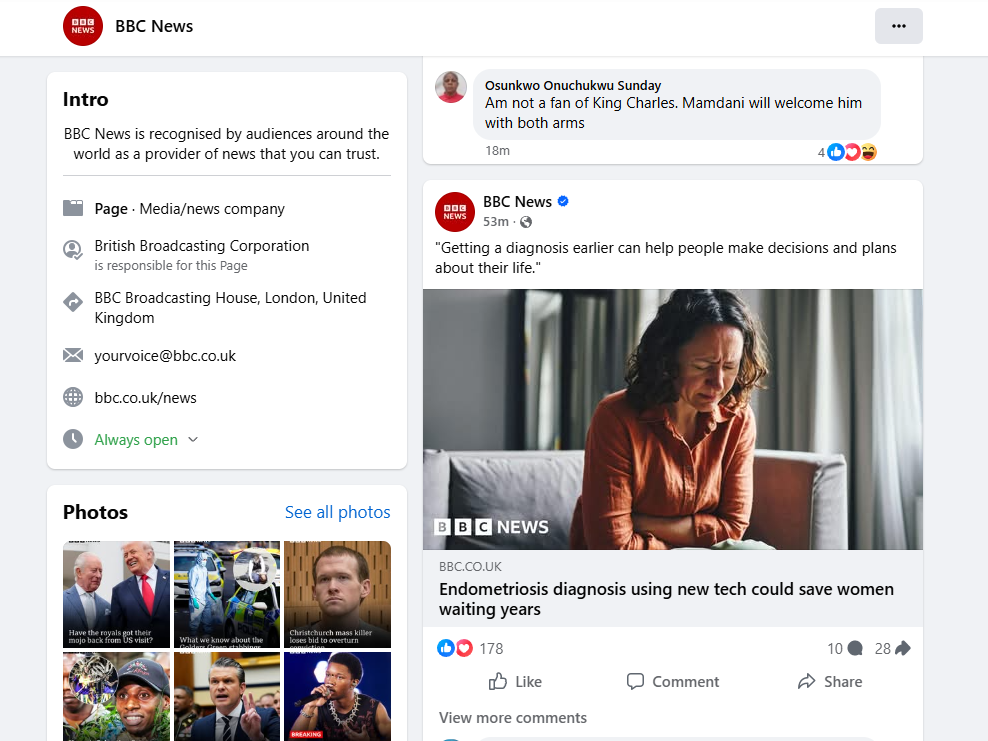
For example, publishers like BBC News regularly use Facebook to share article links. Users can see a headline, short description, and preview image directly in their feed, then click through to read the full story. This makes Facebook highly effective for content-driven businesses that rely on website visits.
Facebook is useful for:
- Driving traffic to websites
- Sharing articles and resources
- Encouraging discussions around content
Tips for choosing the right platform for you
Here are a few simple checks to help you decide whether Facebook or Instagram better fits your business.
- Know your audience age group: If your audience is mostly under 35, Instagram will usually perform better. If you’re targeting a wider or older audience, Facebook is often more effective.
- Match the platform to your content style: If your content is visual (photos, Reels, branding), Instagram is the better fit. If your content is informational (posts, links, updates), Facebook will work better.
- Decide your main goal first: Instagram is stronger for awareness and engagement, while Facebook is better for traffic, leads, and conversions. Your goal should guide your choice.
- Think about how people discover your business: If you want people to find you through trends and visuals, choose Instagram. If you want people to find you through communities or recommendations, choose Facebook.
- Check how much time you can manage content: Instagram often requires more frequent, consistent visual content. Facebook allows more flexibility with longer posts and shared content.
- Consider whether you need community or reach: Facebook is better for building communities through groups and discussions. Instagram is better for reaching new audiences quickly through discovery.
Do you want to create a Facebook post or an Instagram reel but aren’t sure where to start? We’ve got you covered! Here’s a step-by-step guide on creating one with BrandCrowd:
Facebook Posts
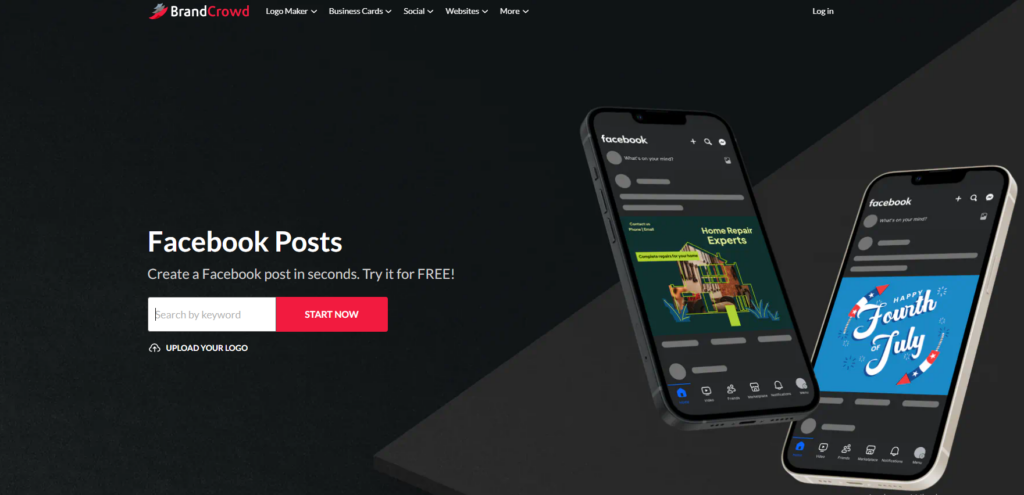
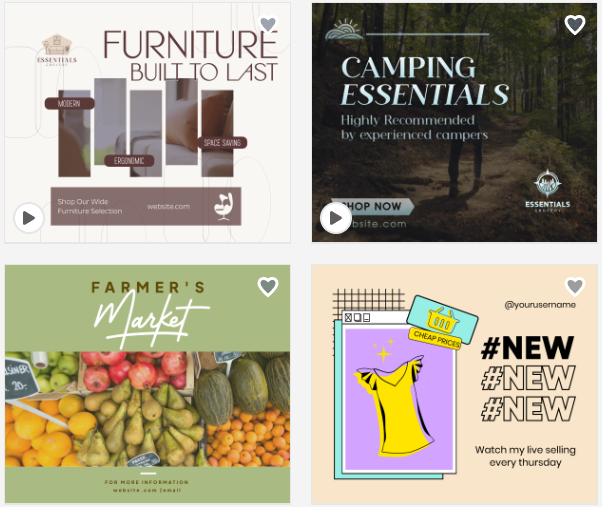
Step 1: Go to BrandCrowd Facebook Posts. Find the perfect Facebook post template in just a few seconds by entering a few keywords that best describe your brand.
Step 2: Choose from the customized templates
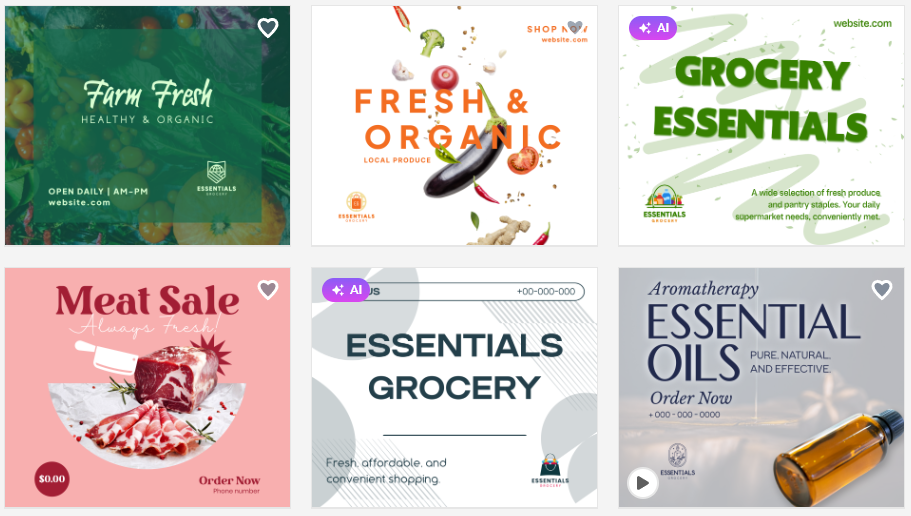
Step 3: Customize to fit your brand’s preferences
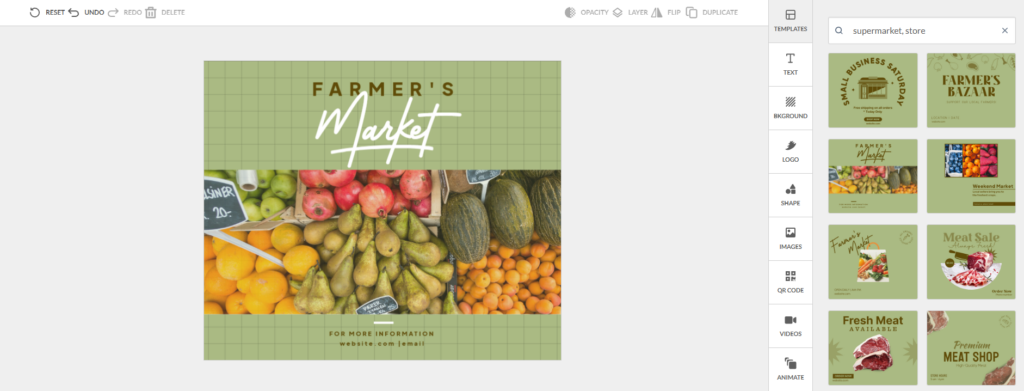
Step 4: Download and use your design!
Instagram Reels
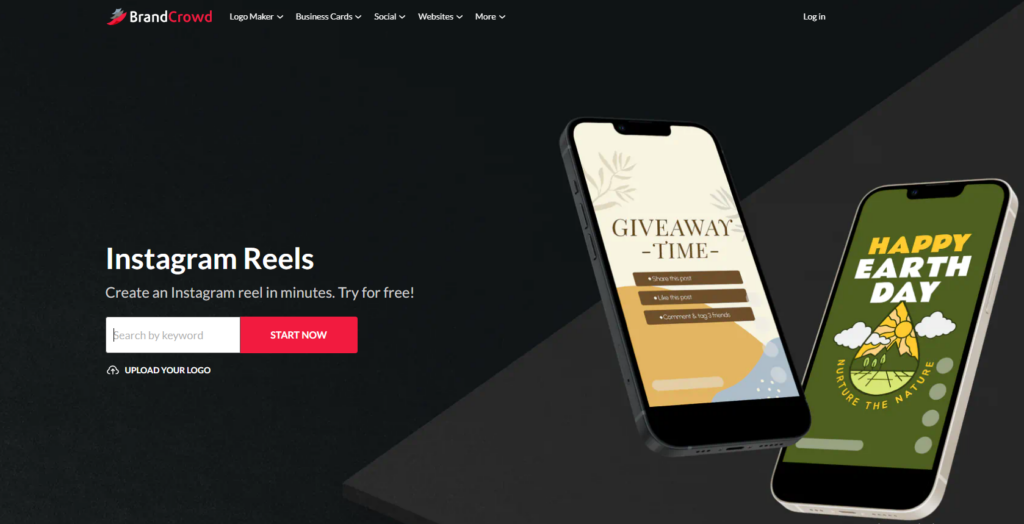
Step 1: Go to BrandCrowd Instagram Reels Maker page. Enter keywords to give our tool an idea of what you’re looking for.
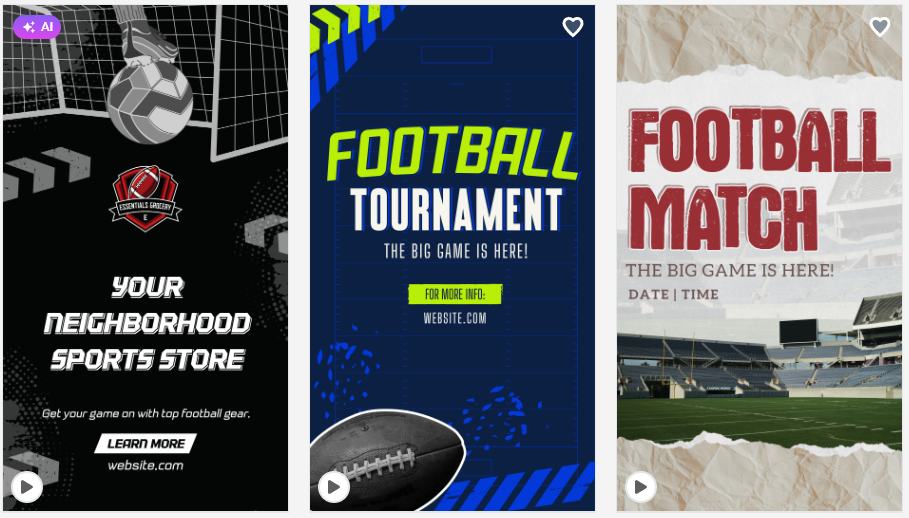
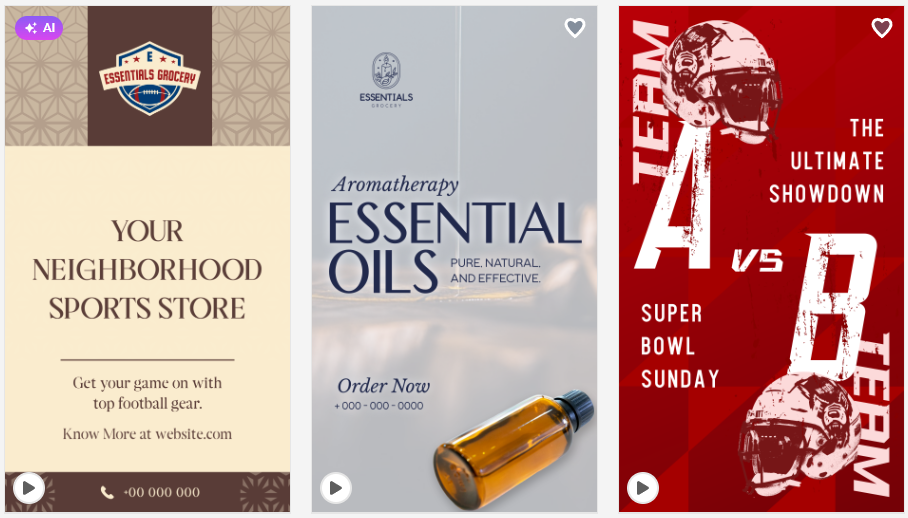
Step 2: Choose from the existing templates. See examples below:
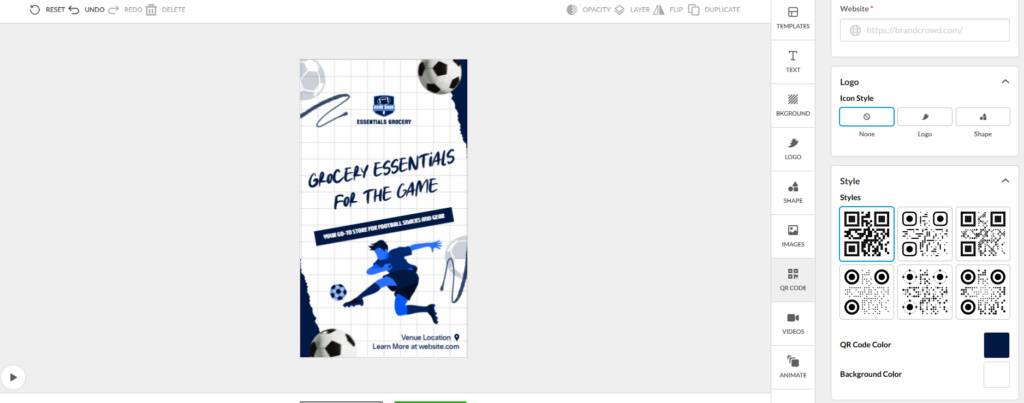
Step 3: Customize the design to fit your branding. You can change the colors and background image, and you can even add QR codes for easy access.
Step 4: Download and share your reel!
The Future of Instagram and Facebook Marketing
The future of Facebook and Instagram Marketing is being shaped by a few clear shifts. Short-form video is becoming the main driver of attention on both platforms, with Reels, Stories, and video ads outperforming traditional posts.
At the same time, AI is playing a bigger role in deciding what users see, meaning content is increasingly shown based on users’ interests and behavior rather than who they follow. Social commerce is also growing, with both platforms making it easier for users to discover and buy products without leaving the app.
For businesses, this means marketing strategies need to change.
- Content needs to be faster, more visual, and designed to hold attention in seconds.
- Instead of focusing only on follower counts, success will depend more on engagement and relevance.
- Businesses that adapt to short-form video, creator-led content, and AI-driven discovery will be in a stronger position as both Facebook and Instagram continue to evolve.
Conclusion
Facebook and Instagram are both powerful marketing platforms, but they serve different purposes. Neither platform is “better” in general. The real advantage comes from understanding how each one works and using it for the right goal. Businesses that treat Facebook vs. Instagram as a strategic choice rather than a competition tend to get the best results.
To make the right decision, businesses should study their audience demographics, test both platforms in real campaigns, and build content strategies tailored to each platform’s strengths.
When used correctly together, Facebook and Instagram can complement each other and create a much stronger overall marketing system.